

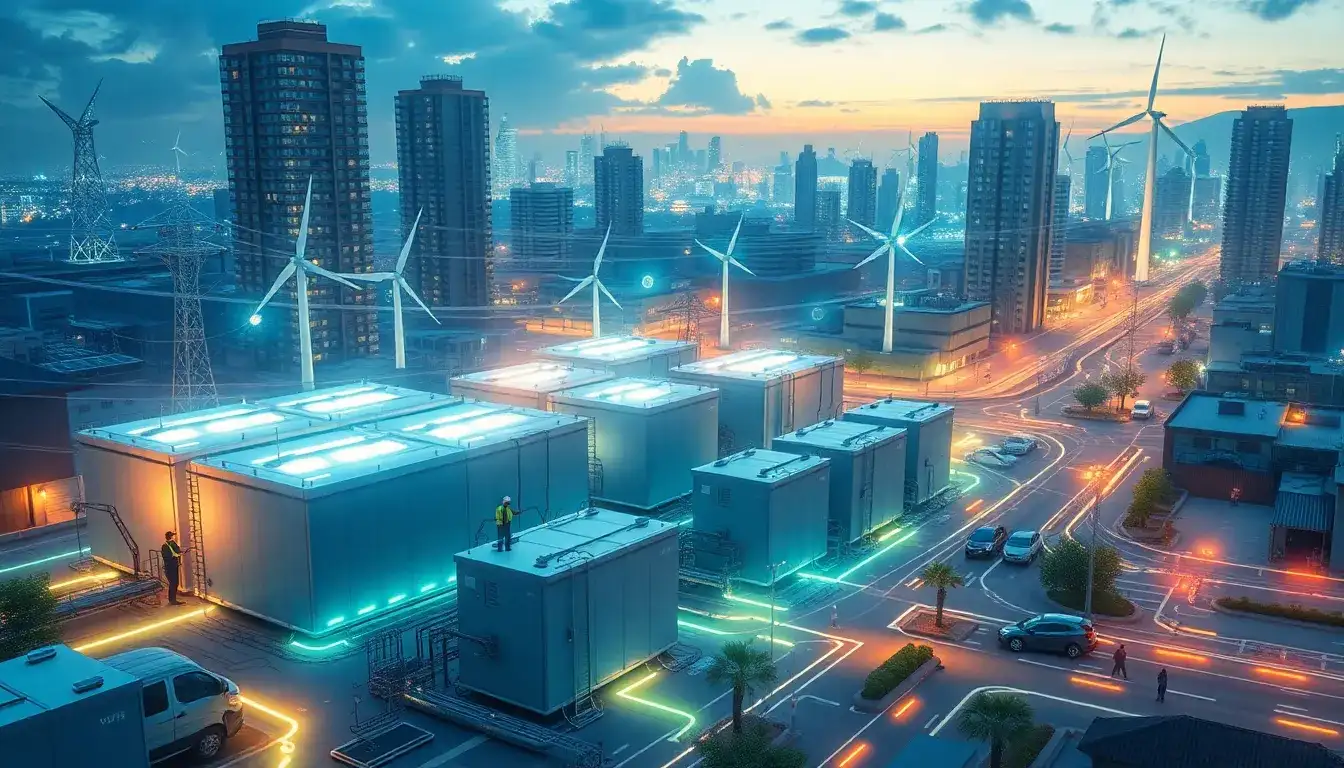
Battery storage systems improve grid resilience through multiple critical functions that enhance the stability, reliability, and recovery capacity of power grids. Key ways battery storage systems contribute include:
1. Enabling Faster Recovery from Outages
Large-scale batteries provide the initial energy needed to restart generators and critical grid infrastructure after a major blackout, a process known as “black start.” This capability enables quicker grid recovery, reduces the dependence on diesel generators, and strengthens overall grid resilience against prolonged outages.
2. Peak Capacity Management and Demand Shifting
Battery systems store excess energy during periods of low demand and discharge it during peak demand times, effectively “time-shifting” electricity supply. This alleviates strain on the grid during extreme weather or high demand events, reducing the need for costly and polluting peaker plants. Long-duration storage paired with renewable sources can also supply power across extended periods, improving stability and lowering costs.
3. Ensuring Uninterrupted Energy Supply
Grid-scale battery storage preserves renewable energy, such as solar power, for use during blackouts or brownouts. This uninterrupted energy supply improves reliability and helps prevent blackouts by balancing supply and demand efficiently during emergencies or fluctuating generation.
4. Decentralizing Energy Distribution
Behind-the-meter (BTM) battery storage systems, owned by consumers or businesses, decentralize energy storage and usage. This reduces dependence on centralized grid infrastructure and long-distance energy transmission, providing local communities with reliable power during emergencies. Decentralization enhances resilience against widespread disruptions caused by extreme weather, equipment failure, or cyberattacks.
5. Supporting Demand Flexibility and Virtual Power Plants
By aggregating many BTM batteries into virtual power plants (VPPs), utilities can remotely dispatch stored energy during peak periods, helping balance the grid without resorting to expensive and polluting peaker plants. This reduces grid strain, lowers peak energy costs, and decreases outage risks.
6. Continuity of Service During Power Outages
BTM battery storage offers a critical lifeline during blackouts, enabling homeowners and businesses to maintain essential services using their stored energy. This is especially valuable in regions frequently affected by severe weather events, where power outages can be abrupt and prolonged.
Summary Table
| Battery Storage Contribution | Impact on Grid Resilience |
|---|---|
| Black start capability | Faster outage recovery, less reliance on diesel |
| Peak capacity shifting | Reduces peak strain and emissions |
| Renewable energy integration | Ensures clean, reliable energy supply in outages |
| Decentralized energy distribution | Local power availability during widespread disruptions |
| Demand flexibility and VPPs | Balances supply-demand, reduces outage risk |
| Continuity during outages | Maintains essential services during blackouts |
Together, these roles make battery storage a foundational technology for a resilient, stable, and sustainable power grid, supporting both reliability in emergencies and cleaner energy integration.
Original article by NenPower, If reposted, please credit the source: https://nenpower.com/blog/how-do-battery-storage-systems-improve-grid-resilience/

