

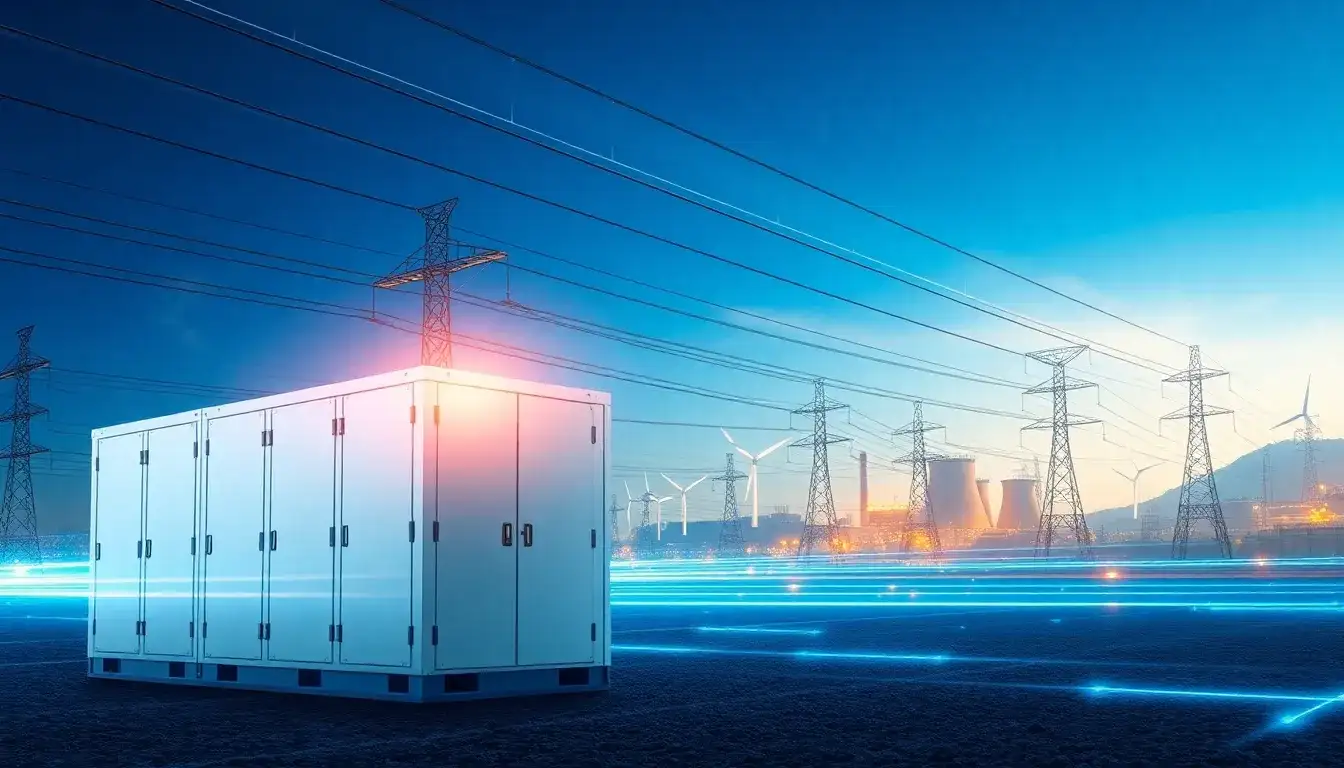
Battery storage systems significantly enhance grid reliability
Battery storage systems significantly enhance grid reliability by acting as flexible, fast-responding resources that address several key challenges in modern electric grids. Their contributions can be summarized as follows:
How Battery Storage Supports Grid Reliability
- Balancing Supply and Demand in Real Time: Batteries can quickly charge or discharge to match electricity supply with demand. This fast response helps balance the grid, especially given the increasing share of variable renewable energy sources like wind and solar, whose output fluctuates with weather conditions. Batteries fill supply gaps during high demand or low renewable output by discharging stored energy, effectively smoothing out variability.
- Providing Stability Services: Batteries help maintain grid frequency and voltage within safe operating limits. They respond more rapidly than traditional thermal plants to disturbances, stabilizing the grid during emergency events and normal operations. For example, batteries provided crucial stability support during a Texas grid emergency in 2023.
- Black Start Capability: Some grid-scale battery systems can restart the grid following a blackout without relying on external power sources, a function traditionally dominated by specific thermal plants. This ability strengthens grid resilience by enabling faster restoration of power.
- Serving as Operating Reserves and Peaking Capacity: Batteries can be rapidly dispatched to meet sudden surges in electricity demand or unexpected generation shortfalls, reducing the need for less efficient peaking plants and improving overall grid flexibility.
- Enabling Integration of Renewables: By storing excess energy generated during periods of low demand (often from renewables) and releasing it during peak demand or renewable shortfalls, batteries smooth renewable integration and reduce curtailment.
- Cushioning Against Extreme Events: Battery Energy Storage Systems (BESS) provide a critical buffer during system stresses such as heatwaves or equipment failures, preventing blackouts and ensuring continuous power delivery.
Current and Future Trends
- The U.S. aims to dramatically increase energy storage deployment to meet rising load and renewable penetration, targeting 700 GWh of total storage capacity by 2030, which would greatly enhance grid reliability and resilience.
- Advances in battery technologies (e.g., lithium-ion, flow batteries) and AI-driven energy management systems are improving storage performance, efficiency, and integration capabilities.
Considerations and Challenges
- While battery storage enhances reliability, integration must be carefully managed to avoid unintended consequences such as market distortions that might increase fossil fuel use in some scenarios.
- Long-term reliability data for newer battery technologies remains limited compared to legacy grid assets. Challenges such as equipment failures and maintenance issues have been observed, indicating ongoing needs for improved reliability assessment and management.
In summary, battery storage systems contribute to grid reliability by providing fast, flexible, and multifaceted support that balances supply and demand, stabilizes grid conditions, assists in black start, and buffers against variability and emergencies. Their increasing deployment is essential for adapting to a dynamic energy landscape dominated by renewables and rising electricity demand.
Original article by NenPower, If reposted, please credit the source: https://nenpower.com/blog/how-do-battery-storage-systems-contribute-to-grid-reliability/

