

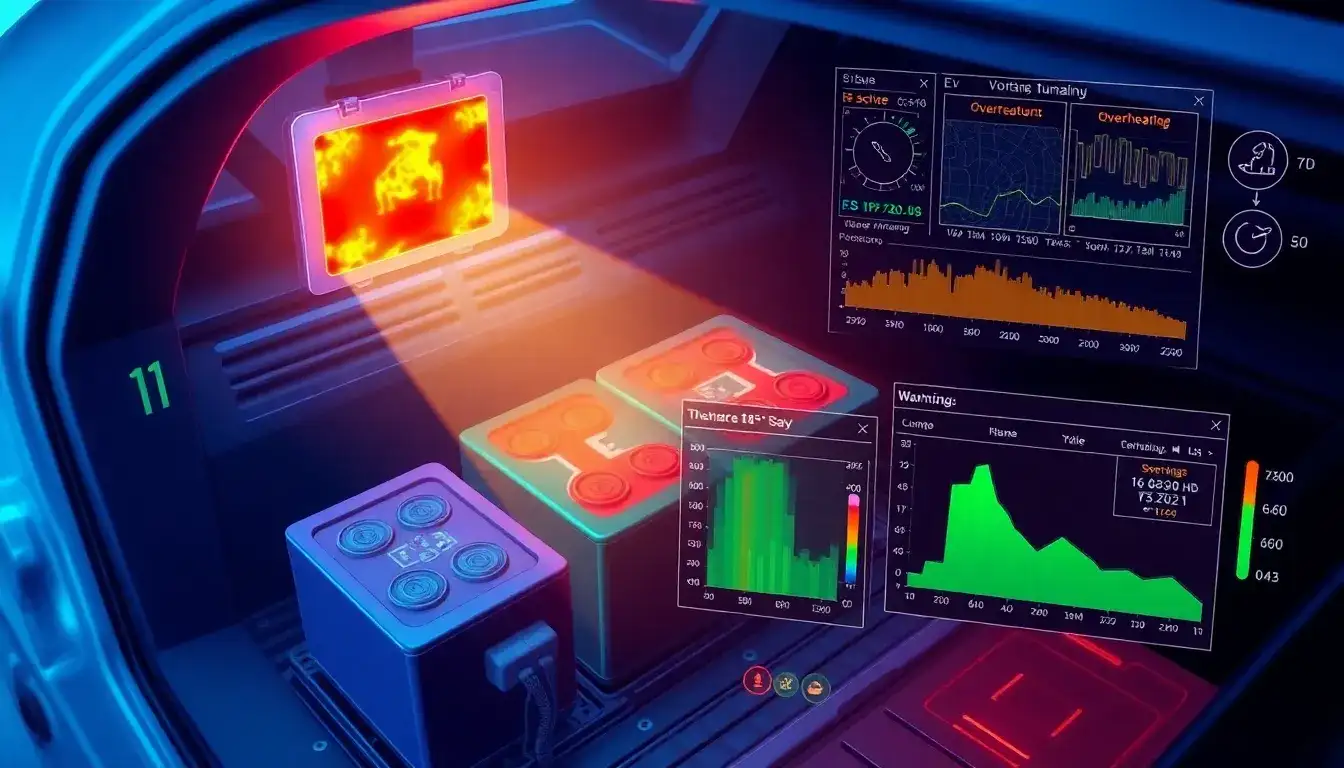
Battery Management Systems (BMS) detect early signs of thermal runaway in lithium-ion batteries through a combination of sensors and algorithms. Here are some key methods used for early detection:
Detection Methods
- Temperature Monitoring: BMS continuously monitor the temperature of individual battery cells. Thermistors, thermocouples, or resistance temperature devices are commonly used for precise temperature measurement. If the temperature exceeds the safe operating range (usually between 10°C and 60°C), it can indicate potential thermal runaway.
- Gas Detection: Sensors can detect specific gases like hydrogen and carbon dioxide that are emitted when a battery cell starts venting, which is a precursor to thermal runaway. Technologies like Amphenol’s REDTR sensor provide early detection by monitoring these gases.
- Pressure Monitoring: Changes in pressure within the battery pack can signal an impending thermal event. Sensors like those from Valeo monitor internal pack pressure to catch early signs of venting or pressure buildup.
- Voltage and Current Monitoring: The BMS tracks voltage and current levels to detect anomalies that might indicate internal short circuits or overcharging, both of which can lead to thermal runaway.
System Response
- Alert and Alarm Systems: Once a thermal event is detected, the BMS can activate alarm systems to alert operators or vehicle occupants.
- Circuit Disconnection: The system typically disconnects the battery pack from the electrical circuit to prevent further heat buildup.
- Cooling Activation: If available, cooling systems (liquid or air) can be activated to reduce the temperature of the battery pack.
Early detection and swift action are critical to prevent or mitigate thermal runaway in lithium-ion batteries, ensuring safety and reducing potential damage to the battery and surrounding equipment.
Original article by NenPower, If reposted, please credit the source: https://nenpower.com/blog/how-do-battery-management-systems-detect-early-signs-of-thermal-runaway/

