

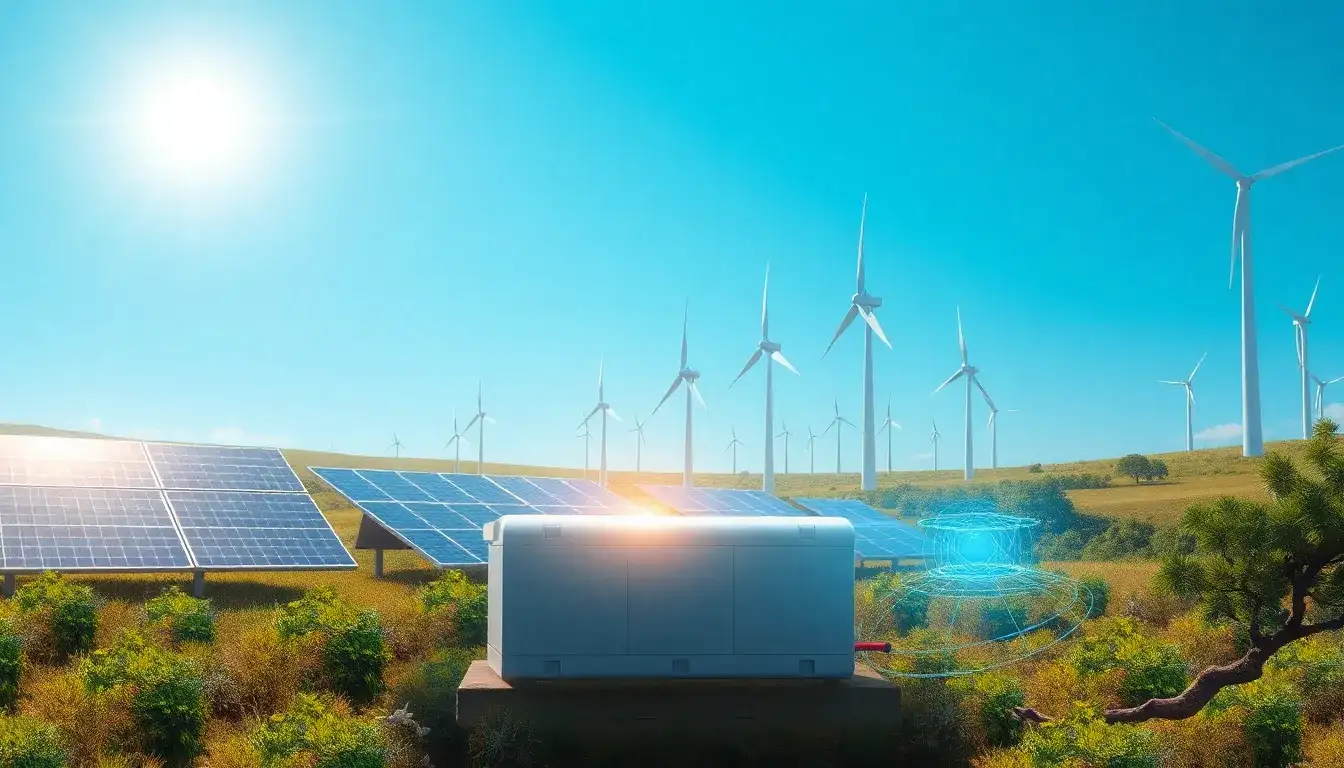
Battery energy storage systems (BESS) integrate with renewable energy sources like solar and wind by addressing intermittency, optimizing grid operations, and enabling reliable energy delivery. Here’s how they work together:
Core Integration Mechanisms
- Energy capture and release: BESS stores excess electricity generated during peak solar/wind production periods (e.g., midday sun or high winds) and discharges it during low production or high demand (e.g., evenings or calm days). This ensures consistent supply even when renewable generation drops.
- Grid stabilization: Intelligent algorithms manage real-time energy flow to balance supply-demand mismatches, reducing reliance on fossil-fuel “peaker” plants. Battery systems provide instantaneous responses to frequency fluctuations caused by renewable variability.
- Demand shifting: Storage enables time-shifting renewable energy to align with peak consumption hours (e.g., evenings for solar-heavy grids).
Key Applications
- Ancillary services: BESS supports grid stability through frequency regulation, voltage control, and reserve capacity. In markets like the UK and Germany, batteries increasingly replace traditional generators for these services.
- Hybrid renewable plants: Co-located solar/wind farms with storage (e.g., 6.5 GWh deployments in the US) minimize curtailment and enhance dispatchability.
- Distributed systems:
- EV charging: BESS buffers high-power EV charging demands, avoiding grid upgrades.
- Critical infrastructure: Hospitals and data centers use BESS for backup power and diesel generator reduction.
- Residential storage: Home systems (e.g., 360 kWh Dutch “Beach Battery”) enable self-consumption of rooftop solar energy.
Technological Synergies
- Lithium-ion dominance: Widely adopted for grid-scale projects due to falling costs (~85% since 2010) and high efficiency.
- Emerging alternatives:
- Flow batteries for long-duration storage
- Mechanical gravity storage for multi-day energy shifting
- Second-life EV batteries repurposed for residential/commercial storage
Challenges
- Intermittency management: Short-duration storage (4-6 hours) currently handles intraday variability, but multi-day storage remains costly.
- Economic scalability: While the UK projects £40 billion savings by 2050, upfront BESS costs still limit widespread adoption.
- Grid dynamics: Regions like Texas and Iowa demonstrate high renewable penetration without storage, using geographic diversity and flexible generation instead. Storage becomes critical at higher renewable shares (>30-50% depending on grid structure).
Future Outlook
BESS deployment will grow alongside renewable expansion, particularly in solar-centric grids requiring evening peak support. Revenue models are evolving toward “stacking” multiple services (arbitrage, capacity markets, frequency response), while innovations in battery chemistry and system design aim to reduce costs further.
Original article by NenPower, If reposted, please credit the source: https://nenpower.com/blog/how-do-battery-energy-storage-systems-integrate-with-renewable-energy-sources-like-solar-and-wind/

