

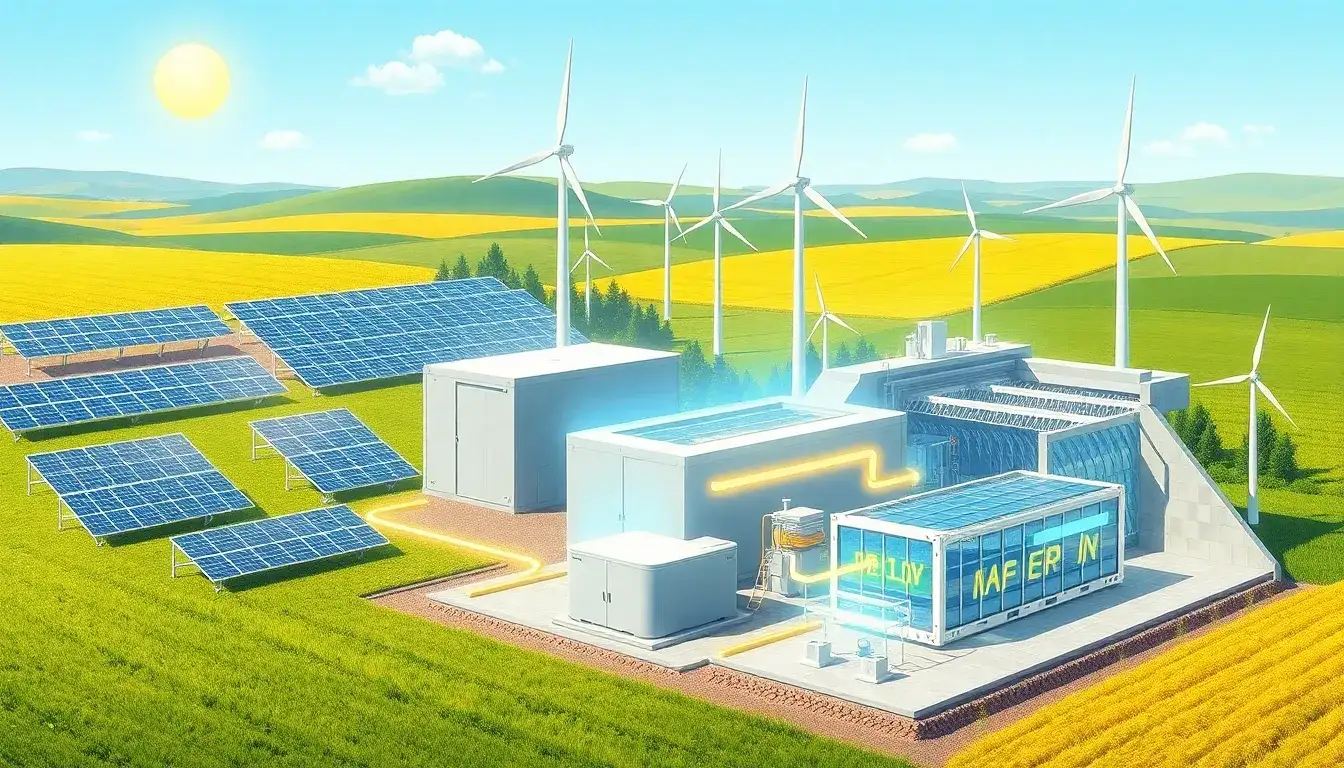
Battery energy storage systems (BESS) integrate with renewable energy sources by addressing the inherent intermittency of solar and wind power, ensuring grid stability, and enabling efficient energy management. Here’s how they work:
1. Storing Excess Energy
BESS capture surplus electricity generated during periods of high renewable output (e.g., sunny midday hours for solar or windy conditions for wind turbines). This stored energy is discharged during low-generation periods (e.g., nighttime or calm weather) to maintain a steady power supply.
2. Grid Stabilization and Ancillary Services
- Frequency Regulation: BESS respond rapidly to grid frequency fluctuations caused by variable renewable generation, injecting or absorbing power within milliseconds to maintain balance.
- Peak Shaving: By releasing stored energy during high-demand periods, BESS reduce reliance on fossil-fuel “peaker plants,” lowering costs and emissions.
3. Enabling Higher Renewable Penetration
BESS allow grids to integrate more renewables by smoothing short-term variability and providing backup during outages. For example, the Netherlands’ Beach Battery (360 kWh) stores solar energy for coastal infrastructure, reducing grid strain. Without storage, high renewable penetration risks instability.
4. Applications Across Sectors
- Residential: Home systems store rooftop solar energy for nighttime use, cutting grid dependence.
- Commercial/Industrial: Factories use BESS to optimize self-consumption of solar power and avoid peak-demand charges.
- Utilities: Large-scale BESS (e.g., lithium-ion farms) balance grid supply, often replacing retiring fossil-fuel plants.
Technologies and Innovations
- Lithium-ion: Dominates due to declining costs and high energy density.
- Flow Batteries: Emerging for long-duration storage (e.g., 8+ hours).
- Gravity Storage: Experimental systems use excess energy to lift weights, generating power when lowered.
By filling gaps in renewable generation, BESS are critical to achieving net-zero grids and reducing reliance on fossil fuels.
Original article by NenPower, If reposted, please credit the source: https://nenpower.com/blog/how-do-battery-energy-storage-systems-integrate-with-renewable-energy-sources/

