

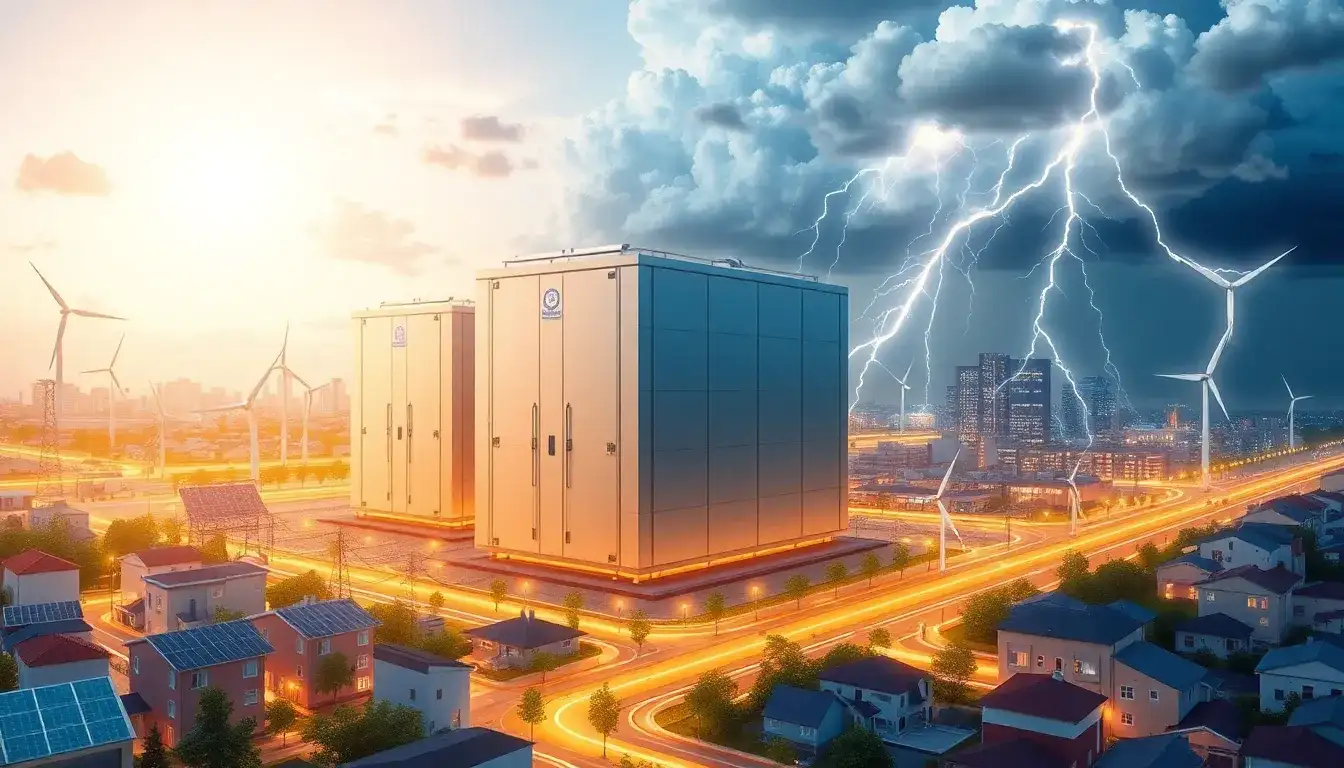
Battery energy storage systems (BESS) enhance grid resilience through multiple mechanisms, addressing both immediate stability needs and long-term energy management challenges. Here’s how they contribute:
1. Stabilizing Renewable Energy Integration
BESS mitigates the intermittency of solar and wind power by storing excess energy during periods of high generation (e.g., sunny or windy days) and discharging it during low production or peak demand. This reduces reliance on fossil fuel-based “peaker” plants and prevents grid instability caused by sudden drops in renewable output.
2. Supporting Microgrids for Localized Resilience
Microgrids paired with BESS can operate independently from the main grid during outages, ensuring uninterrupted power for critical facilities like hospitals or emergency services. They also reduce strain on the broader grid by localizing energy generation and consumption, minimizing transmission losses.
3. Preventing Outages and Enhancing Recovery
During blackouts or brownouts, grid-scale BESS provides immediate backup power, enabling faster system recovery and reducing downtime. For instance, during California’s 2020 heatwave-induced blackouts, BESS could have alleviated demand surges by supplying stored energy.
4. Revenue Stacking and Load Management
BESS enables “revenue stacking” by participating in multiple grid services simultaneously, such as frequency regulation, demand response, and energy arbitrage. This economic efficiency incentivizes broader adoption, indirectly strengthening grid resilience through diversified revenue streams.
5. Mitigating Physical and Cyber Risks
By decentralizing energy storage and distribution, BESS reduces single points of failure, making the grid less vulnerable to extreme weather, equipment failures, or cyberattacks. Distributed storage systems also help absorb shocks from sudden load changes or generation drops.
Future Projections
The U.S. BESS capacity is projected to exceed 170 GW by 2030, reflecting its critical role in next-generation grids. As renewable penetration grows, BESS will remain essential for balancing supply-demand mismatches and maintaining reliability.
Original article by NenPower, If reposted, please credit the source: https://nenpower.com/blog/how-do-battery-energy-storage-systems-improve-grid-resilience-2/

