

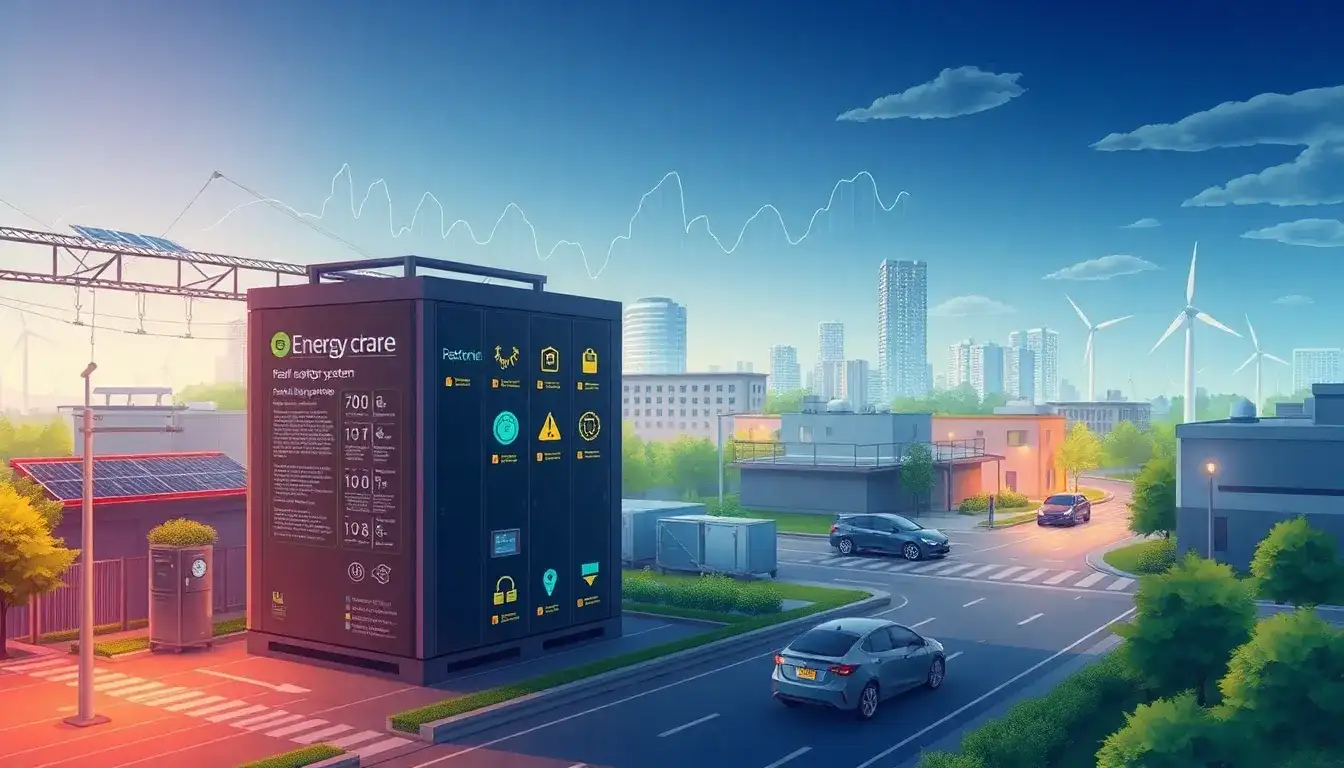
Battery energy storage systems (BESS) reduce peak demand charges by smoothing energy consumption spikes, shifting grid demand, and optimizing power usage. Here’s how they achieve this:
1. Peak Shaving Through Load Smoothing
BESS eliminates short-term demand spikes by discharging stored energy during high-usage periods. Demand charges are calculated based on the highest 15-minute average power draw (in kW) during a billing cycle. By “shaving” these peaks, businesses avoid costly spikes that disproportionately increase charges.
- Example: A 150kW EV charger causes a temporary spike. A BESS supplies power during charging, reducing the grid draw and flattening the load profile.
- Impact: Reduces demand charges by up to 90% for industrial users with consistent demand (e.g., via the 7000-hours rule), and 30-70% for typical commercial users.
2. Time-of-Use Optimization
BESS charges during off-peak periods (low electricity prices) and discharges during peak hours (high prices/demand charges). This “peak shifting” reduces reliance on grid power when rates are highest.
- Mechanism: Intelligent energy management systems forecast demand and adjust battery state of charge (SOC) to prepare for peak intervals.
3. Enhanced Renewable Integration
BESS stores excess solar/wind energy during low demand and deploys it during peak hours, increasing self-consumption of renewables while avoiding grid dependence. This dual benefit lowers both energy (kWh) and demand (kW) charges.
4. Preventing Costly Spikes
A single 15-minute spike can erase annual savings. BESS uses real-time monitoring to preemptively discharge batteries, ensuring grid demand remains stable.
- Case Study: A 50kW EV charger adds ~$1,500/month in demand charges at $30/kW rates. BESS reduces this by offsetting the charger’s grid draw.
Comparison Table: BESS Impact on Demand Charges
| Feature | Without BESS | With BESS |
|---|---|---|
| Peak Demand | High spikes during short intervals (e.g., EV charging) | Smoothed load profile with reduced kW spikes |
| Energy Cost | Higher charges due to peak-hour grid reliance | Lower charges via off-peak charging and renewable self-consumption |
| Grid Stability | Contributes to peak demand, increasing infrastructure strain | Reduces grid strain, qualifying for utility incentives |
By addressing demand charges at the source, BESS provides a scalable solution for both large industrial users and SMEs.
Original article by NenPower, If reposted, please credit the source: https://nenpower.com/blog/how-do-battery-energy-storage-systems-help-reduce-peak-demand-charges/

