

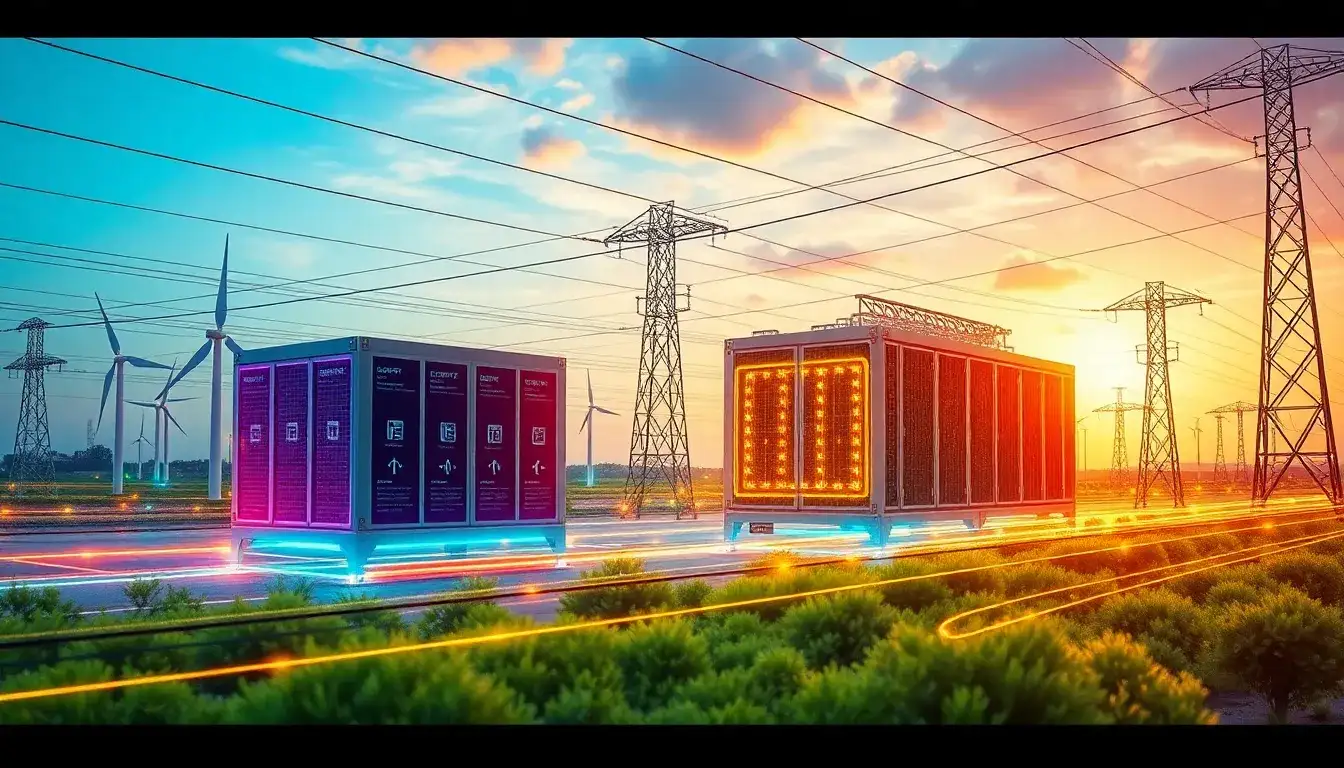
Battery energy storage systems (BESS) play a critical role in maintaining grid stability and enhancing resilience through rapid response capabilities and advanced energy management. Here’s how they contribute:
Grid Stability Services
- Frequency regulation: BESS respond within milliseconds to frequency deviations by injecting or absorbing power, maintaining the grid’s nominal frequency (50/60 Hz). For example, Merus Power’s ESS stabilizes grids by rapidly adjusting to frequency fluctuations.
- Voltage control: By managing reactive power, BESS ensure voltage levels remain within safe operational limits, preventing equipment damage.
- Load balancing: They store surplus energy during low demand and discharge it during peaks, flattening demand curves and reducing reliance on peaker plants.
Enhancing Resilience
- Black start capability: BESS can restart the grid after outages by providing initial power to critical infrastructure, as demonstrated in California and Germany.
- Integration of renewables: They mitigate intermittency issues of solar and wind by storing excess generation and supplying power during low-production periods. This reduces reliance on fossil-fueled backup plants.
- Extreme weather response: Batteries provide backup power during grid failures caused by storms or heatwaves, ensuring continuous electricity supply.
Technological Advancements
- LFP batteries: Lithium iron phosphate (LFP) technology is increasingly adopted for its safety, longevity, and decreasing costs, with further improvements in energy density and cycle life expected.
- Hybrid systems: Future systems may combine lithium-ion with flow batteries for long-duration storage (6+ hours) to address varying grid demands.
- AI integration: Advanced analytics optimize charge/discharge cycles, improving efficiency and grid management.
Global Implementations
- Hornsdale Power Reserve (Australia): The Tesla-built BESS provides frequency regulation and prevents blackouts, responding faster than traditional generators.
- CAISO (California): BESS projects support the state’s renewable-heavy grid, offering load balancing and ancillary services.
- National Grid (UK): Deploys BESS for rapid frequency response, integrating wind energy while maintaining reliability.
By addressing fluctuations in supply and demand, supporting renewable integration, and enabling rapid recovery from disruptions, BESS are indispensable for modernizing grids toward sustainability and resilience.
Original article by NenPower, If reposted, please credit the source: https://nenpower.com/blog/how-do-battery-energy-storage-systems-contribute-to-grid-stability-and-resilience/

