

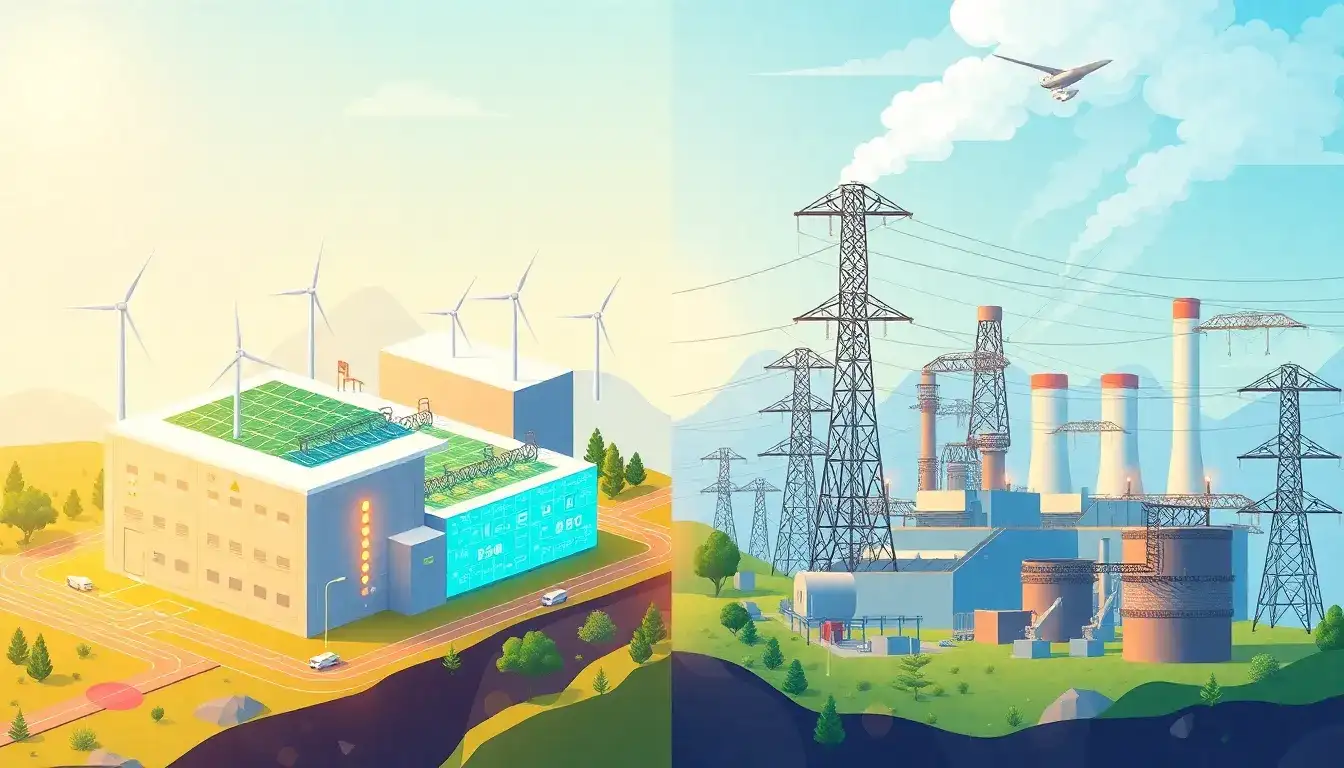
Battery Energy Storage Systems (BESS) are increasingly recognized for their role in enhancing grid stability compared to traditional solutions. Here’s a comparison between BESS and traditional grid stability solutions:
Key Differences Between BESS and Traditional Solutions
- Flexibility and Scalability:
- BESS: Modular and scalable, allowing for easy integration into various grid settings. They can be rapidly deployed and expanded as needed.
- Traditional Solutions: Often less flexible and more cumbersome to scale. Traditional solutions like peaker plants or pumped hydro storage have higher upfront costs and environmental impacts.
- Renewable Energy Integration:
- BESS: Excellent at integrating renewable energies by storing excess energy that is produced intermittently by solar and wind sources, thereby smoothing out supply fluctuations.
- Traditional Solutions: Typically designed for traditional power sources and may struggle with the variability of renewable energy outputs.
- Grid Stability Services:
- BESS: Provide frequency regulation, voltage support, and reactive power compensation, thereby enhancing grid stability.
- Traditional Solutions: Can offer similar stability services but often at higher operational costs and with less precision than BESS.
- Cost and Efficiency:
- BESS: Generally becoming more cost-effective due to technological advancements. They offer efficient storage and release of energy, reducing peak demand and strain on the grid.
- Traditional Solutions: Often more expensive and less efficient, requiring significant infrastructure and resources to operate.
- Environmental Impact:
- BESS: Environmentally friendly as they support renewable energy integration and reduce reliance on fossil fuels.
- Traditional Solutions: Typically have a larger carbon footprint due to dependence on fossil fuels or significant infrastructure requirements.
Advantages of BESS Over Traditional Solutions
- Rapid Deployment: BESS can be quickly installed, which is crucial for meeting urgent grid stability needs.
- Improved Grid Resilience: BESS provides backup power during natural disasters or grid failures, ensuring continuous energy supply.
- Enhanced Reliability: Offers real-time monitoring and predictive maintenance, reducing downtime and improving overall system reliability.
Challenges with BESS Compared to Traditional Solutions
- Availability and Dependency: BESS must be online and functioning effectively to provide grid stability services, especially during extreme weather events.
- Cost of Critical Minerals: The cost and availability of critical minerals like lithium can impact the scalability and cost-effectiveness of BESS.
In summary, BESS offers flexibility, scalability, and environmental sustainability, making it a preferred choice for modern grid stability solutions. However, traditional solutions still have their place in certain contexts, particularly where existing infrastructure is well-suited for their use.
Original article by NenPower, If reposted, please credit the source: https://nenpower.com/blog/how-do-battery-energy-storage-systems-compare-to-traditional-grid-stability-solutions/

