

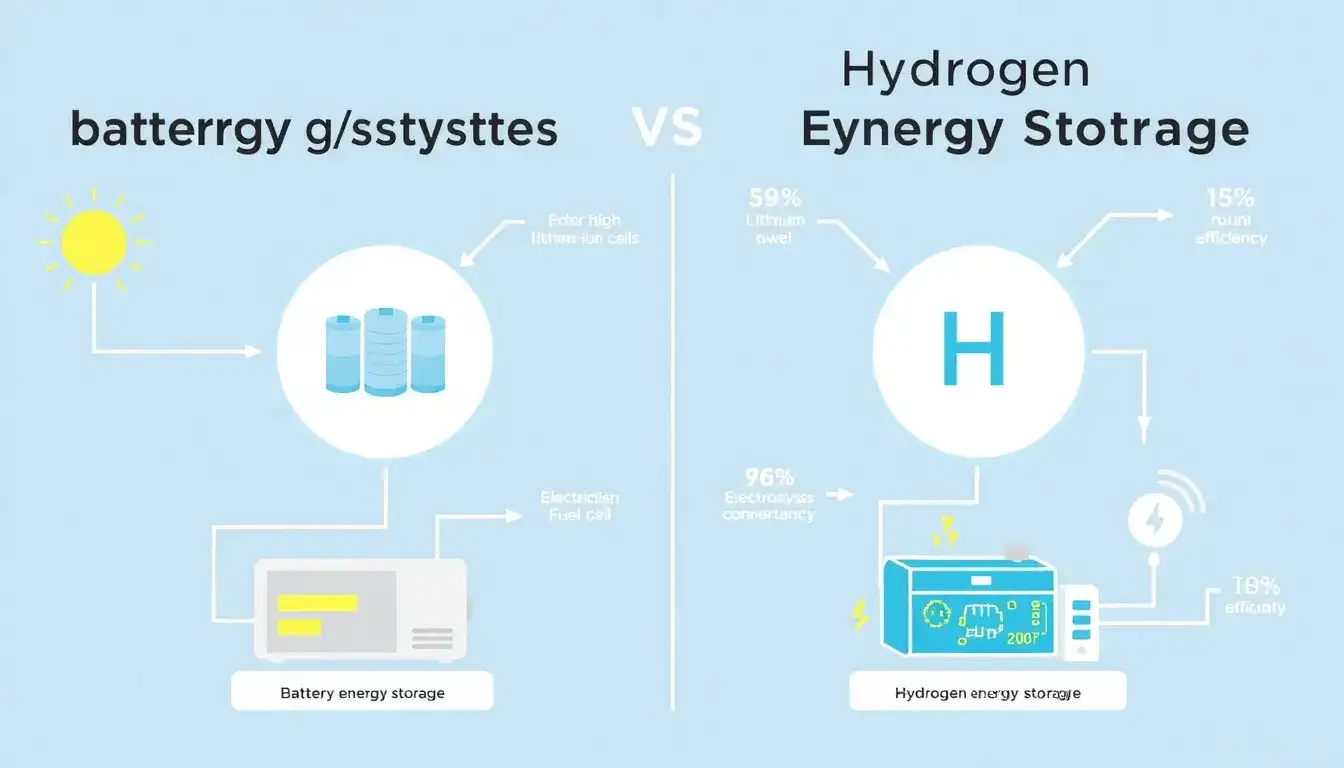
When comparing battery energy storage systems (BESS) and hydrogen energy storage, efficiency is a key metric to consider.
Efficiency of Battery Energy Storage Systems
- Round-trip Efficiency (RTE): Battery systems, particularly lithium-ion, have a high RTE, typically around 83%. This efficiency is measured as the ratio of the energy output to the energy input during a charge-discharge cycle.
- Advantages: Batteries are efficient for daily and small-scale applications, offering high performance with less energy loss compared to hydrogen. They are also versatile and increasingly used in both residential and utility-scale settings.
- Cost and Performance: Battery costs have decreased, making them more viable for widespread adoption. Their efficiency, combined with declining costs, has made them a preferred choice for integrating renewable energy sources.
Efficiency of Hydrogen Energy Storage
- Round-trip Efficiency (RTE): Hydrogen storage involves converting electricity into hydrogen through electrolysis, storing it, and then converting it back into electricity using a fuel cell. The process is generally less efficient than battery storage. The overall RTE for hydrogen systems is typically around 30-50% due to energy losses in electrolysis, storage, and fuel cell conversion.
- Advantages: Hydrogen is more suitable for long-term or seasonal energy storage due to its ability to be stored for extended periods without significant self-discharge. It can also serve as a backup fuel for power generation during extended periods of low renewable output.
- Challenges: Hydrogen production requires significant energy for electrolysis, and the conversion back to electricity via fuel cells incurs additional losses. The infrastructure for hydrogen production and storage is still evolving and requires substantial investments.
Comparison Summary
| Feature | Battery Energy Storage Systems | Hydrogen Energy Storage |
|---|---|---|
| Round-trip Efficiency | Typically around 83% (e.g., Li-ion) | Generally around 30-50% |
| Suitable Applications | Daily, small-scale, and renewable integration | Seasonal, long-term storage, and backup fuel |
| Cost and Infrastructure | Costs decreasing; maturing infrastructure | Higher costs; developing infrastructure |
| Challenges | Energy loss during charge/discharge cycles; aging effects | Energy-intensive production; conversion losses; infrastructure needs |
Batteries are currently more efficient for daily and small-scale energy storage, while hydrogen is more suited for long-term or seasonal storage. However, the efficiency of hydrogen systems can be improved with technological advancements.
Original article by NenPower, If reposted, please credit the source: https://nenpower.com/blog/how-do-battery-energy-storage-systems-compare-to-hydrogen-energy-storage-in-terms-of-efficiency/

