

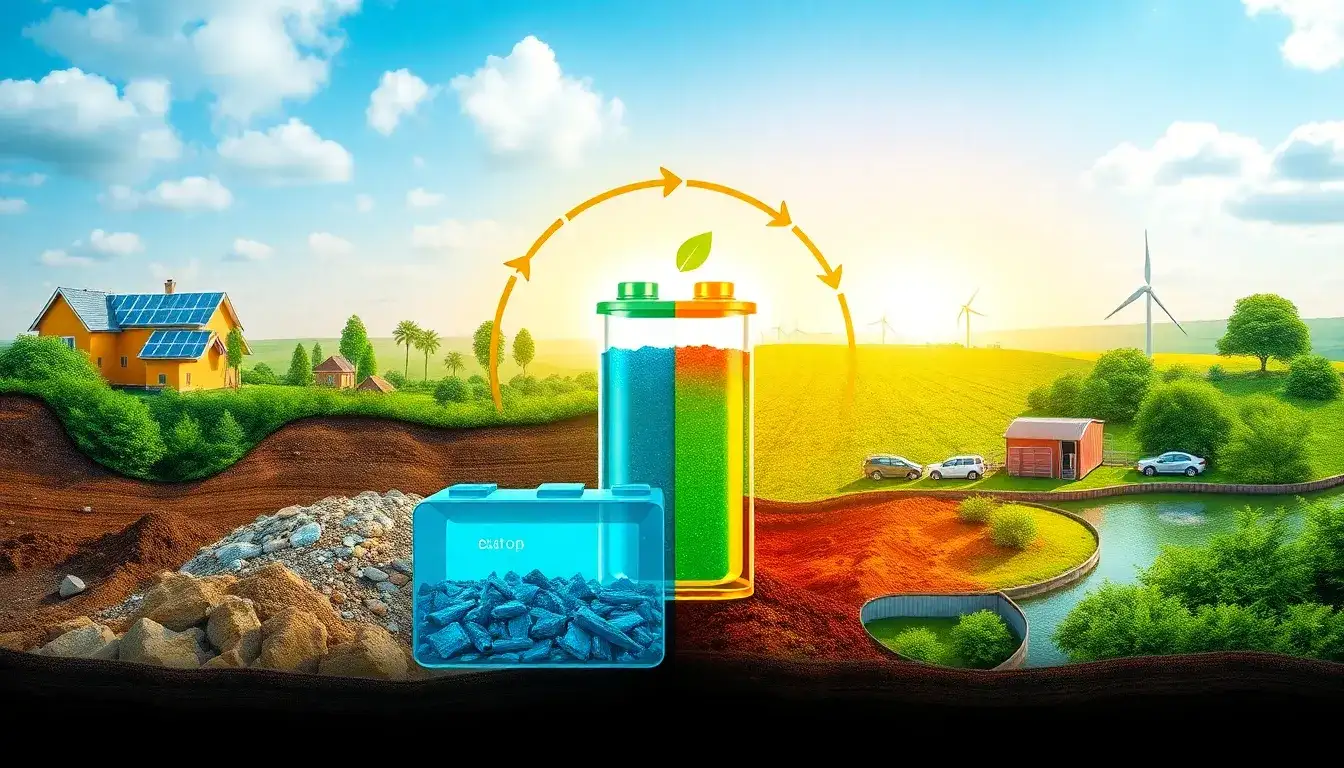
Environmental Impacts of Battery Production
- Material Extraction: The mining of materials such as lithium, cobalt, and nickel is energy-intensive and often involves significant greenhouse gas emissions. Hard rock mining of lithium, for example, can emit up to 15 tonnes of CO2 per tonne of lithium mined. Additionally, mining practices can lead to water pollution and environmental degradation in regions like the Democratic Republic of the Congo and Chile.
- Manufacturing Process: The production of lithium-ion batteries requires high temperatures, typically achieved using fossil fuels, which further increases CO2 emissions. Approximately 40% of the climate impact from lithium-ion battery production comes from mining and processing these materials.
- Water Consumption: Lithium extraction is highly water-intensive. In Chile, up to 65% of regional water is used for lithium mining, leading to water depletion.
- Waste Management: Disposal of lithium-ion batteries can pose significant environmental risks, including toxic metal leakage into soil and groundwater. Recycling, though challenging, is becoming more critical as only about 5% of lithium-ion batteries are recycled globally.
Impact of Different Battery Chemistries
- Nickel-Manganese-Cobalt (NMC): Commonly used in EVs, NMC batteries have a high energy density but rely on cobalt, which raises concerns about human rights in mining contexts.
- Lithium-Iron-Phosphate (LFP): These batteries avoid cobalt, reducing ethical and environmental risks associated with its mining. However, they generally have lower energy density.
- Silicon Nanowire (SiNW) Anode Batteries: Newer technologies, such as those using SiNW materials, show promise for high-capacity batteries but also introduce new nanowaste concerns.
Strategies for Improvement
- Recycling and Reuse: Encouraging recycling and developing efficient recycling technologies can help mitigate waste issues and reduce demand for primary materials.
- Green Energy Sources: Transitioning manufacturing processes to renewable energy sources can significantly reduce the carbon footprint of battery production.
- Sustainable Mining Practices: Promoting responsible mining practices can help minimize environmental impacts during material extraction.
In summary, battery chemistries significantly impact environmental sustainability through their material extraction, manufacturing processes, and waste management practices. Future developments will focus on reducing these impacts through more efficient recycling, greener energy sources, and sustainable mining practices.
Original article by NenPower, If reposted, please credit the source: https://nenpower.com/blog/how-do-battery-chemistries-impact-environmental-sustainability/

