

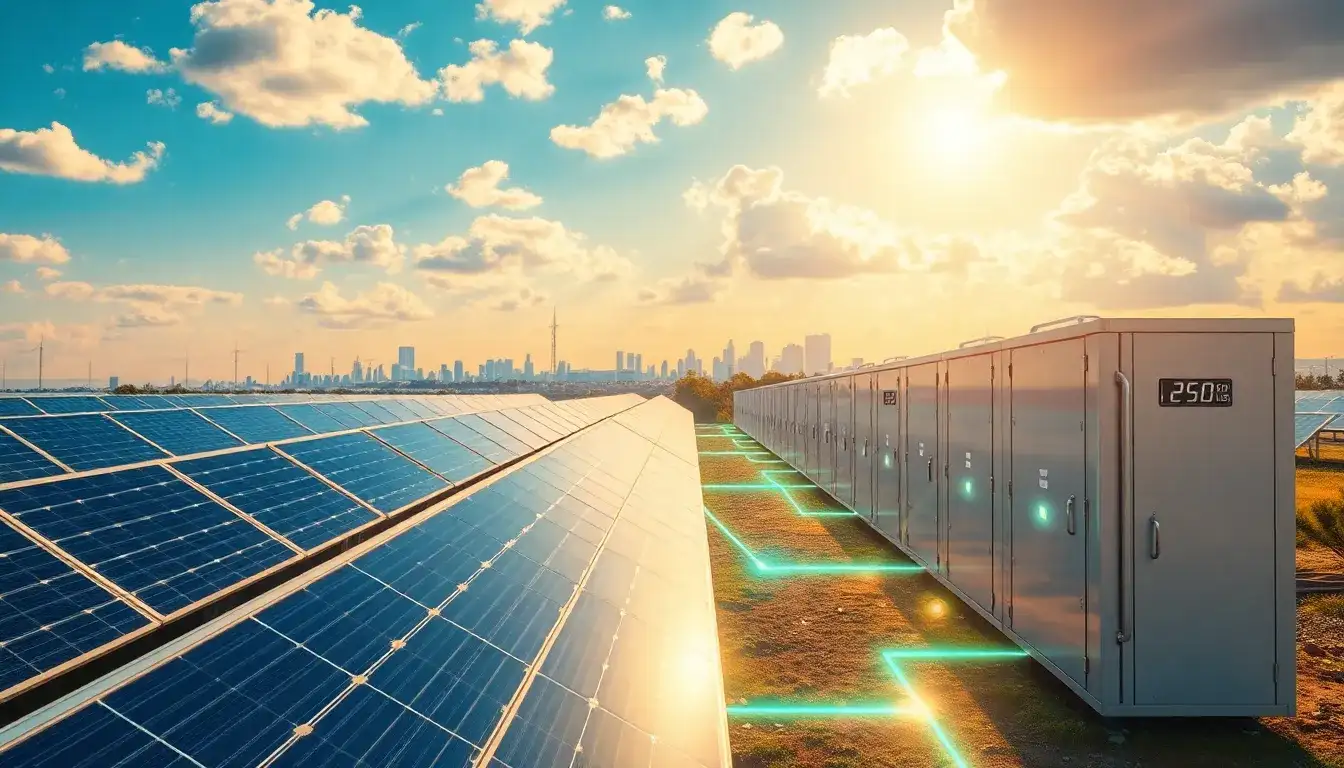
Batteries play a crucial role in balancing the grid during periods of high solar energy production in several key ways:
Balancing Supply and Demand
When solar energy production peaks, batteries can store the excess energy generated. This stored energy can be deployed later when solar output drops, such as during the evening or night, to match demand. By doing so, batteries help maintain a steady supply of electricity to the grid, mitigating the variability of solar power output.
Grid Stabilization
Batteries are highly effective at stabilizing the grid by responding quickly to fluctuations in energy demand. They can discharge energy into the grid in a short time, helping to balance supply and demand during high solar production periods. This rapid response capability is especially important for maintaining grid stability and preventing power outages.
Short-Term Balancing
Lithium-ion batteries, common for renewable energy storage, are well-suited for short-term grid balancing, which is ideal for handling fluctuations over short periods (from seconds to hours). They provide large amounts of power quickly, making them effective in dealing with temporary supply and demand imbalances during peak solar periods.
Managing Excess Energy
During peak solar production, excess energy is often more than what can be used immediately. Batteries capture this excess energy, preventing it from being wasted and allowing it to be used when demand increases later in the day. This capability helps maintain grid efficiency and maximizes the value of solar energy.
Ancillary Services
Beyond storing and stabilizing energy, batteries can offer ancillary services like frequency response and reserve power. These services help maintain grid frequency within acceptable limits, ensuring the reliability and efficiency of the power supply during both high and low solar production periods.
Original article by NenPower, If reposted, please credit the source: https://nenpower.com/blog/how-do-batteries-help-balance-the-grid-during-periods-of-high-solar-energy-production/

