

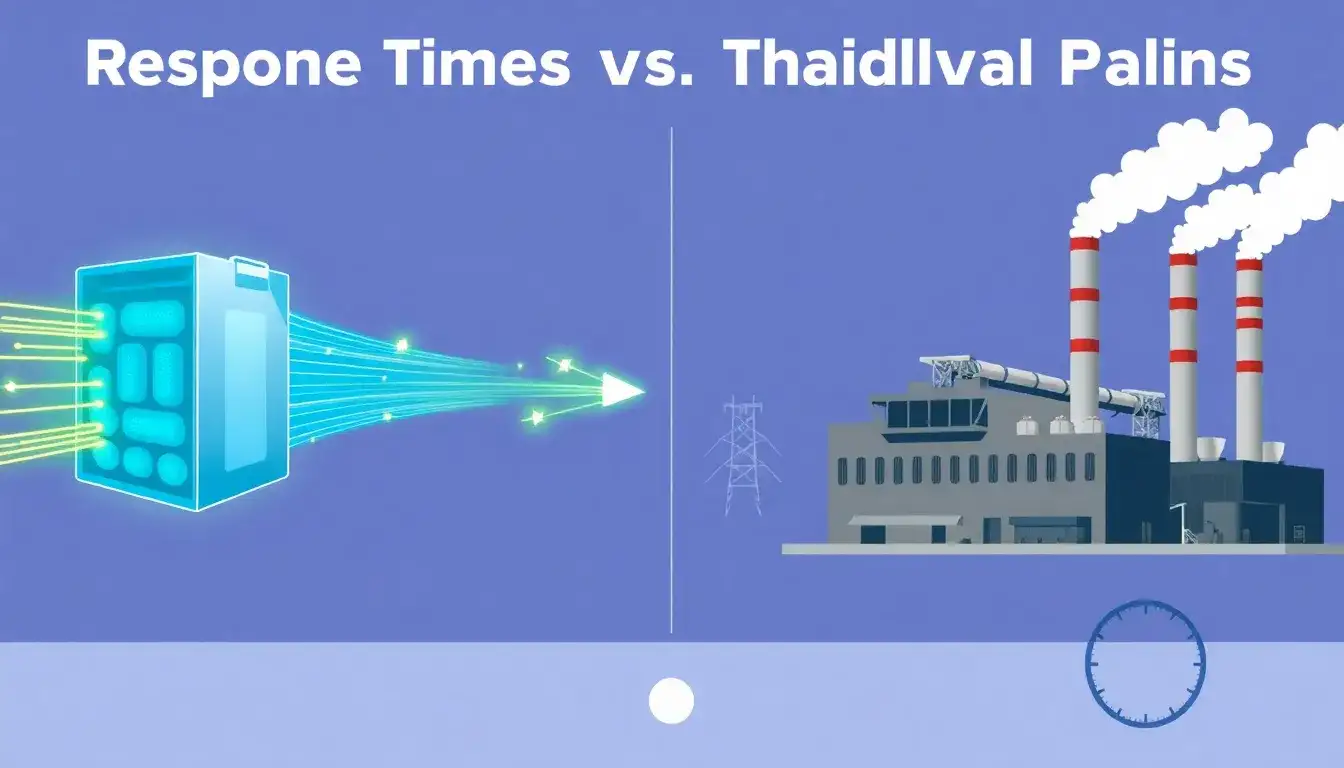
Batteries, particularly battery energy storage systems (BESS), have a significant advantage over traditional power plants in terms of response time. Here’s a comparison:
Response Time
- Batteries (BESS): These can respond almost instantaneously, typically within seconds, to changes in energy demand or supply. This fast response is crucial for stabilizing the grid during sudden fluctuations in power consumption or generation.
- Traditional Power Plants: In contrast, traditional power plants, whether fossil fuel-based or nuclear, take significantly longer to adjust their output. They often require minutes to ramp up or down, making them less agile in responding to immediate changes in the grid.
Grid Stabilization and Renewable Integration
- Batteries: They are highly effective in mitigating the intermittency of renewable energy sources like solar and wind by storing excess energy during peak production periods and discharging it during low production periods.
- Traditional Power Plants: These have traditionally provided baseline power and helped stabilize the grid, but they are less adaptable to the rapid integration of renewable energy sources compared to batteries.
Flexibility and Cost
- Batteries: While batteries are becoming more cost-competitive, their flexibility in providing short-term backup and stabilizing services makes them increasingly valuable in energy markets.
- Traditional Power Plants: They have higher operating costs and capital expenses than batteries for short-term stabilization tasks, making them less economic for such roles.
Original article by NenPower, If reposted, please credit the source: https://nenpower.com/blog/how-do-batteries-compare-to-traditional-power-plants-in-terms-of-response-time/

