

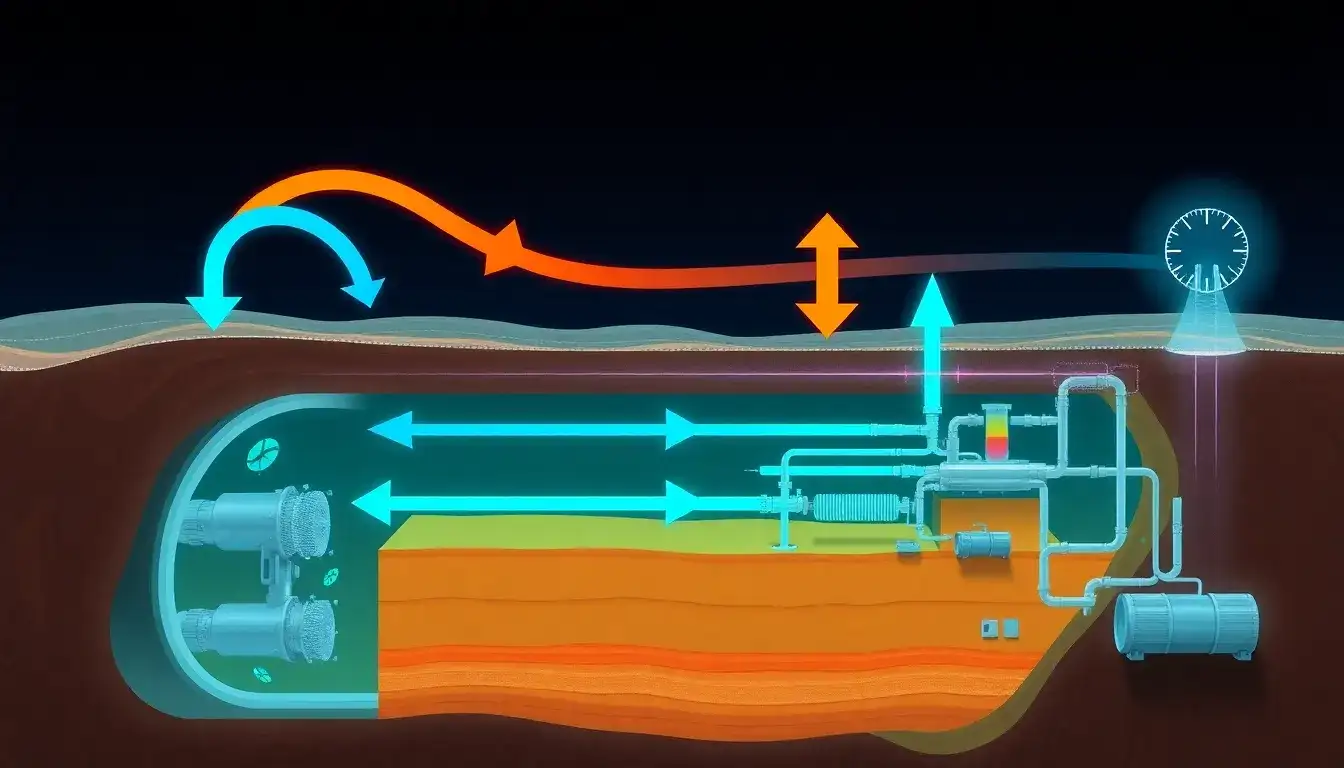
Asynchronous Charge and Discharge in CAES
CAES involves compressing air during the charging process and expanding it to generate electricity during discharge. These processes are asynchronous, meaning they do not happen simultaneously, which affects how heat is managed within the system.
Impact on Heat Management
- Heat Generation: The compression process generates significant amounts of heat, which must be managed efficiently to maintain system efficiency.
- Need for Thermal Energy Storage: Because charge and discharge are asynchronous, it is necessary to store thermal energy generated during compression for use during expansion. This requires integrating efficient heat exchange systems and thermal energy storage mediums, such as sensible heat storage in liquids or solids, or phase change materials.
- Efficiency Considerations: The effectiveness of thermal energy storage directly influences the overall efficiency of the CAES system. Inefficient heat management leads to energy losses, reducing the system’s round-trip efficiency.
- Technological Innovations: Improvements in thermal storage techniques, such as designing low-cost methods or exploring alternative high-temperature storage approaches, are crucial for optimizing CAES systems.
In summary, managing heat in CAES systems during asynchronous charge and discharge cycles is vital for maintaining efficiency and requires advanced thermal energy storage solutions.
Original article by NenPower, If reposted, please credit the source: https://nenpower.com/blog/how-do-asynchronous-charge-and-discharge-cycles-affect-heat-management-in-caes/

