

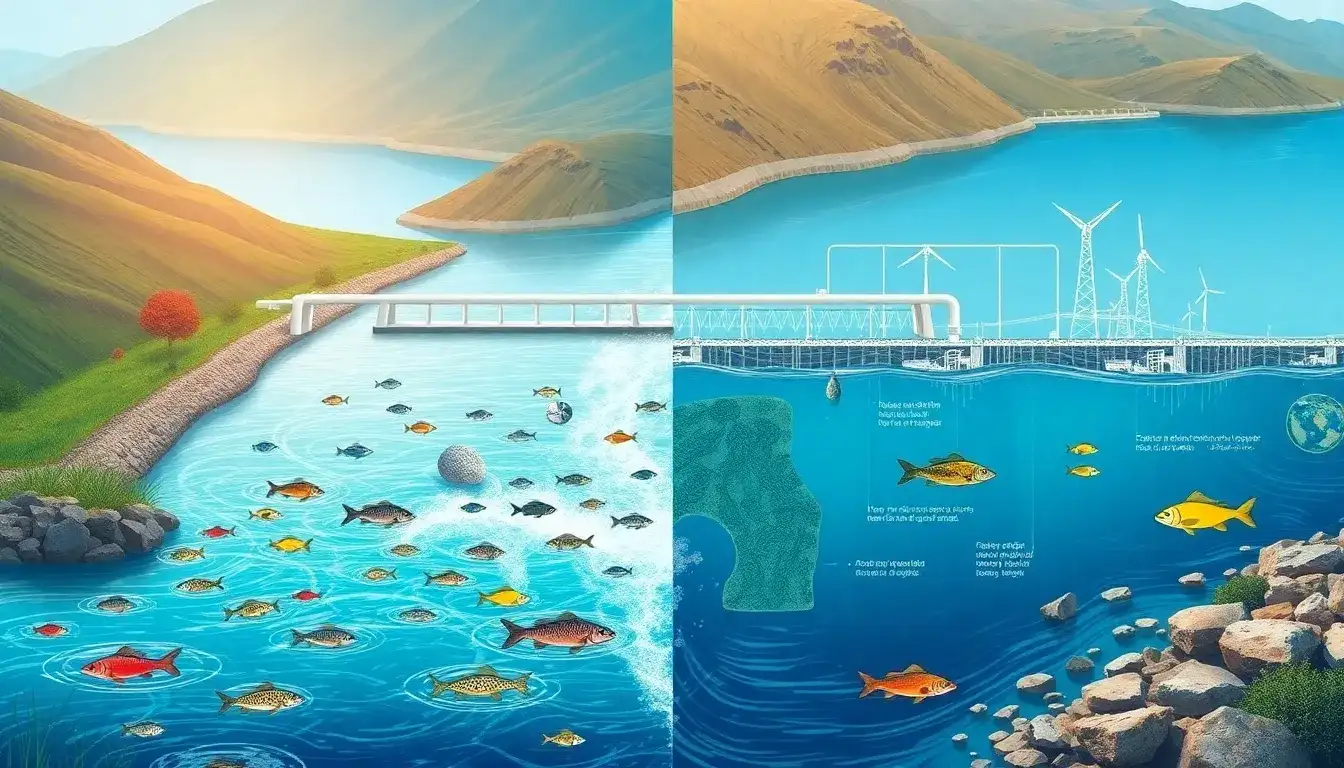
Aquatic resource impacts play a critical role in the environmental assessment of pumped hydro storage (PHS) projects because these impacts influence ecosystem health, biodiversity, and water resource quality. The way these impacts are considered varies notably between the two main types of pumped hydro facilities: open-loop and closed-loop systems.
Aquatic Resource Impacts in Pumped Hydro Projects
Open-Loop vs. Closed-Loop Systems
- Open-loop PHS systems are continuously connected to naturally flowing water bodies, such as rivers or lakes. This connection exposes aquatic ecosystems to ongoing alterations in water flow, temperature, and quality due to the pumping and release of water between reservoirs. These effects include habitat inundation, disruption of fish migration routes, and alterations to aquatic species community structures.
- Closed-loop PHS projects are not continuously connected to natural water bodies. Instead, they typically involve off-stream reservoirs filled initially from surface water sources and then operate in a contained cycle. This design results in more localized and generally lower aquatic impacts because the interaction with natural ecosystems is more limited and usually only occurs during the initial filling or occasional water replenishment.
Key Aquatic Impacts to Consider
- Habitat Inundation and Alteration: The creation of reservoirs for pumped storage floods land and aquatic habitats, causing loss of terrestrial and aquatic species habitats and altering local ecosystems.
- Water Level and Flow Fluctuations: The operation of PHS changes water levels and flow regimes, which can disturb aquatic communities, from plankton to fish and other wildlife, potentially affecting their abundance and distribution.
- Fish Passage and Migration Disruptions: Open-loop systems often act as barriers that impede fish migration and spawning movements, fragmenting populations and threatening species survival. Mitigation measures such as fish ladders, bypass channels, or specialized flow management strategies are critical components of environmental assessments to minimize these impacts.
- Water Quality Changes: Variations in temperature, dissolved oxygen, and nutrient levels caused by water pumping can affect aquatic organisms and ecosystem functions.
- Invasive Species Risk: Reservoirs created by pumped hydro can provide habitats for invasive species, which may alter ecosystem dynamics and compete with native species. Monitoring and management plans are essential to control such risks.
- Initial Water Withdrawal: In closed-loop systems, the main aquatic impact often arises during the initial filling of reservoirs, which can affect water availability and quality in source water bodies.
Implications for Environmental Assessment
Environmental assessments must comprehensively evaluate these aquatic impacts to ensure sustainable project design and operation. This includes:
- Conducting detailed ecological studies on local aquatic ecosystems to understand baseline conditions and predict project effects across trophic levels, including plankton, invertebrates, fish, and aquatic mammals.
- Modeling changes in hydrology and water quality to assess how project operation might alter aquatic habitats and species.
- Assessing and planning for fish passage solutions and operational flow regimes that support native species’ reproduction and migration.
- Developing mitigation measures to minimize habitat loss, manage invasive species, and maintain water quality.
- Considering project siting options that reduce connectivity with natural water bodies (favoring closed-loop designs) when feasible to reduce long-term aquatic impacts.
In summary, aquatic resource impacts strongly influence the environmental assessment of pumped hydro projects by shaping the evaluation of ecological risks, mitigation strategies, and sustainable project design. Closed-loop pumped storage projects generally present fewer and more localized aquatic impacts compared to open-loop systems, making their environmental assessments potentially less complex but still essential in addressing initial water sourcing and ecosystem health concerns.
Original article by NenPower, If reposted, please credit the source: https://nenpower.com/blog/how-do-aquatic-resource-impacts-influence-the-environmental-assessment-of-pumped-hydro-projects/

