

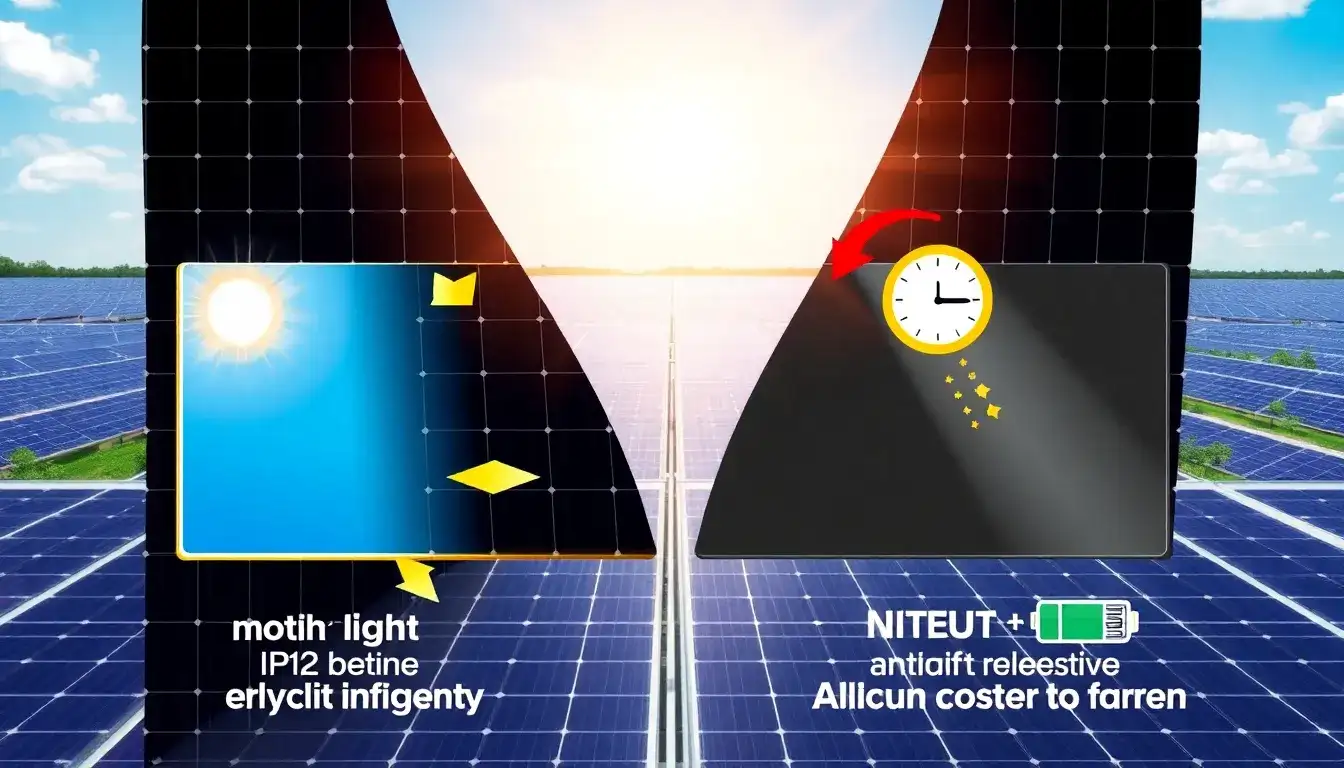
Anti-reflective coatings (ARCs) positively impact the lifespan of solar panels primarily by enhancing efficiency and providing protective benefits that reduce degradation over time.
How AR Coatings Affect Solar Panel Lifespan
1. Increased Efficiency and Reduced Degradation
- ARCs reduce surface reflection from about 30% in uncoated panels to less than 1%, allowing more sunlight to enter the solar cells and be converted to electricity. This increase in light absorption typically enhances panel efficiency by 3-5% or more.
- By enabling panels to generate more power under the same sunlight exposure, ARCs reduce the electrical stress on each solar cell, potentially slowing efficiency loss and degradation associated with cell aging.
- Higher light absorption means less heat buildup caused by reflected sunlight, which can also reduce thermal degradation of the panel materials, extending operational life.
2. Protection from Environmental Damage
- Many ARCs include hydrophobic and self-cleaning properties that reduce dust and dirt accumulation on panel surfaces. This minimizes efficiency loss due to surface soiling and protects against abrasive environmental factors, particularly in dusty or harsh climates.
- AR coatings provide a durable protective layer that withstands UV radiation, temperature fluctuations, humidity, and pollutants, which are common causes of material degradation in solar panels. Well-designed ARCs maintain their optical properties and adhesion throughout the typical 25-30 year lifespan of solar panels.
3. Durability and Long-Term Performance
- Research involving accelerated weathering and outdoor testing shows that modern AR coatings, such as sol-gel applied glass coatings or multilayer nanostructured films, retain their performance effectively over time, with only minor degradation in optical transmittance over years of exposure.
- Quality ARCs are formulated with materials like silicon nitride, titanium dioxide, magnesium fluoride, or silicon dioxide, which offer excellent durability under environmental stress.
Summary Table of Impact
| Aspect | Effect of Anti-Reflective Coatings |
|---|---|
| Efficiency | +3-5% light absorption, reduces cell stress |
| Degradation Rate | Slows due to less thermal and electrical stress |
| Surface Soiling | Reduced dust/dirt adhesion via hydrophobic/self-cleaning properties |
| Durability | Maintains optical properties and adhesion 25-30 years |
| Environmental Protection | Shields against UV, humidity, temperature extremes |
| Economic Benefit | Faster ROI due to efficiency gain and maintenance reduction |
Conclusion
Anti-reflective coatings extend the effective lifespan of solar panels by boosting their efficiency, reducing physical and environmental degradation, and protecting the delicate solar cells beneath the glass. These coatings are engineered to last as long as the panels themselves—typically 25 to 30 years—thereby supporting sustained power generation and better long-term returns on solar investments.
Original article by NenPower, If reposted, please credit the source: https://nenpower.com/blog/how-do-anti-reflective-coatings-impact-the-lifespan-of-solar-panels/

