

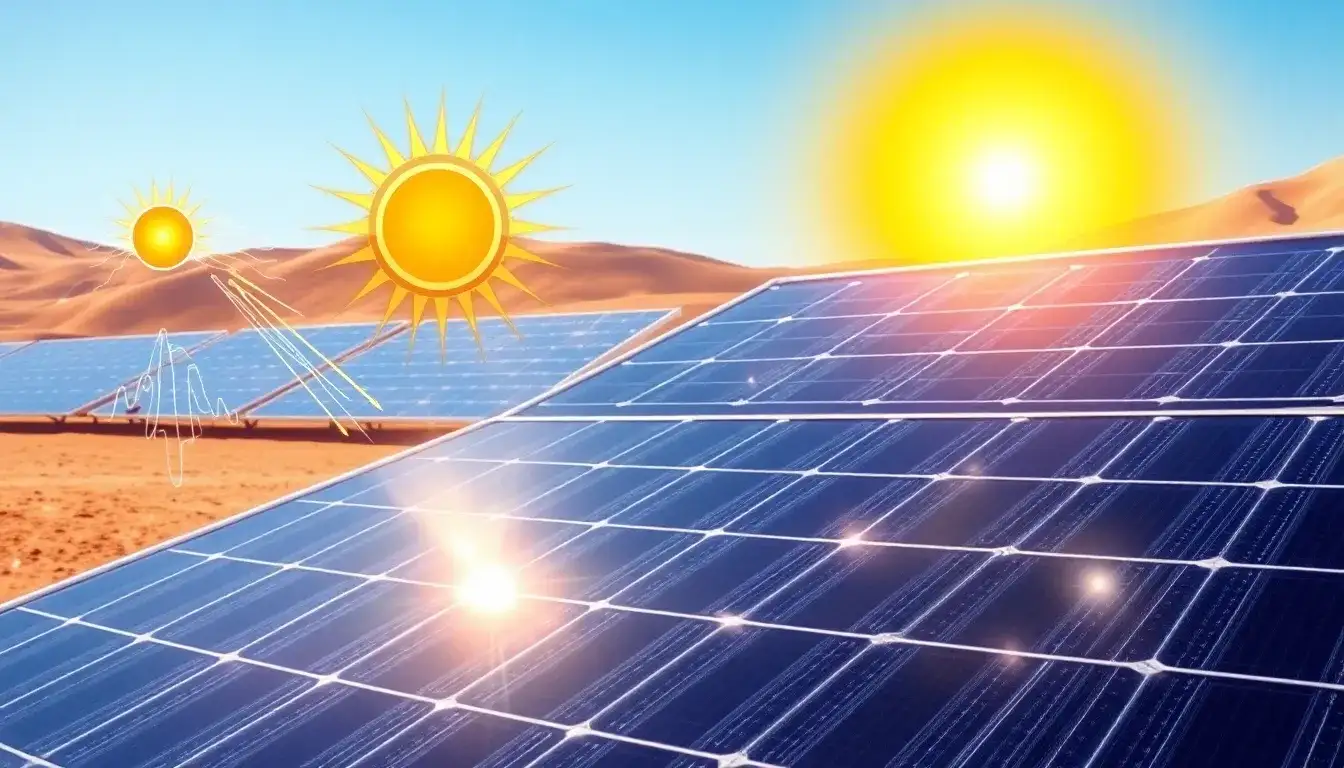
Anti-reflective coatings (AR coatings) positively impact the energy output of solar panels in high-temperature regions by significantly increasing the amount of sunlight transmitted through the panel glass to the solar cells, thereby enhancing overall efficiency and power generation.
How AR Coatings Improve Solar Panel Performance
- Reduction of Reflection: Bare silicon solar cells naturally reflect over 30% of incident sunlight. AR coatings reduce this reflection by using thin dielectric layers (commonly silicon nitride or titanium oxide) with specific thicknesses designed to cause destructive interference of reflected light waves, minimizing surface reflection and increasing light absorption by the cells.
- Increased Light Transmittance: When applied to the glass cover of solar panels, AR coatings improve the transmittance of sunlight through the glass, allowing more photons to reach the photovoltaic cells. This results in a measurable increase in electrical output and efficiency of the photovoltaic (PV) module.
- Enhanced Efficiency in Various Conditions: Besides boosting performance under direct sunlight, AR coatings can also improve energy capture in low-light or diffuse-light conditions, which benefits panels deployed in environments with variable sunlight.
Specific Benefits in High-Temperature and Harsh Climates
- Real-World Study in Desert Climate: Research conducted at a high solar irradiance, high-temperature desert location in Morocco showed that solar modules with AR coatings produced about 5.5% more electricity annually compared to identical uncoated modules. This translates into increased energy yields despite the harsh climate conditions, which often include dust, high temperatures, and aerosols.
- Durability and Reduced Soiling: The same study confirmed AR coatings maintained their optical properties well over time, losing only about 2.6% efficiency in simulated 29 years of cleaning abrasion. Additionally, AR coatings mitigated soiling losses by 3.7%, meaning less dust buildup and better performance in dusty, dry, and hot environments typical of deserts and similar regions.
- Cost and Water Savings: Because AR coatings enable more effective cleaning methods such as dry cleaning, they reduce water use and cleaning costs, which is critical in arid, high-temperature areas where water is scarce.
Quantitative Impact on Energy Output and Costs
- The overall increase in power conversion efficiency due to AR coatings on solar modules is often in the range of 0.3% to 0.6% in typical commercial systems, but field studies in severe climates have observed larger gains in annual energy production (around 5.5%) due to improved light absorption and soiling resistance.
- This efficiency improvement also reduces the levelized cost of electricity (LCOE) by approximately 2.7%, making solar power plants more economically viable in hot and dry regions.
Summary Table
| Impact Aspect | Effect in High-Temperature Regions |
|---|---|
| Reflection reduction | Significantly lowers surface reflection (>30% baseline) |
| Light transmittance increase | More sunlight reaches cells, boosting output |
| Annual energy yield | ~5.5% increase in electricity generation |
| Soiling resistance | 3.7% reduction in soiling losses |
| Coating durability | Minimal degradation over decades of use |
| LCOE reduction | Around 2.7% decrease in electricity cost |
| Cleaning cost and water usage | Lower due to suitability for dry cleaning methods |
In conclusion, anti-reflective coatings enhance solar panel energy output in high-temperature regions by increasing light absorption and reducing losses from reflection and soiling. Their durability under harsh conditions and additional cost savings from reduced cleaning needs make them highly beneficial for solar installations in such climates.
Original article by NenPower, If reposted, please credit the source: https://nenpower.com/blog/how-do-anti-reflective-coatings-impact-the-energy-output-of-solar-panels-in-high-temperature-regions/

