

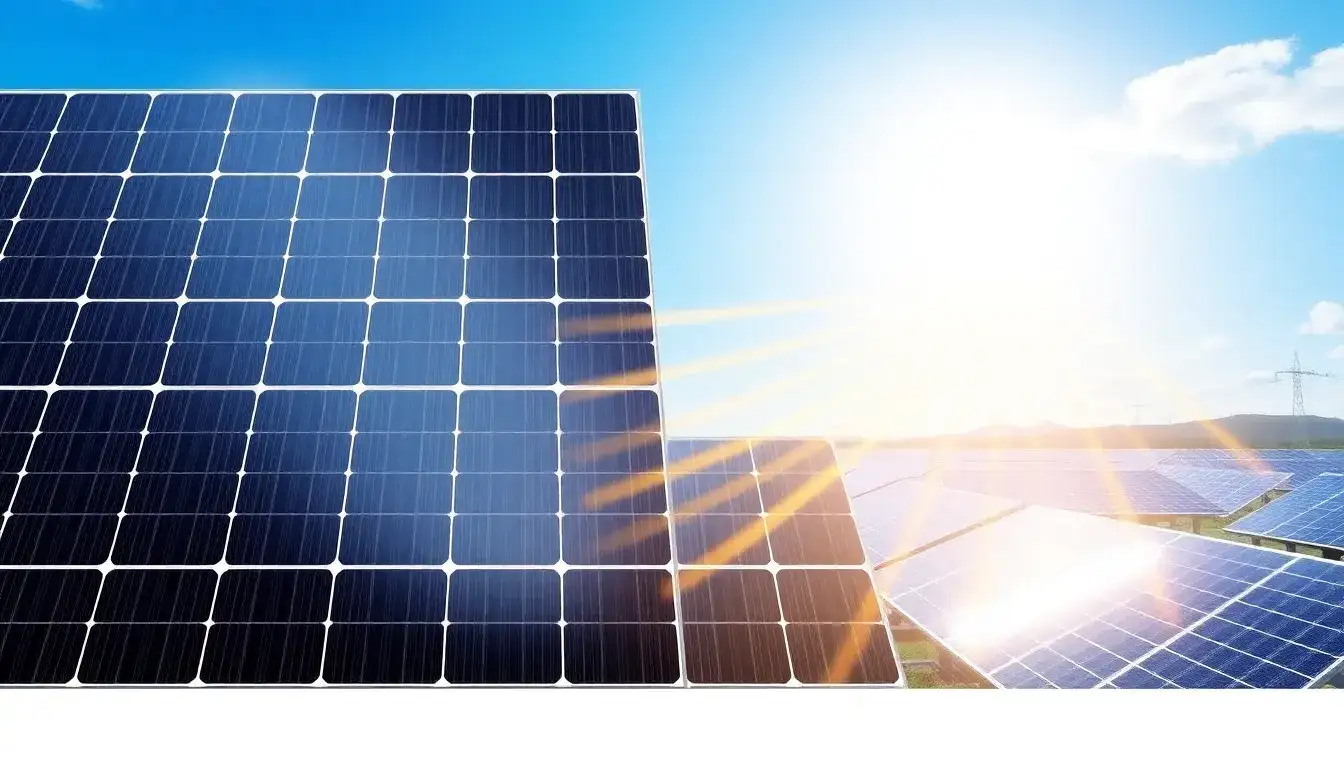
Anti-reflective coatings significantly enhance the efficiency of solar panels by reducing the reflection of sunlight from the panel surface and increasing the amount of light absorbed by the photovoltaic cells.
How Anti-Reflective Coatings Improve Solar Panel Efficiency
- Reducing Light Reflection: Without coatings, a substantial portion of sunlight—over 30% in the case of bare silicon solar cells—is reflected away from the panel surface. Anti-reflective coatings, typically made from materials like silicon nitride, titanium dioxide, or silica, create a thin layer that minimizes this reflection, allowing more light to penetrate into the solar cells for conversion into electricity.
- Increasing Light Absorption: By decreasing reflection, these coatings increase the effective light transmittance through the glass surface of the panel, thereby boosting the total solar energy absorbed by the cells. Some coatings are engineered with varying refractive indices to trap more light effectively, further improving absorption.
- Reducing Soiling Effects: Anti-reflective coatings often have hydrophobic properties that help repel dust, dirt, and water. This reduces the accumulation of contaminants that would otherwise scatter or absorb sunlight before it reaches the cells, maintaining higher efficiency over time and reducing cleaning frequency and costs.
- Improving Performance in Harsh Environments: Studies in harsh climates, such as desert areas, show that anti-reflective coatings not only maintain their optical performance over long periods (with minimal degradation after simulated years of cleaning and abrasion) but also reduce losses from soiling by about 3.7% compared to non-coated panels.
- Enhancing Low-Light Performance: By improving light transmission even under diffuse or low solar irradiance conditions, such as cloudy days or low sun angles, anti-reflective coatings help maintain solar panel efficiency throughout variable weather conditions.
Quantified Efficiency Improvements and Economic Impact
- Field tests comparing panels with and without anti-reflective coatings have demonstrated efficiency boosts leading to around a 5.5% increase in annual electricity generation for large-scale solar plants.
- Another study found average efficiency gains of about 10.6%, with potential increases up to 20-30%, depending on the specific coating and conditions.
- Economically, these improvements correspond to a reduction in the levelized cost of energy (LCOE) by approximately 2.7%, making solar power more competitive and cost-effective.
- Durability tests suggest that such coatings can withstand long-term outdoor exposure and cleaning processes, supporting their practical use in commercial solar installations.
Summary Table: Impact of Anti-Reflective Coatings on Solar Panels
| Benefit | Details | Impact on Efficiency/Costs |
|---|---|---|
| Reduced reflection | Coatings lower reflected sunlight from >30% to much less | More light absorbed, +5-10%+ output |
| Increased light absorption | Enhanced by materials with varying refractive indices | Higher energy conversion efficiency |
| Reduced soiling and dust | Hydrophobic, repels dirt and water | Maintains efficiency, lowers cleaning costs |
| Durability and longevity | Minimal degradation after simulated years of abrasion | Sustained performance, lower maintenance |
| Enhanced low-light performance | Better light capture during cloudy or low sun | More consistent energy production |
| Economic benefit | LCOE lowered by about 2.7% in large-scale PV plants | Cost savings, improved ROI |
In conclusion, anti-reflective coatings play a critical role in improving solar panel efficiency by maximizing light absorption, minimizing losses from reflection and soiling, and enhancing durability under real-world conditions. These factors collectively lead to higher energy yields and reduce the overall cost of solar electricity generation.
Original article by NenPower, If reposted, please credit the source: https://nenpower.com/blog/how-do-anti-reflective-coatings-impact-the-efficiency-of-solar-panels/

