

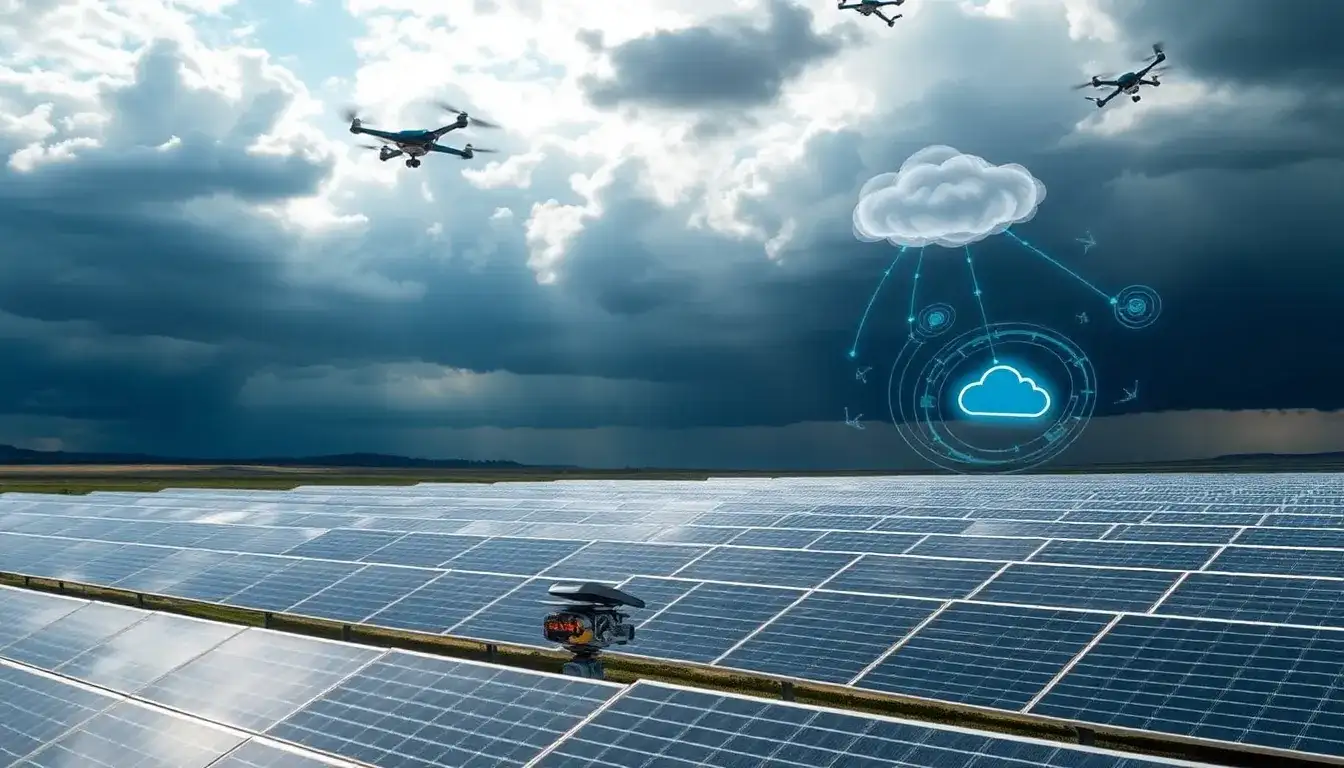
AI-enabled sensors play a crucial role in predicting hailstorms for solar trackers by integrating multiple data sources and leveraging advanced machine learning algorithms. Here’s how this process typically works:
AI-Powered Prediction of Hailstorms
Data Collection
- Weather Satellites: Provide information on cloud formations, storm tracks, and other atmospheric conditions that may indicate hailstorms.
- Ground Stations: Offer data on temperature, humidity, wind speed, and other environmental factors that can influence storm development.
- IoT Sensors: Capture localized weather conditions, such as wind direction and speed near solar panels, which can help assess potential storm impacts.
Machine Learning Models
- Convolutional Neural Networks (CNNs): Originally developed for image recognition, these models are repurposed to analyze atmospheric data and identify patterns indicative of hailstorms. For instance, they can recognize cloud structures and weather conditions associated with severe storms.
- Deep Learning Techniques: These models learn from historical storm data to predict future occurrences based on patterns identified in satellite imagery and sensor data.
Prediction Process
- Model Training: AI models are trained on historical weather data, including instances of hailstorms. This training helps the models learn to recognize conditions that precede hailstorms, such as specific cloud formations or temperature and humidity changes.
- Real-Time Data Integration: The models continuously integrate real-time data from satellites, ground stations, and IoT sensors to update their forecasts and alert systems.
- Alert Generation: Once the model detects conditions indicative of a potential hailstorm, it generates alerts that allow solar tracker operators to secure equipment or adjust operations to minimize damage.
Benefits for Solar Trackers
- Preventive Measures: AI-driven predictions enable operators to take proactive measures, such as securing vulnerable parts of the solar system or temporarily adjusting tracking angles to reduce exposure to hail impacts.
- Efficiency and Safety: By accurately predicting hailstorms, AI helps ensure the longevity and efficiency of solar systems while maintaining safety standards for personnel and equipment.
Overall, AI-enabled sensors enhance hailstorm prediction for solar trackers by providing timely and accurate forecasts, which are crucial for protecting these systems from severe weather events.
Original article by NenPower, If reposted, please credit the source: https://nenpower.com/blog/how-do-ai-enabled-sensors-specifically-predict-hailstorms-for-solar-trackers/

