

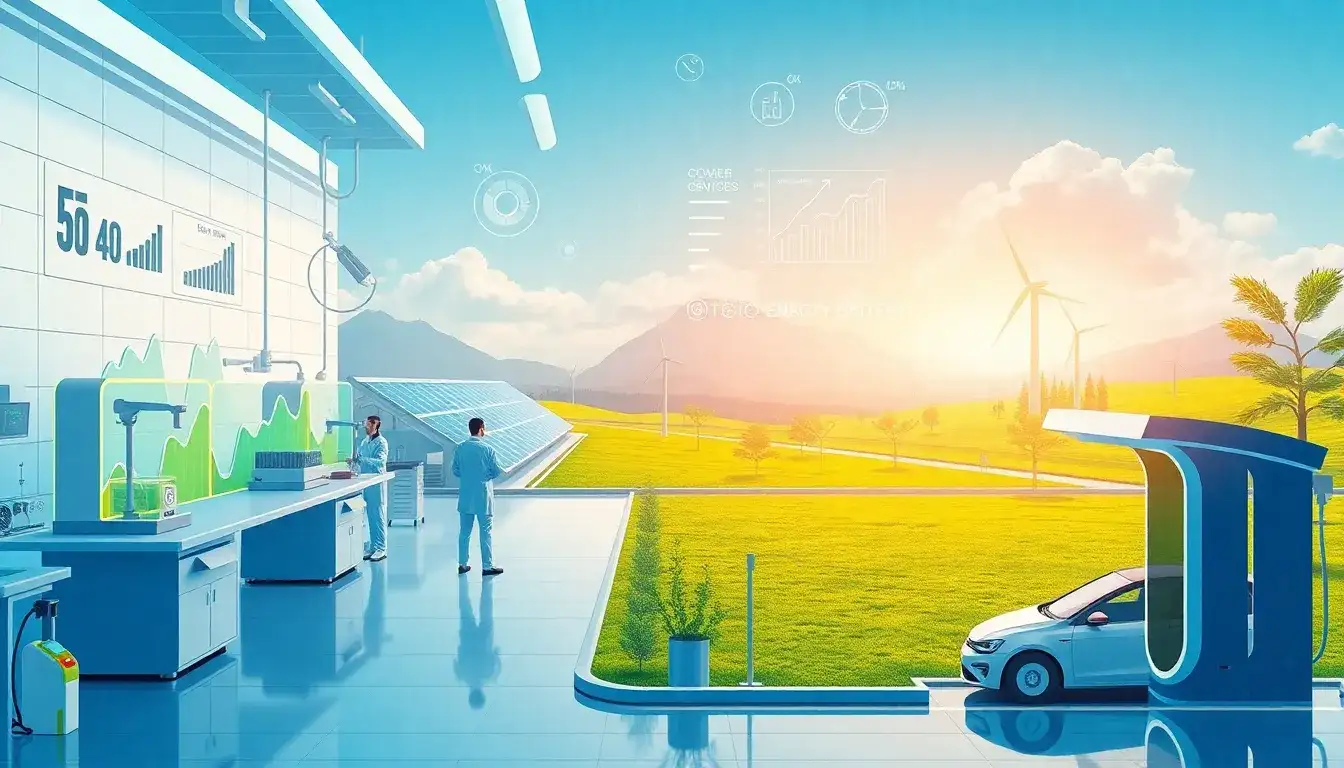
Advancements in manufacturing technologies have significantly impacted the cost of lithium-ion batteries, leading to reduced production costs and increased efficiency. Here are some key ways in which these advancements affect lithium-ion battery costs:
Impact of Technological Advancements on Lithium-Ion Battery Costs
1. Improvements in Manufacturing Processes
- Economies of Scale: Large-scale manufacturing facilities and improved production processes have helped drive down costs. Economies of scale enable companies to reduce overheads and optimize resource usage, leading to more cost-effective production.
- Advanced Techniques: Techniques like laser material processing have improved efficiency and reduced environmental impact, further lowering costs. Laser technology provides precision and speed, reducing material waste and improving overall production efficiency.
2. Innovation in Materials and Design
- Alternative Materials: Research into alternative materials such as silicon-based anodes and lithium-iron-phosphate (LFP) cathodes can reduce reliance on scarce resources like cobalt and nickel, potentially lowering costs. These materials are also more abundant, which can mitigate supply chain risks.
- Solid-State Batteries: Transitioning from liquid to solid electrolytes promises safer and more efficient batteries but currently carries higher production costs. However, long-term benefits include improved safety and potentially higher energy density.
3. Efficient Production Steps
- Mixing and Coating Techniques: Innovations in slurry mixing, such as ball milling and ultrasonic mixing, improve particle distribution and reduce drying time, saving material costs and energy.
- Increased Throughput: Optimizing production steps like calendering and formation reduces energy consumption and increases throughput, contributing to lower costs.
4. Scalability and Market Growth
- Mass Production Challenges: Scaling up production while maintaining quality is a challenge. As demand increases, companies must invest in large-scale manufacturing facilities and skilled labor, which can be costly but is essential for meeting market needs.
- Market Dynamics: Growing demand for lithium-ion batteries in electric vehicles and renewable energy systems drives investment in manufacturing technologies, which can help reduce costs as more players enter the market.
Overall, advancements in manufacturing technologies have contributed significantly to reducing the cost of lithium-ion batteries, making them more accessible for various applications.
Original article by NenPower, If reposted, please credit the source: https://nenpower.com/blog/how-do-advancements-in-manufacturing-technologies-impact-lithium-ion-battery-costs/

