

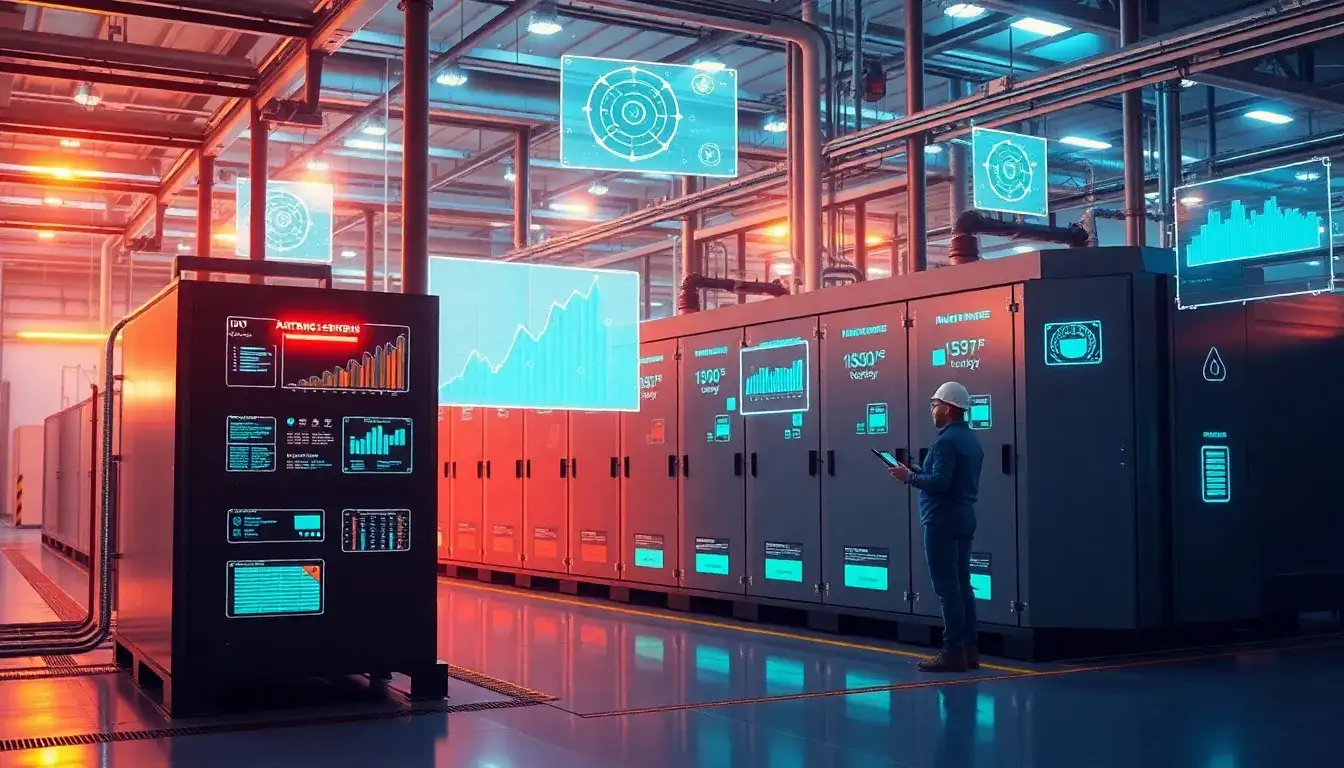
1. Continuous Condition Monitoring
Advanced sensors track critical parameters like temperature, voltage levels, current flow, and battery charge cycles. IoT devices transmit this data continuously, creating a comprehensive operational profile for energy storage assets. This granular monitoring allows early detection of anomalies, such as overheating or voltage irregularities, before they escalate into failures.
2. Data Integration & Machine Learning
IoT networks aggregate sensor data into centralized platforms, where machine learning algorithms analyze patterns to predict failures. For example, deviations in charge cycles or storage conditions can signal degradation, triggering preemptive maintenance alerts. This integration transforms raw data into actionable insights, optimizing maintenance schedules.
3. Cost & Safety Benefits
By identifying issues early, operators avoid emergency repairs and schedule maintenance during off-peak periods, reducing downtime and costs. Sensors also enhance safety by preventing hazardous scenarios like thermal runaway in batteries. Case studies show predictive systems can reduce workplace injuries by up to 27% in energy sectors.
Future Innovations
Emerging trends include autonomous maintenance systems that auto-prioritize repairs and digital twins for scenario testing. Augmented reality (AR) tools further aid technicians with real-time guidance during maintenance tasks.
Original article by NenPower, If reposted, please credit the source: https://nenpower.com/blog/how-do-advanced-sensors-and-iot-devices-contribute-to-predictive-maintenance-in-energy-storage/

