

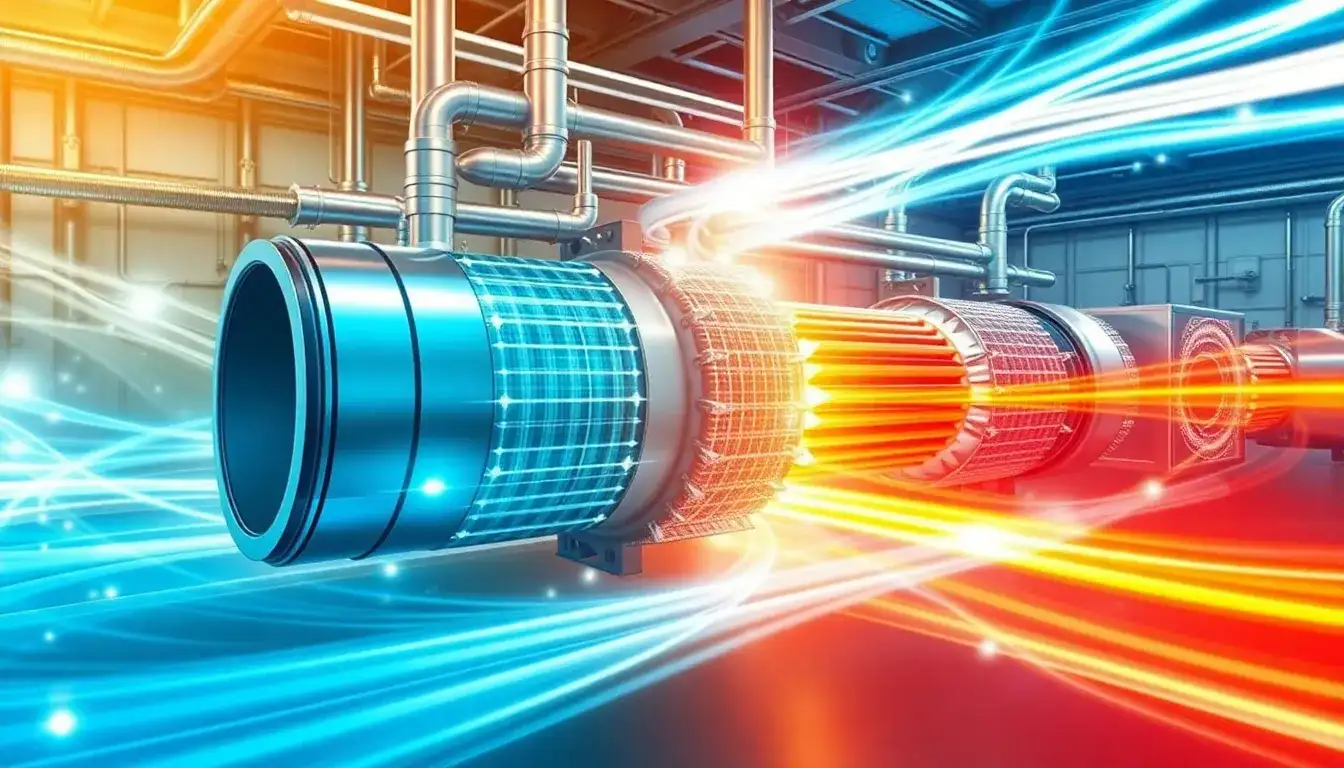
Improving CAES Efficiency with Advanced Heat Exchanger Technologies
Advanced heat exchanger technologies play a critical role in enhancing the efficiency of Compressed Air Energy Storage (CAES) systems, particularly by optimizing thermal energy management. CAES involves compressing air, storing it in an underground reservoir, and expanding it to generate electricity during periods of high demand. The efficiency of CAES systems is significantly impacted by how efficiently they can manage thermal energy produced during the compression and expansion phases.
Key Heat Exchanger Technologies and Their Contributions:
- Thermal Energy Storage (TES) and Heat Exchangers:
- Direct-Contact and Indirect-Contact Heat Exchangers: Direct-Contact Heat Exchangers (DCHEs) allow for efficient heat transfer by bringing the air directly into contact with a thermal energy storage medium, improving cycle efficiency compared to Indirect-Contact Heat Exchangers (ICHEs). DCHEs, such as packed bed heat exchangers, are particularly effective in adiabatic CAES (ACAES) systems, enhancing the utilization of thermal energy during the compression and expansion phases.
- Efficient Thermal Energy Management:
- Advanced Materials and Designs: The selection of appropriate materials and designs for heat exchangers can mitigate losses by minimizing thermal resistance and maximizing heat transfer coefficients. Advanced materials like phase-change materials or high-temperature ceramics in thermal energy storage can improve the efficiency of storing and releasing heat during the cycle.
- Integration with Renewable Energy:
Adiabatic CAES systems can utilize renewable energy sources effectively by storing thermal energy produced during compression, which is then used during expansion. This eliminates the need for fossil fuels, improving both efficiency and environmental sustainability. - Optimization of Operating Conditions:
Advanced heat exchanger technologies enable better control over system temperatures, pressures, and flow rates. Optimizing these parameters can improve the efficiency of heat transfer and energy storage, contributing to higher round-trip efficiencies.
Advantages of Advanced Heat Exchanger Technologies in CAES:
- Increased Efficiency: By integrating and optimizing thermal energy management, advanced heat exchanger technologies can significantly boost the round-trip efficiency of CAES systems.
- Sustainability: These technologies facilitate the use of renewable energy sources without relying on fossil fuels, enhancing the sustainability of CAES operations.
- Cost Reduction: Efficient thermal management can reduce operational costs by minimizing energy losses and maximizing the use of stored energy.
Challenges and Future Developments:
- Scalability: While small-scale models show promising results, scaling up these technologies while maintaining efficiency remains a challenge.
- Material Innovations: Developing more efficient and durable materials for thermal energy storage and heat exchangers is crucial for future advancements in CAES efficiency.
In summary, advanced heat exchanger technologies play a pivotal role in enhancing CAES efficiency by effectively managing thermal energy and integrating with renewable energy sources. Further innovations in materials and system design will be essential for optimizing CAES performance.
Original article by NenPower, If reposted, please credit the source: https://nenpower.com/blog/how-do-advanced-heat-exchanger-technologies-improve-caes-efficiency/

