

How a Century-Old Automotive Company Adapts to the Wave of New Energy and Intelligent Technology
During the 2025 Shanghai Auto Show, BMW Group showcased over 30 new models across its three major brands, along with several groundbreaking technologies. The global automotive industry is currently navigating a complex transition towards smart and electric vehicles. How can traditional automakers maintain their advantages while exploring new opportunities in this evolving landscape?
Driving First, Human-Centric Approach
BMW Group Chairman, Oliver Zipse, emphasized that the company’s innovative achievements represent a “new generation.” This term encompasses more than just individual models; it signifies a comprehensive leap in areas such as artificial intelligence, driving dynamics, powertrain systems, battery technology, and operational philosophies. The new generation aims to elevate the pure joy of driving to unprecedented heights.
New generation models are equipped with three core technologies: the BMW Driving Control Super Brain, the panoramic iDrive system, and a revolutionary large cylindrical battery. The Driving Control Super Brain, developed in-house by BMW, integrates the powertrain with driving dynamics control. Its response time exceeds 1 millisecond, which is approximately five times faster than current mainstream control systems. This means that as soon as the driver lightly presses the accelerator, the system has already executed complex decisions regarding torque distribution and suspension adjustments.
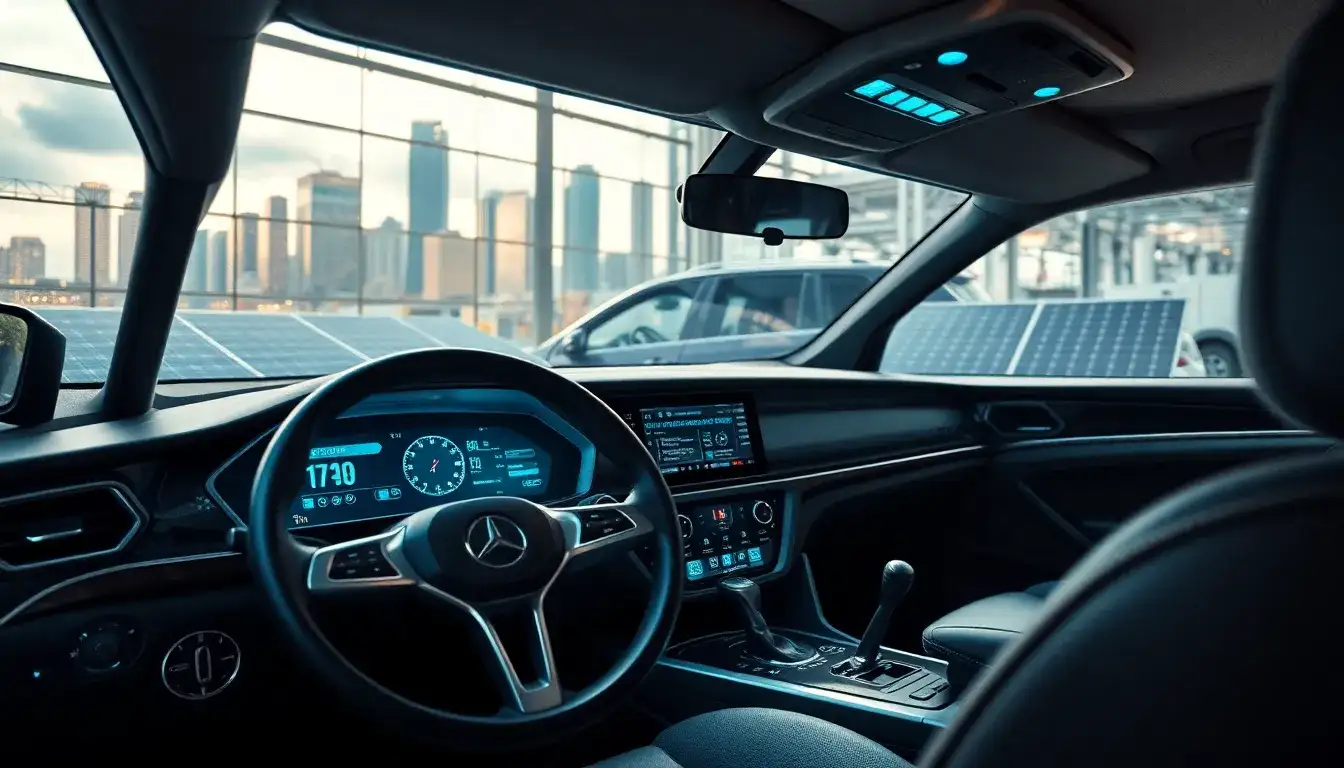
At the Shanghai Auto Show, BMW’s “cinema” version of the new generation super-sensory intelligent cockpit attracted significant attention from visitors. Instead of a traditional cockpit cluttered with buttons, it features a “visual cone” system made up of four major interactive interfaces: a panoramic display, a 3D head-up display, a super-sensory control steering wheel, and a centralized control interface. This design allows drivers to access critical information without taking their eyes off the road.
Technology is not meant to distract; rather, it should enhance driving instincts. In 2004, BMW became the first automotive brand to widely implement head-up display technology. By 2025, the new generation models will feature an upgraded 3D head-up display that utilizes industry-leading slanted projection technology, making navigation arrows appear to “stick” to the road, while speed limit signs seem to float in front of the vehicle. This innovation allows drivers to receive essential driving or navigation information without shifting their gaze, making driving safer and less distracting.
The panoramic iDrive system aims to provide “just the right amount of intelligence” for drivers. Based on over 2,500 hours of research into Chinese user behavior, BMW’s development team identified five high-frequency usage scenarios and localized the in-car navigation and voice interaction systems. The new generation operating system X also integrates popular local apps such as WeChat and Douyin, making BMW vehicles more attuned to the needs of users, allowing intelligent features to truly resonate with everyday life.
BMW’s commitment to a “driving-first” philosophy fundamentally revolves around the principle of being human-centric, ensuring that regardless of technological advancements, the focus remains on the driver.
From “Transportation Tool” to “Smart Ecosystem”
In the latest wave of automotive industry transformation, BMW has been proactive in applying electrification and intelligent technology across a range of products, particularly with the new generation models, which hold great promise.
“Through our strategy of technological openness, we offer our customers the latest innovations across all brands and powertrains—allowing them to freely choose the products that best suit their needs. This strategy has proven successful on a global scale,” said Zipse. He believes that innovation is not merely about individual technological advancements but rather about integrating all technologies to comprehensively meet customer demands. “We are not just pursuing flashy technologies; we aim to provide solutions that customers can use confidently and effectively.”
While rapidly advancing innovation, BMW maintains a steadfast commitment to “safety first,” ensuring that every new technology offers reliable and safe travel assurances. The company has invested heavily in a driving simulation center and a future mobility development center to rigorously test and validate these technologies during the development process. Zipse noted, “Consumers are increasingly focused on the ‘traditional values’ of cars, such as safety, product quality, system integration capabilities, and brand building. These are precisely BMW’s strengths.”
As technology evolves at a rapid pace, the application of AI in automotive products is becoming a new trend in the industry. AI not only changes manufacturing processes but also redefines user experiences, pushing the automotive sector from being merely a “transportation tool” towards becoming a “smart ecosystem.”
At the Shanghai Auto Show, BMW also unveiled two custom AI assistants tailored specifically for the Chinese market: “Car Expert” and “Travel Companion,” developed in close collaboration with Alibaba. These AI systems, based on Alibaba’s extensive large language model, will be integrated into the domestically produced new generation BMW models by 2026. The “Car Expert” can analyze weather and traffic conditions in real-time to suggest optimal driving modes, while the “Travel Companion” can plan complete itineraries based on complex user requests, such as avoiding highways and passing by popular restaurants, functioning like a personal concierge.
These AI assistants are not just technological gimmicks; their training data is derived from the driving behaviors of six million Chinese car owners, ensuring that each recommendation aligns with the genuine needs of local users. Technology is not merely cold code; it becomes a travel companion that can sense emotions and provide proactive care.
In China, For China
BMW has been deeply rooted in the Chinese market for over 30 years, currently employing around 28,000 people and collaborating closely with nearly 500 local suppliers while making substantial long-term investments. Since 2010, BMW has invested approximately 116 billion RMB in its Shenyang production base, which represents the largest investment by BMW outside Germany.
Zipse stated, “BMW consistently adheres to the principle of ‘in China, for China, and innovating at Chinese speed.’ We are partnering with local pioneering companies to rapidly implement breakthrough technologies.” He highlighted that BMW has established the largest and most comprehensive R&D network outside Germany, with four major research and innovation bases located in Beijing, Shanghai, Shenyang, and Nanjing, covering all aspects of automotive R&D and full-stack intelligent connected vehicle software development.
Zipse also noted that while BMW is a German company, its largest market is in China. “The strategic importance of the Chinese market in BMW’s global innovation landscape is increasingly evident, playing a crucial role in the leapfrog development of new generation technologies.” The BMW Shanghai design team is leading the development of new generation models specifically tailored for the Chinese market, blending local aesthetics with advanced functionality.
Furthermore, BMW is fostering collaborative progress within the industry chain, establishing a healthy “whole-zero relationship” and becoming a positive force for innovation. BMW works with approximately 460 local suppliers in China, among which companies like Yanfeng and CATL have emerged as industry leaders. This collaboration goes beyond commercial relationships; it forms an ecological alliance of technological advancement.
Currently, BMW’s partnerships with Chinese counterparts have entered a new phase, focusing on innovative smart mobility solutions that drive high-quality development in the Chinese automotive sector. “Artificial intelligence is one of the key areas for future collaboration,” Zipse remarked, “We are deepening our strategic cooperation with leading Chinese technology firms to integrate cloud interaction capabilities with personalized experiences powered by generative AI.”
As Zipse aptly stated, “To succeed in the global market, we must not only create products that have global appeal but also cultivate a deep understanding of each local market.” In China, BMW is making significant strides by leveraging innovative technologies from the new generation models, a robust R&D system in China, enhanced local collaborations, and a steadfast commitment to responsibility, accelerating its pace of innovation to write a new chapter in brand development and provide Chinese users with smarter, more convenient, and sustainable mobility solutions.
Original article by NenPower, If reposted, please credit the source: https://nenpower.com/blog/how-century-old-car-manufacturers-are-adapting-to-the-waves-of-new-energy-and-smart-technology/

