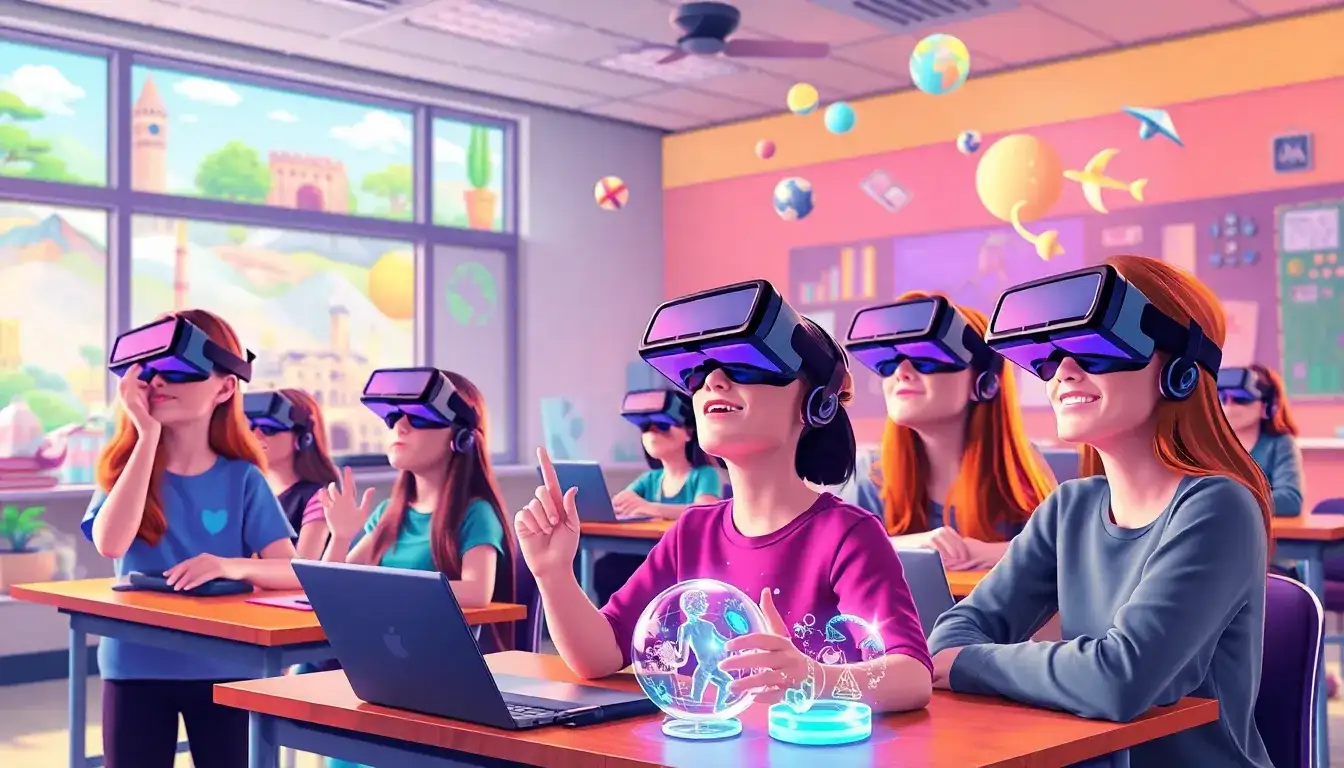
Virtual reality (VR) can significantly enhance educational campaigns by making them more engaging, immersive, and impactful through several key approaches:
Leveraging Empathy and Immersive Storytelling
- VR allows learners to “step into someone else’s shoes” by immersing them in real-life scenarios or stories that foster empathy and deeper emotional connections. For example, the UN SDG Action Campaign uses VR experiences that place young people within the realities of others worldwide, such as refugees or those affected by global crises. This immersion helps change perceptions and makes abstract issues more tangible and memorable, as users feel physically “present” in these narratives rather than just reading or hearing about them.
- Such emotional engagement means learners are more likely to retain information. A student noted that VR experiences helped her remember content better because it removed distractions and created a sense of actually being there.
Enhancing Social and Emotional Learning (SEL)
- VR supports social and emotional learning by allowing users to understand diverse perspectives in a visceral way. For example, VR simulations where users experience conditions such as colorblindness lead to increased empathy and pro-social behaviors compared to simply imagining those conditions.
- VR also fosters inclusivity and teamwork by creating shared virtual spaces where learners can collaborate on projects or problem-solving regardless of their physical location. This promotes communication, relationship-building, and collective learning experiences beyond what traditional classrooms offer.
Interactive and Collaborative Experiences
- VR can transform passive learning into active participation through virtual experiments, design challenges, or exploration activities that engage multiple senses and learning styles.
- Students can even co-create VR content, deepening their engagement and understanding by contributing directly to the educational materials and then experiencing their creations together.
Practical Implementation in Schools
- Technologies like ClassVR provide schools with comprehensive VR solutions designed to integrate VR into classrooms, making it easier for educators to adopt this technology and create immersive lessons.
- There is also a growing ecosystem of educational VR games that facilitate engagement and learning through gamified VR content, appealing especially to younger audiences by combining education with entertainment.
Summary
By applying VR in educational campaigns, educators and campaigners can:
- Promote empathy and deeper understanding through immersive storytelling and perspective-taking.
- Enhance social and emotional learning by supporting perspective-taking, collaboration, and inclusivity.
- Increase content retention by providing memorable, experiential learning.
- Facilitate active, collaborative, and creative learning environments remotely or in person.
- Utilize existing VR platforms and games tailored for education to easily implement VR-based campaigns.
This multifaceted use of VR makes educational campaigns more dynamic, memorable, and able to foster meaningful behavioral change and awareness among learners.
Original article by NenPower, If reposted, please credit the source: https://nenpower.com/blog/how-can-we-leverage-virtual-reality-to-make-educational-campaigns-more-engaging/