

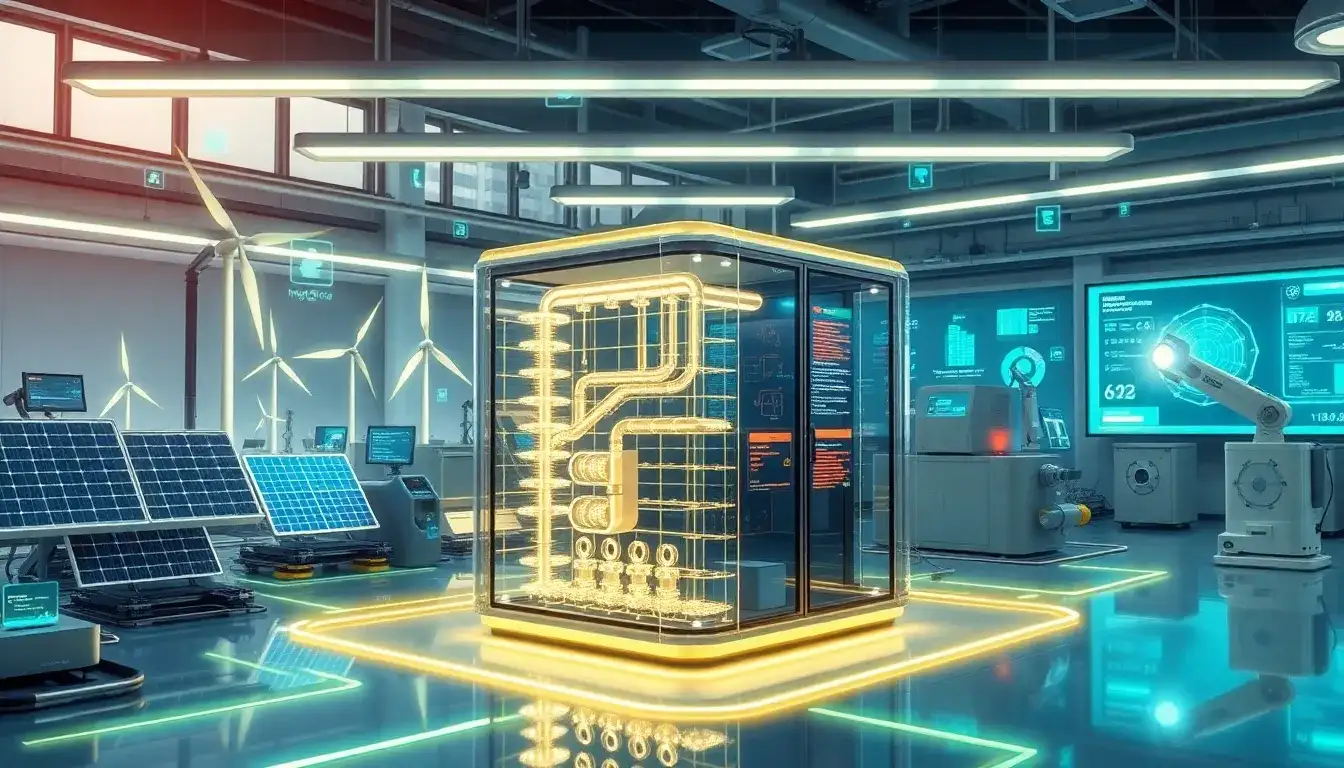
Improving the efficiency of battery storage for renewable energy involves advancements in technology, optimization of system management, and innovative applications to better capture, store, and deploy energy from intermittent sources like solar and wind. Key strategies and developments include:
1. Enhancing Battery Technologies
- Lithium-ion Batteries and Alternatives: Lithium-ion batteries, especially lithium iron phosphate (LFP) variants, currently dominate due to their balance of cost, safety, and performance. However, limitations like lithium scarcity and cost are driving research into alternatives such as sodium-ion batteries, which, while slightly lower in energy density and cycle life, offer lower costs and improved safety, potentially becoming more widespread as manufacturing scales up.
- Organic Element Cathodes: New designs incorporating organic materials for cathodes reduce reliance on scarce metals like cobalt and nickel. These developments promise lower production costs and reduced environmental impact while maintaining competitive performance, aiding sustainability and cost efficiency in battery storage.
- Flow Batteries and Mechanical Storage: Beyond chemical batteries, technologies like flow batteries (using liquid chemical components) and mechanical gravity or compressed air energy storage offer scalable, longer-duration storage alternatives that can complement or substitute traditional battery chemistries in large-scale applications.
2. Smart Battery Management and Integration
- Algorithm-Driven Control Systems: Advanced software and computerized control systems optimize when to charge batteries (storing excess renewable energy) and when to release it (during peak demand). This smart coordination stabilizes the grid, reduces energy waste, and minimizes reliance on fossil fuels during energy shortfalls.
- Grid Flexibility and Peak Shaving: Batteries improve grid efficiency by balancing supply-demand fluctuations inherent in renewable generation. By discharging stored energy during peak hours—when demand spikes and renewable supply often dips—batteries reduce strain on the grid and lower overall costs.
3. Scalability and Versatility
- Flexible Deployment: Battery storage systems can be tailored to different scales—from residential solar setups to large utility grids—allowing wide adoption and enabling consumers to use stored solar power during non-generating periods, which increases self-sufficiency and reduces fossil-fuel dependency.
- Mobile and Portable Solutions: Innovations such as portable battery docks for vehicles and mobile battery generators provide clean, versatile alternatives to fossil-fuel generators in various settings, enhancing the accessibility and practicality of battery storage.
4. Economic and Environmental Considerations
- Cost Reduction and Lifecycle Improvements: Lowering installation and maintenance costs while extending battery life cycles enhances the economic viability of storage solutions. Emerging chemistries and circular economy approaches (recycling and reusing battery components) contribute to cost savings and sustainability.
- Reducing Energy Waste: Efficient battery storage captures surplus renewable energy that would otherwise be curtailed or wasted, ensuring maximum utilization of clean energy and supporting the expansion of renewable capacity on the grid.
Summary Table
| Improvement Area | Approach/Technology | Benefits |
|---|---|---|
| Battery Chemistry | Lithium iron phosphate, sodium-ion, organic cathodes | Lower costs, improved safety, sustainability |
| Alternative Storage | Flow batteries, mechanical gravity, compressed air | Scalability, long-duration storage |
| Management Systems | Algorithmic control, smart grid integration | Grid stability, peak load management |
| Deployment Flexibility | Scalable systems (residential to utility-scale), mobile batteries | Widespread adoption, energy independence |
| Economic & Environmental | Cost reduction, recycling, lifecycle extension | Affordability, reduced environmental impact |
Improving battery storage efficiency for renewable energy thus requires a combination of advancing battery chemistries, integrating intelligent control systems, developing flexible and scalable solutions, and optimizing economic and environmental impacts. These innovations collectively enable renewable energy to be more reliable, cost-effective, and capable of supporting a decarbonized energy future.
Original article by NenPower, If reposted, please credit the source: https://nenpower.com/blog/how-can-we-improve-the-efficiency-of-battery-storage-for-renewable-energy/

