

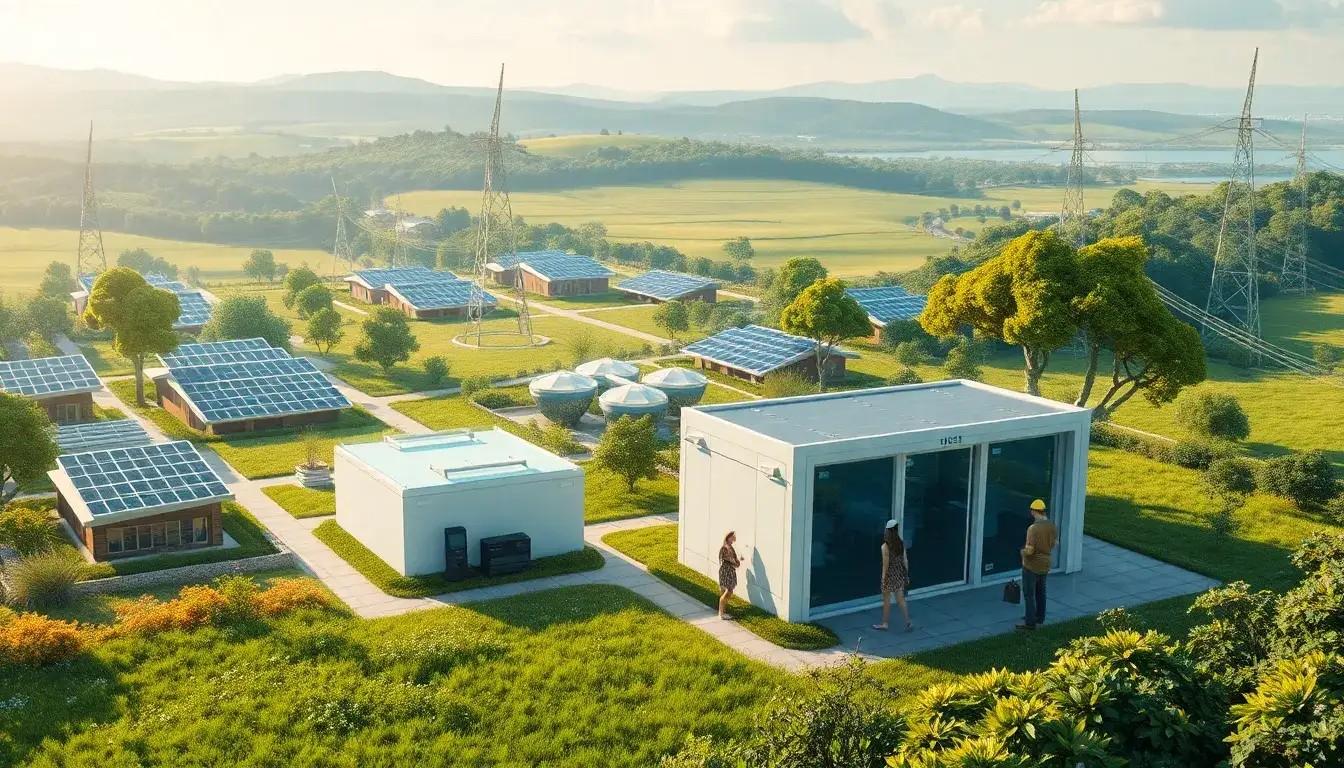
To enhance energy storage solutions for broader solar energy adoption, key improvements should focus on technological innovation, cost reduction, and system integration:
Advanced Battery Technologies
- Lithium-ion improvements: Increase energy density and cycle life while reducing reliance on rare materials (e.g., nickel, cobalt) through chemistries like lithium iron phosphate (LiFePO4).
- Emerging alternatives: Accelerate development of solid-state batteries, flow batteries (for grid-scale storage), and hydrogen fuel cells for long-duration storage.
- Recycling infrastructure: Build closed-loop recycling systems to recover lithium, cobalt, and other critical materials from spent batteries.
Cost and Accessibility
- Scale manufacturing: Expand production of LiFePO4 batteries, which are safer and cheaper than traditional NMC variants.
- Policy incentives: Expand programs like the 30% federal ITC and state-level storage rebates (e.g., California’s Self-Generation Incentive Program).
- Modular designs: Develop scalable storage systems like Fortress eVault Max (18.5 kWh) and Tesla Powerwall 3 (13.5 kWh) to cater to diverse needs.
Grid Integration and Performance
- Hybrid systems: Combine battery storage with solar thermal or wind to balance supply-demand mismatches, as seen in Kauai’s solar-plus-storage plants.
- Smart management: Use AI-driven tools like Aurora Solar’s self-consumption modeling to optimize battery sizing and load management.
- Grid services: Deploy storage for ancillary services (frequency regulation, peak shaving) to stabilize grids, as demonstrated by Australia’s Hornsdale Power Reserve.
Resilience and Longevity
- Cycle life enhancements: Improve architectures to exceed 10,000 cycles, such as Sonnen Eco’s LiFePO4 batteries.
- Weatherproofing: Design systems like Generac PWRcell to withstand extreme climates and provide backup during outages.
- Thermal management: Integrate advanced cooling systems to prevent degradation in high-temperature environments.
Comparative Table: Leading Storage Solutions
| Battery Model | Chemistry | Capacity | Cycle Life | Key Features |
|---|---|---|---|---|
| Tesla Powerwall 3 | LiFePO4 | 13.5 kWh | 4,000+ | Integrated inverter, storm resilience |
| Sonnen Eco 10 | LiFePO4 | 10 kWh | 10,000+ | High durability, virtual plant support |
| LG Chem RESU 10H | NMC | 9.6 kWh | 6,000+ | Compact design, multi-inverter compatibility |
By prioritizing these advancements, solar storage can better address intermittency, reduce costs, and support grid decarbonization.
Original article by NenPower, If reposted, please credit the source: https://nenpower.com/blog/how-can-we-improve-energy-storage-solutions-to-support-solar-energy-adoption/

