

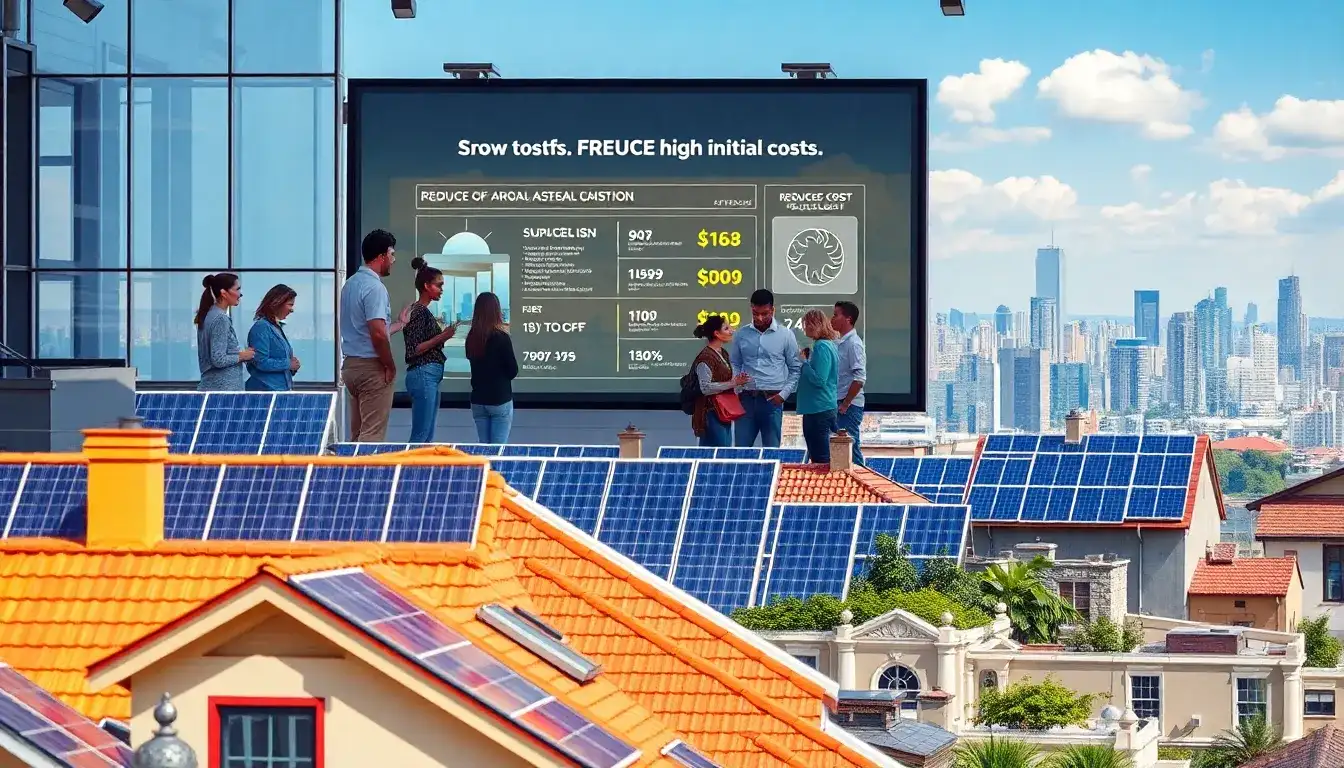
To address the high upfront costs of solar energy installations, various strategies and financial options can be employed:
1. Leverage Federal and State Incentives
- The Federal Solar Investment Tax Credit (ITC) allows a deduction of 30% of the solar system cost from federal taxes, significantly lowering the net upfront expense. For example, a $20,000 system can be reduced to about $14,000 after this credit.
- Many states offer additional incentives such as rebates, property tax exemptions, expedited permitting, and sales tax waivers. Checking resources like the Database of State Incentives for Renewables & Efficiency (DSIRE) can identify available programs in your area.
2. Opt for Financing Options
- Solar Loans: These spread the cost over time, allowing homeowners to pay in installments while owning the system. Interest rates and loan terms should be carefully reviewed to ensure cost-effectiveness.
- Solar Leases and Power Purchase Agreements (PPAs): These arrangements have lower or no upfront costs, as a third party owns the system and sells electricity to you. However, you may save less overall and lose ownership benefits like tax credits.
3. Choose System Size and Components Wisely
- Tailoring the system size to actual energy needs can reduce unnecessary spending. For example, in California, a 4 kW system might be adequate for average usage, costing less than larger installations.
- Panel type influences cost: Monocrystalline panels are more expensive but more efficient, while polycrystalline and thin-film panels are cheaper but less efficient. Selecting appropriate quality balances cost and performance.
4. Minimize Installation Complexity and Additional Costs
- Installation expenses vary by roof type, shading, and site complexity. Choosing simpler installations or addressing roof repairs beforehand can reduce costs.
- Consider if battery storage is necessary, as it adds to upfront cost but improves energy independence.
5. Consider Long-Term Savings and Payback Periods
- Although upfront costs are high (typically around $2.50 to $3.30 per watt before incentives), solar systems provide substantial savings on electricity bills over time. Payback periods average around 6-7 years in favorable markets, after which electricity from the system is essentially free.
- Over 20-25 years, net savings can range from tens of thousands to over $100,000 depending on location and energy use.
Summary Table of Key Cost-Reduction Approaches
| Strategy | Description | Impact on Upfront Cost |
|---|---|---|
| Federal and State Incentives | Tax credits, rebates, and exemptions | Can reduce cost by 30% or more |
| Solar Loans | Financing to spread payments | Lowers immediate financial burden |
| Solar Leases/PPAs | No/low upfront costs, system owned by a third party | Reduces upfront cost, but less long-term saving |
| System Size Optimization | Matching system size to actual energy needs | Avoids overpaying for unnecessary capacity |
| Panel Type Selection | Choosing efficient vs. affordable panel types | Balances upfront cost and energy output |
| Simplify Installation | Minimizing complex roof modifications | Reduces labor and permitting fees |
Using these methods together can substantially mitigate the high upfront costs of solar installations, making solar energy more accessible and financially viable for homeowners.
Example: A typical 5 kW solar system in California costs about $17,150 before incentives, reduced to roughly $12,005 after the 30% federal tax credit. Financing options and state rebates can lower this further. The system typically pays for itself in 6 years and yields over $26,000 in savings over 20 years.
In 2025, the average cost of an 11 kW system across the U.S. after federal incentives is around $20,552, with savings over time potentially reaching $31,000 to $100,000.
Therefore, addressing high upfront costs involves combining incentives, financing, and tailored system design to maximize affordability and long-term benefits.
Original article by NenPower, If reposted, please credit the source: https://nenpower.com/blog/how-can-we-address-the-high-upfront-costs-of-solar-energy-installations/

