

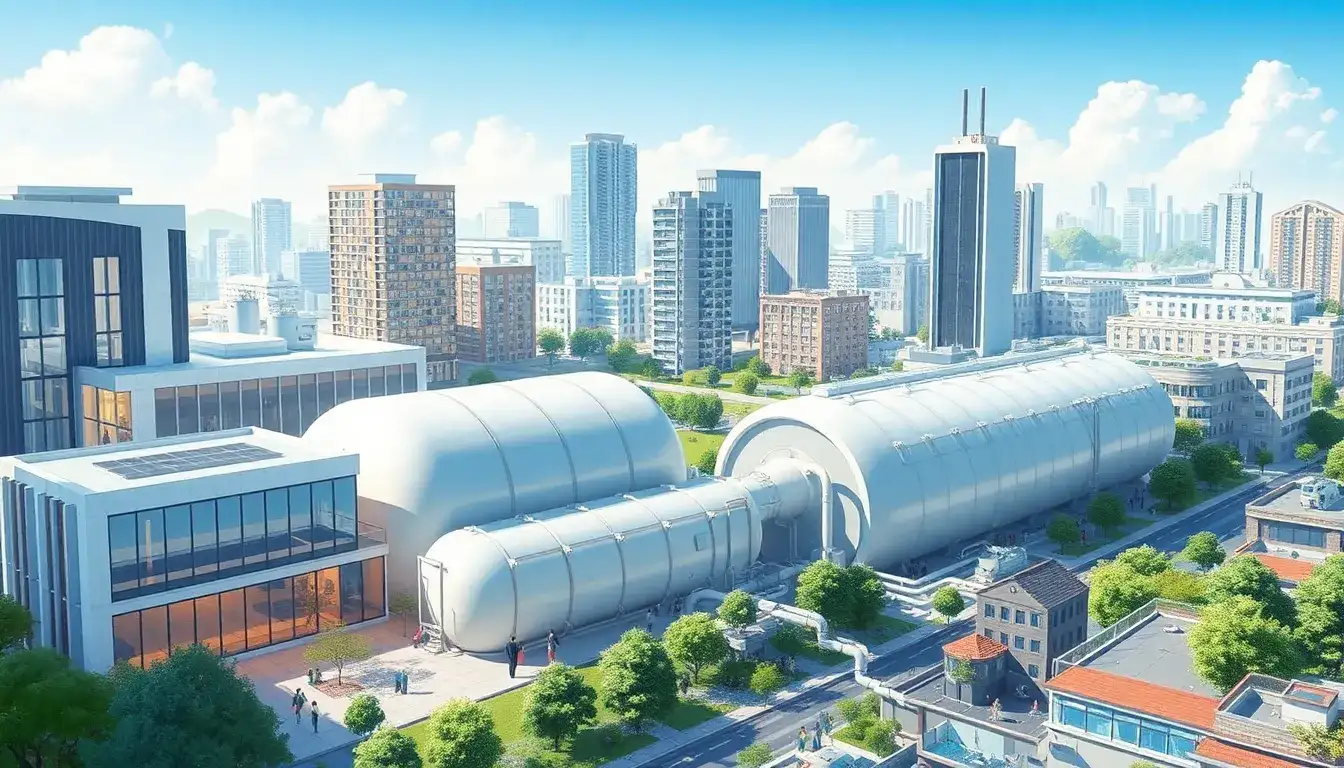
Integrating waste heat recovery systems with thermal energy storage in cities can significantly enhance energy efficiency, reduce greenhouse gas emissions, and support decarbonization goals. Here are several ways to achieve this integration:
Integration Strategies
- District Heating and Cooling Networks: Waste heat from sources like data centers, wastewater, and underground infrastructure can be captured and integrated into district heating and cooling systems. Thermal energy storage methods, such as hot water tanks or underground thermal storage, can be used to stabilize these networks by balancing supply and demand over time.
- Localized Thermal Grids: Creating local grids allows for efficient redistribution of waste heat to nearby buildings. This can be achieved using insulated pipelines, which minimize heat loss and optimize the use of recovered heat for space heating or hot water supply.
- Phase Change Materials (PCMs): PCMs can enhance thermal storage by absorbing and releasing heat during phase transitions. This is particularly useful in data centers where space is limited but rapid temperature regulation is needed.
- Geographic Proximity and Decentralized Networks: Building decentralized thermal energy networks can overcome geographic constraints by connecting multiple heat sources and users. This approach ensures that waste heat is not wasted due to distance limitations.
- Ambient Loop Systems: These systems operate at ambient temperatures and use booster heat pumps at each end-user site. This setup allows for efficient distribution and utilization of recovered heat, often from sources like data centers or underground infrastructure.
Benefits
- Energy Efficiency: Integrating waste heat recovery with thermal storage reduces the need for primary energy consumption by utilizing otherwise wasted thermal energy.
- Climate Neutrality: By substituting fossil fuels with waste heat and renewable energy sources, cities can move closer to climate-neutral targets.
- Cost Savings: Reduces energy costs and enhances economic competitiveness of buildings and industries.
Challenges and Future Directions
- Infrastructure Development: Requires significant investment in infrastructure to establish thermal grids and storage facilities.
- Technology Improvements: Continued innovation in thermal energy storage technologies will be crucial for optimizing waste heat utilization.
Overall, combining waste heat recovery with thermal energy storage is a powerful strategy for enhancing urban sustainability and reducing carbon footprints in urban environments.
Original article by NenPower, If reposted, please credit the source: https://nenpower.com/blog/how-can-waste-heat-recovery-systems-be-integrated-with-thermal-energy-storage-in-cities/

