

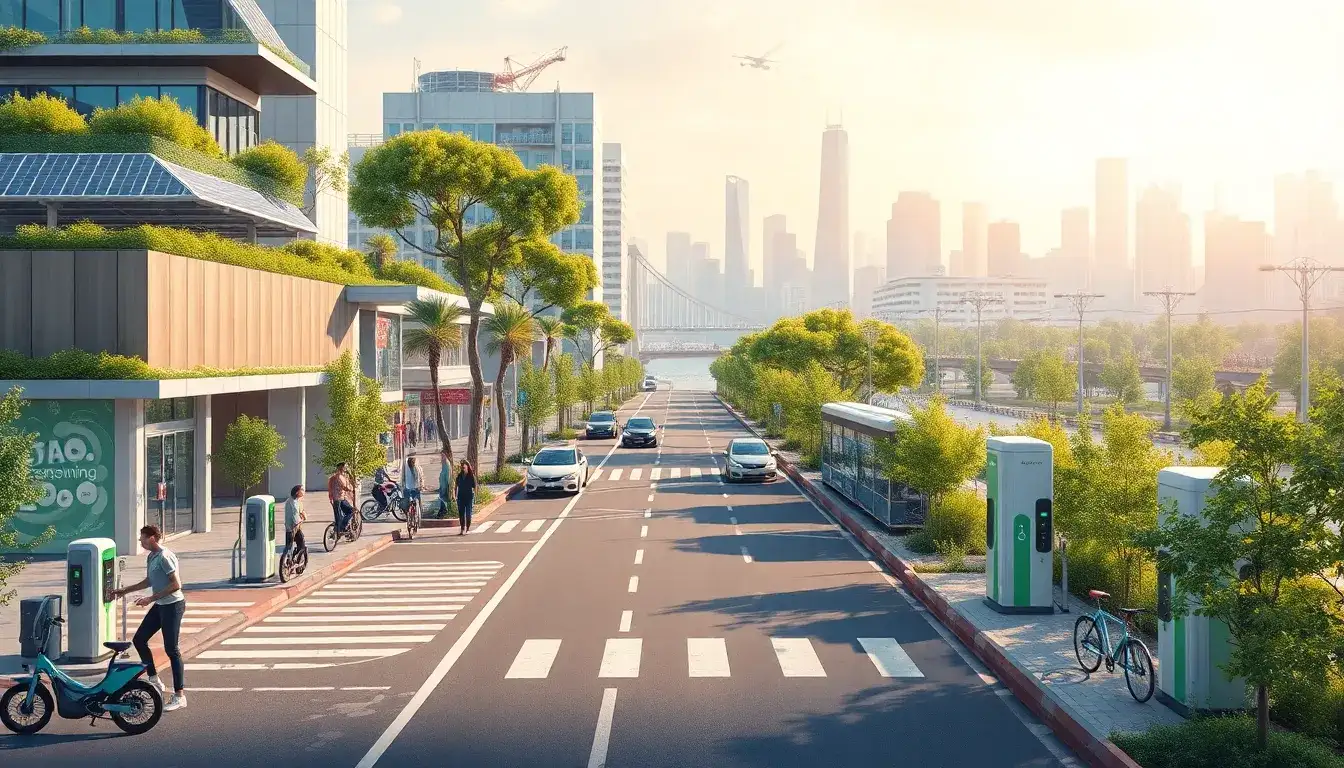
To adapt urban planning for increased EV charging infrastructure, cities should employ a multi-faceted approach that integrates demand analysis, technology, and strategic placement:
Demand-Driven Site Selection
Analyze current EV ownership, travel patterns, and charging behavior using data from vehicle registrations, charging networks, and user surveys. This helps prioritize high-demand zones such as residential areas, commercial districts, and transportation hubs.
Smart Mobility Integration
Install charging stations at multi-modal mobility hubs (e.g., bike-share stations, bus stops) to reduce private vehicle dependency. Implement real-time availability systems to minimize driver search time and traffic congestion.
Grid Resilience and Zoning Policies
- Upgrade electrical infrastructure to handle concentrated power loads, particularly in older urban areas.
- Adjust zoning regulations to mandate EV-ready parking in new developments and retrofitted buildings.
Incentive-Driven Deployment
Use public charging stations to boost driver confidence in EVs, which can pressure private enterprises to expand their own networks. Allocate funding for underserved neighborhoods to ensure equitable access.
Key Planning Considerations Table
| Aspect | Strategy |
|---|---|
| High-Traffic Zones | Install fast chargers near shopping centers, highways, and business districts. |
| Residential Areas | Prioritize overnight charging solutions in apartments and public lots. |
| Future-Proofing | Deploy scalable chargers with compatibility for emerging technologies. |
By combining data analytics, infrastructure upgrades, and policy reforms, cities can create an EV-friendly ecosystem that reduces emissions and congestion while meeting growing demand.
Original article by NenPower, If reposted, please credit the source: https://nenpower.com/blog/how-can-urban-planning-be-adapted-to-support-the-installation-of-more-ev-charging-stations/

