

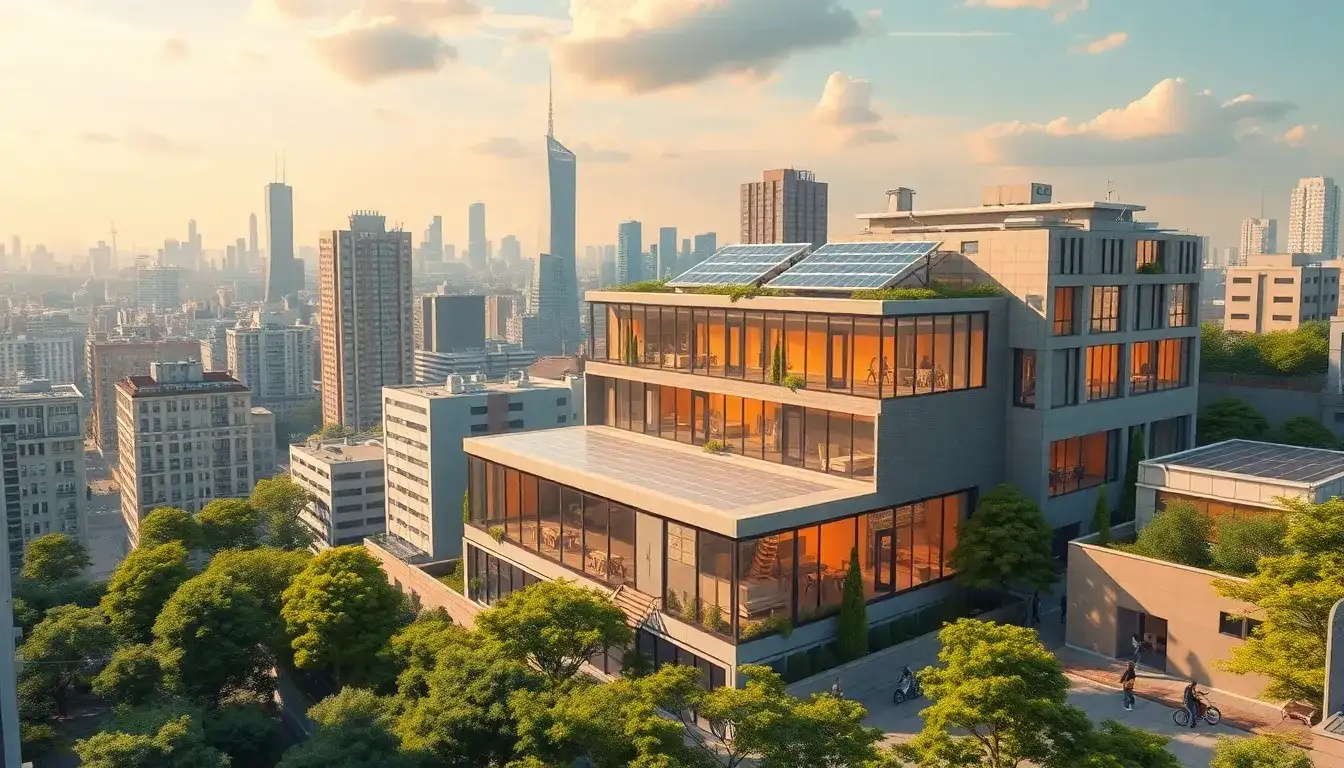
Optimizing thermal energy storage (TES) systems for urban areas with limited space requires innovative approaches to maximize efficiency while minimizing physical footprint. Here are several strategies to achieve this:
Optimization Strategies for Urban Areas
1. Compact Thermal Storage Materials
- Phase Change Materials (PCMs): These materials store or release large amounts of energy as they change phase (typically from solid to liquid or vice versa) with relatively small volume changes, making them ideal for space-limited areas.
- Highly Efficient Liquids: Advanced liquids with high thermal storage capacities can be used in compact systems.
2. Vertical and Modular Designs
- Stackable Storage: Modular, vertically stacked storage tanks can fit into smaller spaces, allowing for efficient use of available land.
- Underground Thermal Energy Storage (UTES): Using underground spaces for thermal energy storage can entirely remove the need for above-ground structures, preserving urban space.
3. Integration with Existing Infrastructure
- Building Integration: Incorporate thermal storage into the design of buildings, using structural elements like concrete for thermal mass, which can store energy and release it when needed.
- Water-Based Systems: Utilize existing water tanks or piping systems in urban areas for thermal storage, reducing the need for new infrastructure.
4. Seasonal Storage and Load Shifting
- Seasonal Thermal Storage: Store excess heat from summer for use in winter, optimizing seasonal supply and demand fluctuations.
- Load Shifting: Store energy during off-peak hours and use it during peak demand times, reducing strain on energy systems and optimizing the use of renewable sources.
5. Advanced Technologies and Materials
- Solid-State Storage: Use materials like rocks or ceramic bricks for solid-state thermal storage, which can be more space-efficient than liquid systems.
- Energy-Efficient Systems: Incorporate technologies that minimize energy loss during storage and release, ensuring maximum efficiency in urban settings.
6. District Heating Integration
Integrate TES systems with district heating networks to optimize energy distribution, reduce peak loads, and maximize the use of waste heat from industrial processes.
By applying these strategies, thermal energy storage systems can be effectively optimized for urban areas with limited space, enhancing sustainability and reducing environmental impact.
Original article by NenPower, If reposted, please credit the source: https://nenpower.com/blog/how-can-thermal-energy-storage-systems-be-optimized-for-urban-areas-with-limited-space/

