

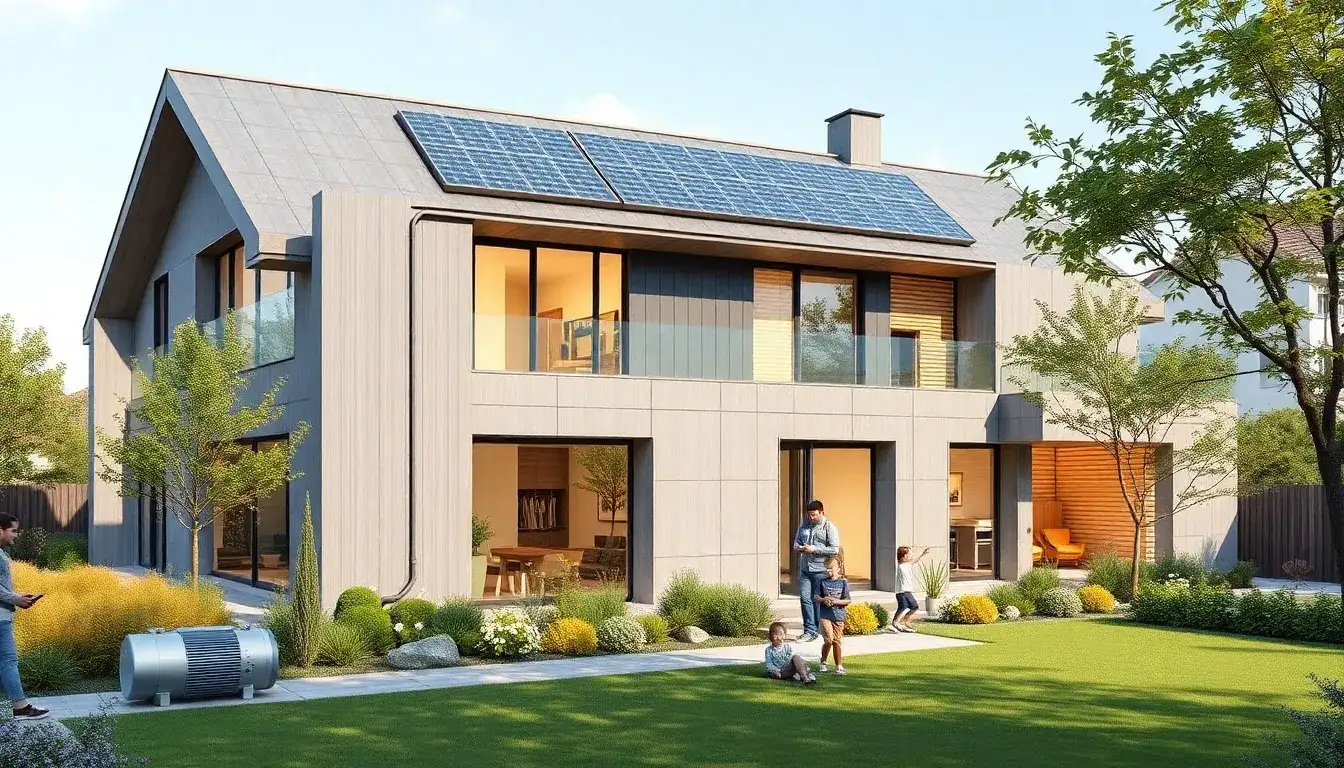
Thermal energy storage (TES) can be effectively integrated into residential buildings to manage heating and cooling demands more efficiently. Here are some strategies to integrate TES:
1. Sensible Heat Storage
- Materials: Use materials like water, sand, or masonry for sensible heat storage. These materials absorb and release heat slowly, providing thermal comfort over extended periods.
- Application: Incorporate water-filled containers or large thermal mass components like concrete and brick into building design to increase thermal storage capacity.
2. Phase Change Materials (PCMs)
- Materials: Leverage PCMs such as waxes or phase-change materials mixed with other substances to create more affordable alternatives. These materials change phase (solid to liquid or vice versa) close to room temperature, providing heating and cooling.
- Application: Incorporate PCMs into building envelopes or use them in tanks to store thermal energy for later use.
3. Thermochemical Storage
- Materials: This method stores energy through chemical reactions and can release it as heat when needed. This technology is promising but still under development.
- Application: Utilize solar energy or excess electricity to charge thermochemical materials, which then supply thermal energy for space and water heating.
4. Integration with HVAC Systems
- Strategy: Couple TES with heating, ventilation, and air conditioning (HVAC) systems to reduce peak demand on the electric grid. This can be done by using stored thermal energy during peak hours, such as late afternoons in summer or early mornings in winter.
- Example: Trane’s thermal energy storage systems use water for efficient cooling and heating, reducing energy costs by utilizing off-peak energy consumption.
5. Policy and Financial Incentives
- Incentives: Leverage financial incentives like the Inflation Reduction Act (IRA) in the U.S., which provides up to a 50% tax credit for thermal energy storage installations.
- Implementation: Work with local authorities and energy service providers to integrate TES into community-scale projects, which can reduce peak demand and promote wider adoption.
6. Building Design and Materials
- Passive Solar Design: Incorporate features like proper building orientation, window glazing, and shading to reduce heating and cooling needs.
- Thermal Envelope: Utilize materials with high thermal mass (e.g., concrete, brick) in building envelopes to enhance natural thermal regulation.
These strategies can significantly enhance the energy efficiency and sustainability of residential buildings by optimizing thermal energy usage and reducing reliance on traditional energy sources.
Original article by NenPower, If reposted, please credit the source: https://nenpower.com/blog/how-can-thermal-energy-storage-be-integrated-into-residential-buildings/

