

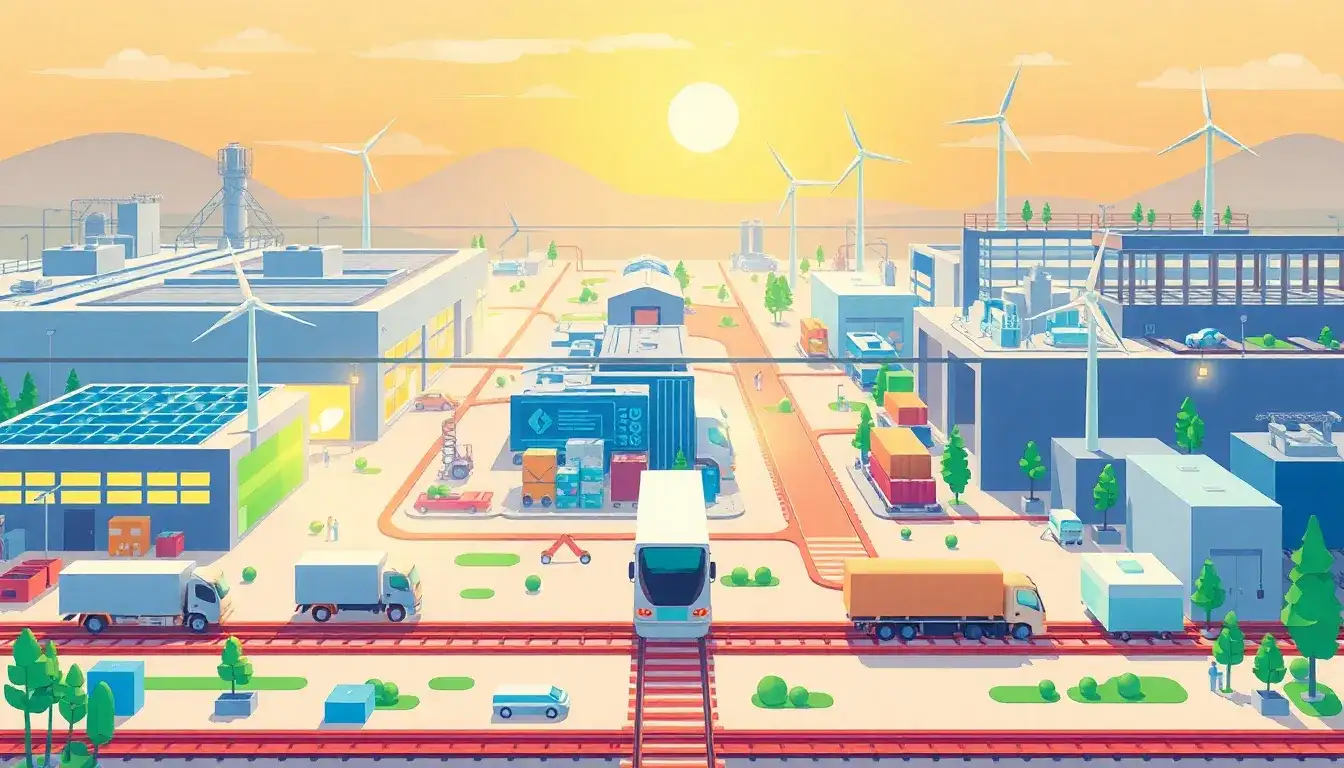
To minimize logistics emissions in the EV battery supply chain, several key strategies can be implemented:
Material Sourcing and Supplier Selection
- Localize material procurement where feasible to reduce long-distance transportation. Sourcing critical minerals from regions with lower embedded emissions and shorter transport routes can significantly cut logistics-related CO₂.
- Prioritize suppliers using renewable energy for mining and refining processes, as upstream emissions from fossil fuel-dependent operations contribute disproportionately to the total footprint.
Transportation Optimization
- Shift to low-carbon transport modes, such as electric or hydrogen-powered trucks for regional distribution and rail/ship for long-haul routes, which typically have lower emissions per ton-mile than air freight.
- Route optimization using advanced logistics software to reduce empty backhauls and consolidate shipments, minimizing fuel consumption.
Production and Energy Electrification
- Electrify mining and refining equipment to reduce emissions at the source, which indirectly lowers the carbon intensity of transported materials.
- Use renewable energy in gigafactories, particularly those located near raw material sources, to decarbonize both production and associated logistics.
Recycling and Circular Economy
- Scale closed-loop recycling systems to recover materials (e.g., lithium, cobalt) from end-of-life batteries and manufacturing scrap near production hubs, reducing demand for virgin materials and associated transport.
- Regionalize recycling infrastructure to avoid cross-continental shipping of spent batteries, which is projected to become critical post-2035 as end-of-life volumes surge.
Technological and Operational Efficiency
- Adopt higher-energy-density batteries (e.g., solid-state) to reduce the weight and volume per kWh transported, thereby lowering emissions per unit of energy capacity.
- Implement real-time emissions tracking across the supply chain using blockchain or IoT systems to identify high-impact logistics nodes for targeted decarbonization.
By integrating these measures, the sector could reduce lithium, nickel, and cobalt demand by up to 40% through recycling alone by 2050 while cutting transport-related emissions through localized value chains.
Original article by NenPower, If reposted, please credit the source: https://nenpower.com/blog/how-can-the-logistics-emissions-along-the-ev-battery-supply-chain-be-minimized/

