

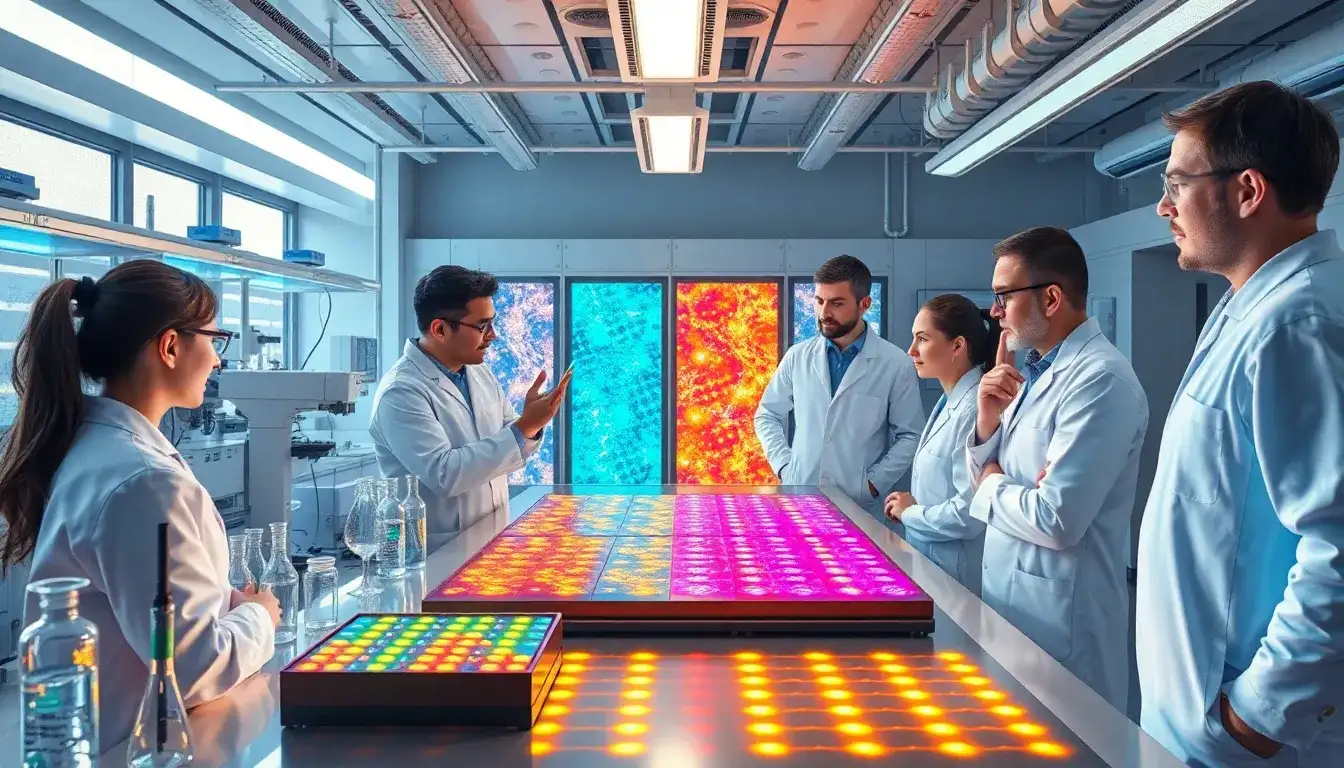
Improving the efficiency of perovskite solar cells (PSCs) without compromising their stability involves several advanced material and structural strategies that address both performance and durability challenges.
Strategies to Improve Efficiency While Maintaining Stability
1. Surface and Interface Engineering
- Incorporation of dual-molecule treatments targeting surface recombination and interface defects has been shown to boost efficiency by reducing electron losses at defects and interfaces. This approach achieved certified efficiencies above 25% while helping stabilize the cell performance, as demonstrated by Northwestern University researchers.
- Modifying the perovskite formula itself and optimizing the charge transport layers, such as applying specially treated conductive layers like tin dioxide, enhances charge carrier pathways and efficiency (up to about 25.2%), without significantly degrading stability.
2. Material Composition Optimization
- Researchers have improved the perovskite chemical composition to enhance both light absorption and stability. Perovskites inherently offer a high bandgap, allowing them to capture different parts of the solar spectrum more efficiently than silicon alone, which can also complement silicon in tandem cells to improve overall system efficiency.
- The transition from lab-scale efficiencies around 10-20% to over 33% has been propelled by meticulous control over the crystalline structure and chemical stability of perovskite materials.
3. Protective Coatings and Encapsulation
- Advanced protective coatings have been developed to shield perovskite layers from environmental factors such as moisture and oxygen, which typically degrade stability. These coatings, combined with encapsulation techniques, maintain long-term cell functionality without compromising efficiency.
4. Structural Innovations
- Perovskite cells’ ability to be made extremely thin while maintaining efficient light absorption helps reduce material degradation and thermal stress, which can impact stability.
- The inverted architecture mentioned in recent works reduces interface losses and can contribute to more stable operational lifetimes while achieving high efficiencies.
Summary Table of Key Improvements
| Approach | Efficiency Gain | Stability Impact | Notes |
|---|---|---|---|
| Dual-molecule surface treatment | Certified 25.1%+ | Reduces recombination losses | Addresses surface & interface defects |
| Conductive layer optimization | ~25.2% | Improved charge transport | Tin dioxide conductive layer technique |
| Material composition tuning | Lab efficiencies >33% | Enhanced intrinsic stability | Approaching theoretical efficiency limit |
| Protective coatings & encapsulation | Maintains high eff. | Protects from moisture & oxygen | Extends operational lifespan |
| Thin-film, inverted architectures | >25% | Reduced degradation & losses | Enables flexible, lightweight designs |
By combining these methods, researchers have pushed PSC efficiency beyond 25%, with some lab demonstrations surpassing 33%, all while adopting solutions to overcome the intrinsic instability of perovskite materials.
In conclusion, improving perovskite solar cells’ efficiency without compromising stability relies on advanced surface/interface treatments, optimized material composition, protective encapsulation, and innovative device architectures that jointly enhance performance and durability.
Original article by NenPower, If reposted, please credit the source: https://nenpower.com/blog/how-can-the-efficiency-of-perovskite-solar-cells-be-improved-without-compromising-stability/

