

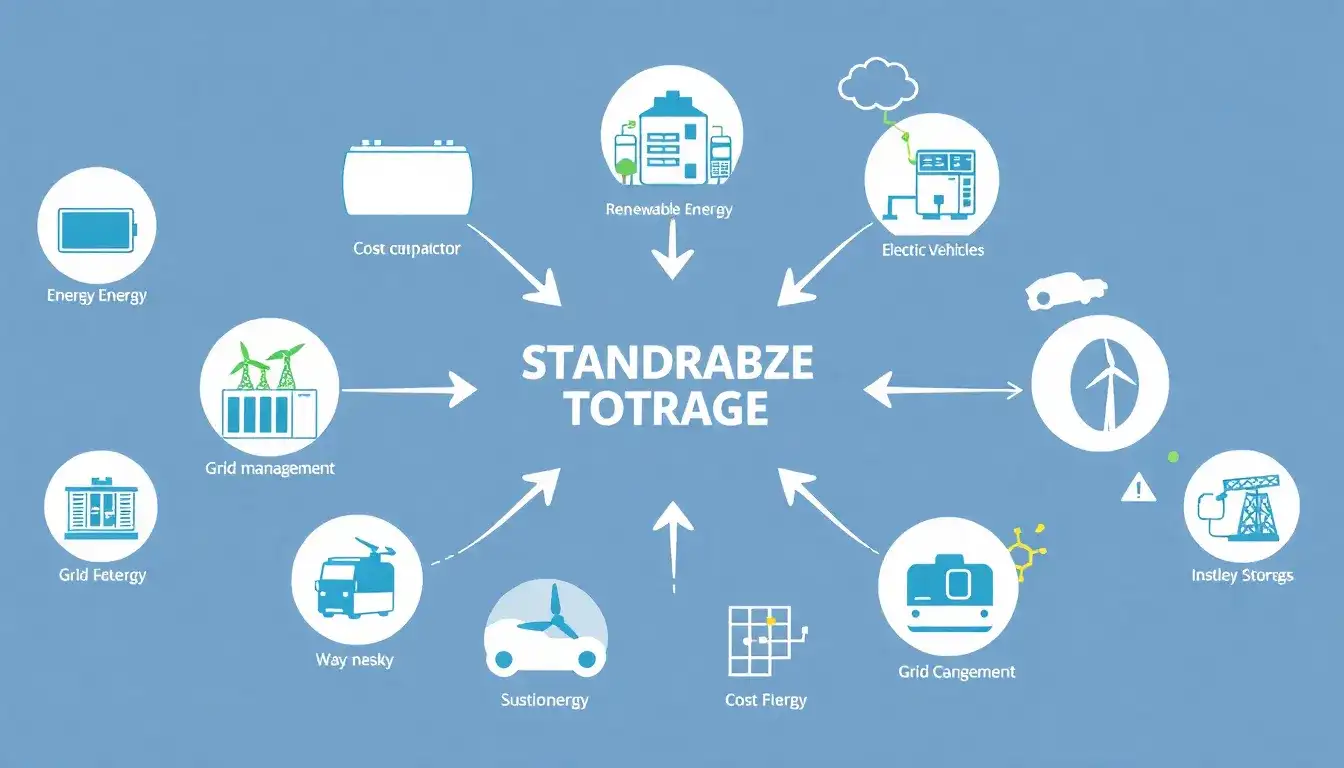
Standardization in Energy Storage Systems
Standardization in energy storage systems can significantly help reduce implementation costs through several key mechanisms:
Enhanced System Integration
- Simplified Interconnectivity: Standardized protocols enable seamless communication between diverse energy storage technologies and grid systems, reducing the complexity and time needed for integration.
- Compatibility: Standardization ensures that different components from various vendors can work cohesively, eliminating the need for custom interfaces that often come with high development costs.
Cost Reduction Strategies
- Reduced Custom Engineering: By using standardized components and interfaces, the need for custom engineering is decreased, which lowers both initial deployment and ongoing maintenance costs.
- Economies of Scale: Standardization facilitates production at larger scales, which can drive down manufacturing costs through economies of scale.
Operational Efficiency
- Improved Scalability: Standardized systems allow for easier expansion of energy storage capacity, enabling utilities to adapt to growing demand without costly re-engineering.
- Enhanced Innovation: Standardization fosters a competitive environment where innovators and suppliers can focus on improving technology performance, leading to more cost-effective solutions over time.
Government and Industry Support
- Regulatory Incentives: Governments can mandate the use of standardized systems in energy storage regulations, providing incentives that encourage widespread adoption and cost reductions.
- Industry Collaboration: Collaborative efforts among stakeholders can further accelerate standardization, leading to more efficient implementation processes and lower costs.
Original article by NenPower, If reposted, please credit the source: https://nenpower.com/blog/how-can-standardization-in-energy-storage-systems-help-reduce-implementation-costs/

