

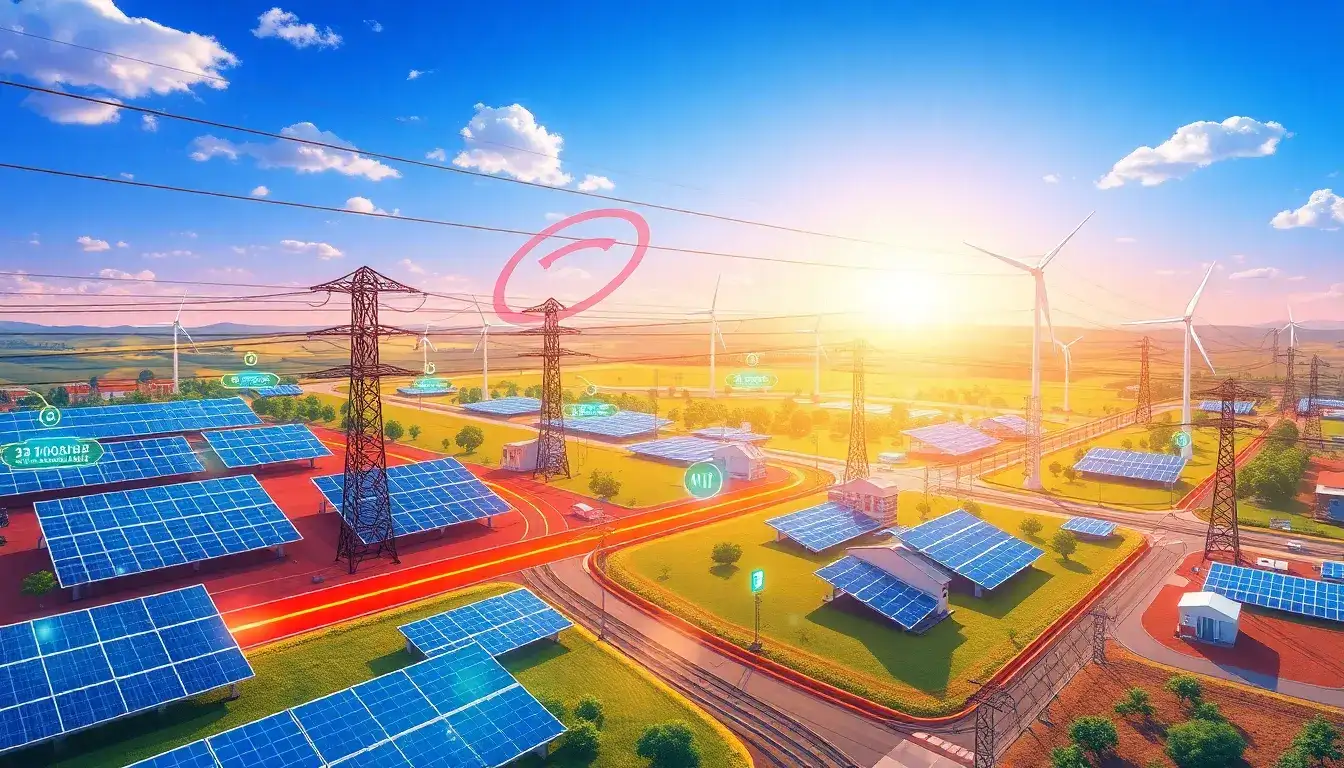
Smart grids improve the integration of intermittent renewable energy sources in several key ways:
Technological Advancements
- IoT and Real-Time Data Collection: Smart grids use the Internet of Things (IoT) to gather real-time data on environmental conditions (like wind speed and sunlight) from distributed renewable systems. This data helps utilities predict energy output from renewable sources and manage grid stability effectively.
- Artificial Intelligence (AI) and Predictive Maintenance: AI technologies enable smart grids to analyze collected data for predictive maintenance, thus reducing downtime for renewable energy systems. AI also helps in forecasting energy demand and supply, allowing for better management of intermittent energy sources.
- Smart Inverters: These are intelligent control points between renewable energy installations (e.g., solar arrays) and the grid. They modulate power output based on grid conditions, preventing overload and instability.
Grid Management and Efficiency
- Advanced Distribution Management Systems: These systems simulate grid operations to improve reliability and power quality. They help in managing distributed energy resources more effectively, ensuring a stable grid environment for renewable integration.
- Microgrids and Storage Solutions: Smart grids integrate microgrids and storage systems like batteries to stabilize the supply of renewable energy. Excess energy can be stored during low-demand periods and released during peak demand, ensuring a balanced supply-demand scenario.
- Automation and Self-Healing: Smart grids automate many processes, such as rerouting power to avoid circuit overloads. This automation enhances grid resilience and reduces human errors, allowing for smoother integration of intermittent renewable sources.
Economic and Environmental Benefits
- Cost Savings: By optimizing grid operations and managing peak demands through demand response programs, smart grids can reduce costs for consumers and utilities. This efficiency makes renewable energy more economically viable.
- Environmental Sustainability: Smart grids promote a more sustainable energy mix by seamlessly integrating renewable sources. This reduces reliance on fossil fuels and helps in achieving net-zero emission goals.
Overall, smart grids provide a flexible, efficient, and resilient framework that accommodates the variability of renewable energy sources, enhancing their integration into the existing energy infrastructure.
Original article by NenPower, If reposted, please credit the source: https://nenpower.com/blog/how-can-smart-grids-improve-the-integration-of-intermittent-renewable-energy-sources/

