

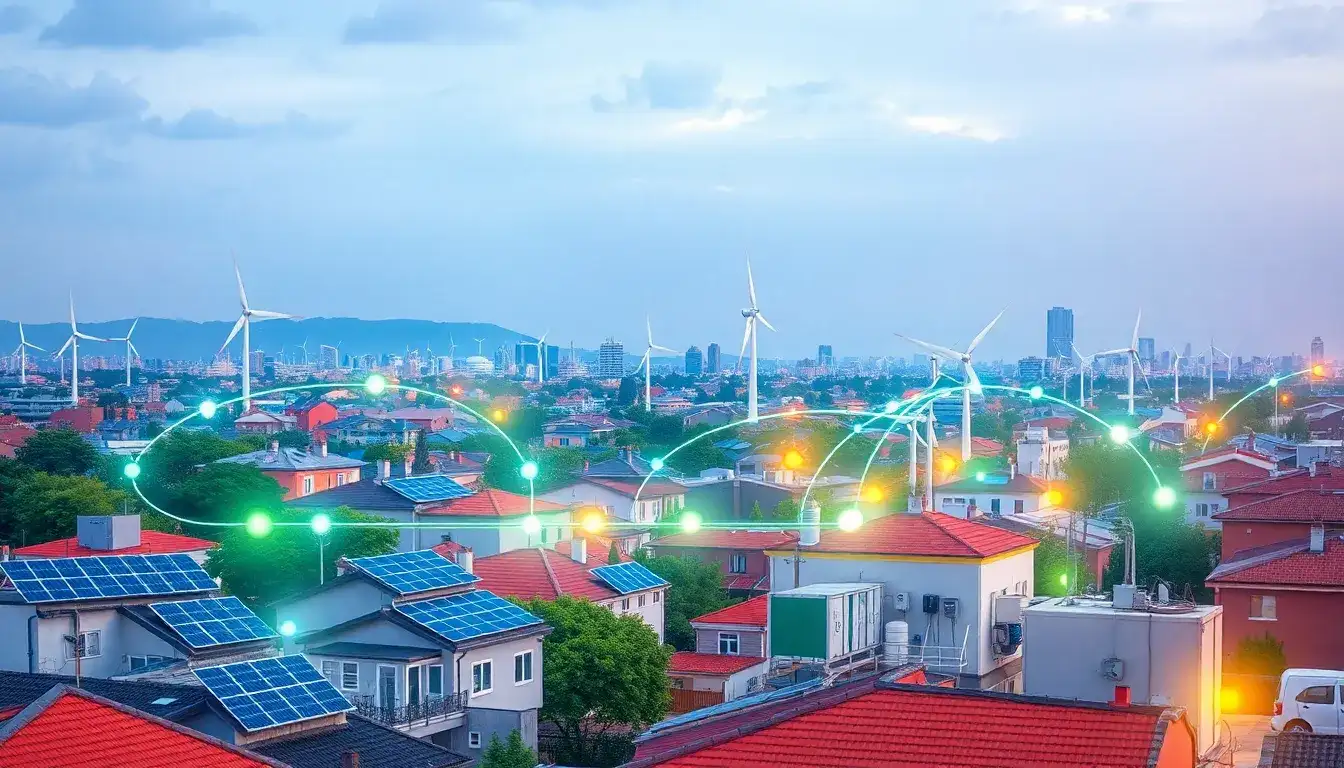
Smart grid technology significantly enhances the integration of renewable energy and energy storage by providing an intelligent, adaptable, and interconnected electrical grid that manages the variability and distributed nature of renewable sources like solar and wind.
How Smart Grids Enhance Renewable Energy Integration
- Real-Time Monitoring and Data Analytics
Smart grids use advanced sensors and the Internet of Things (IoT) to collect real-time data on energy supply, demand, and environmental conditions at multiple points in the grid. This extensive data collection allows utilities to monitor renewable energy production continuously, anticipate fluctuations, and rapidly respond to changes, improving grid reliability and stability. - Managing Intermittency and Variability
Renewable energy sources such as wind and solar are inherently intermittent. Smart grids leverage smart inverters and control systems that modulate power output and manage two-way power flows between distributed renewable generators and the grid. This capability balances supply and demand dynamically, preventing overloads and instability in the grid. - Integration of Distributed Energy Resources (DERs)
Smart grids enable the seamless integration of distributed energy resources like rooftop solar panels, community wind farms, and local battery storage by coordinating their operation and ensuring that their variable outputs do not disrupt grid stability. This integration enables a diversified and resilient energy mix. - Energy Storage Optimization
Local and residential energy storage systems (batteries) are integrated into smart grids to store excess renewable energy generated during low demand periods and release it during peak demand. Advanced battery management platforms within smart grids optimize usage and lifecycle value of these storage systems. - Automation and Self-Healing Capabilities
Smart grids incorporate automation technologies that can reroute power flows, isolate faults, and restore service autonomously, reducing downtime and improving resilience. The self-healing feature is crucial when integrating renewables, as it maintains system stability despite fluctuations and outages. - Demand Response and Flexible Loads
By providing consumers with real-time energy usage data and enabling automated control of devices such as electric vehicle chargers, smart grids facilitate demand response programs. This flexibility helps to match energy consumption patterns with renewable energy availability, maximizing renewable usage and reducing reliance on fossil fuel backups. - Microgrids and Islanding
Smart grid technology supports the development of microgrids that can operate connected to or independently from the main grid. This capability allows localized renewable generation combined with storage to supply power reliably, enhancing energy resilience and enabling cleaner energy in remote or vulnerable areas.
Summary Table: Smart Grid Contributions to Renewable and Storage Integration
| Smart Grid Capability | Contribution to Renewable Integration and Storage |
|---|---|
| Real-time data and IoT | Enables monitoring, forecasting, and rapid response to variability |
| Smart inverters and control | Manages bidirectional power flows and stabilizes grid voltage |
| Distributed energy resource integration | Coordinates multiple renewable sources and storage systems |
| Energy storage management | Stores excess renewable energy, optimizes battery performance |
| Automation and self-healing | Enhances grid resilience and reliability amid intermittent supply |
| Demand response facilitation | Aligns energy consumption with renewable supply patterns |
| Microgrids and islanding | Supports localized energy resilience and renewable self-sufficiency |
Smart grids transform the traditional electricity grid from a one-way, centralized system to a dynamic, distributed network capable of integrating large shares of renewable energy while maintaining grid stability and efficiency. This transformation is essential for achieving sustainability goals, reducing greenhouse gas emissions, and enabling a resilient energy future.
Original article by NenPower, If reposted, please credit the source: https://nenpower.com/blog/how-can-smart-grid-technology-enhance-the-integration-of-renewable-energy-and-storage/

