

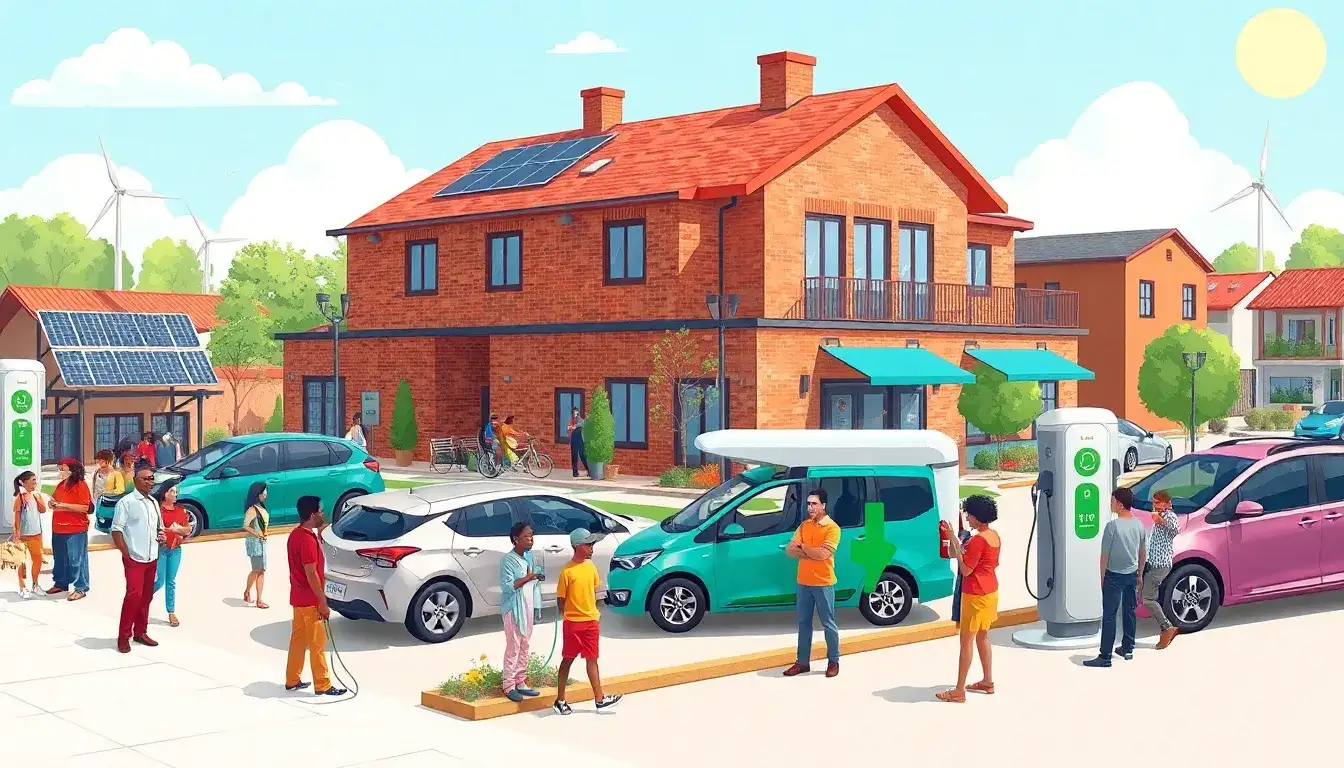
Benefits of Smart Charging Strategies for Low-Income Communities
- Lower Transportation Costs: Installing EV chargers in affordable housing developments can help reduce transportation expenses for residents, as EVs typically have lower fuel and maintenance costs compared to conventional vehicles.
- Equitable Access to Charging Infrastructure: Smart charging initiatives aim to expand EV charger availability in lower-income multifamily housing and underserved neighborhoods, where access has traditionally lagged. This helps avoid exacerbating existing transportation disparities.
- Reduced Charging Costs Through Income-Sensitive Pricing: Collaborations with utilities and charging providers can create pricing models that take residents’ income levels into account, ensuring affordable and sustainable charging rates for low-income households.
- Support for Economic Growth and Clean Air: By increasing EV deployments via accessible charging, communities can benefit from cleaner air and local economic development opportunities linked to the growing EV market.
- Lowered Soft Costs for Infrastructure Deployment: Programs like Charging Smart assist local governments in streamlining permitting, inspection, and interconnection processes, reducing the non-hardware “soft costs” that raise the price and complexity of installing EV chargers in communities with limited resources.
- Community Engagement and Tailored Solutions: Effective smart charging strategies incorporate resident involvement and local planning to identify specific transportation and grid capacity needs, enabling targeted, incremental approaches that address charging access gaps in low-income multifamily housing.
- Development of Replicable and Scalable Models: Partnerships among utilities, nonprofits, and local governments are working to develop business models for affordable public charging that can be replicated across regions, ensuring sustainable charging options for renters and others without home charging access.
In summary, smart charging strategies help make EV adoption feasible and affordable for low-income communities by expanding infrastructure access, lowering costs, supporting clean air benefits, and fostering inclusive economic growth. These strategies overcome key barriers like limited charging availability and high upfront costs through thoughtful planning, utility partnerships, and tailored pricing models.
Original article by NenPower, If reposted, please credit the source: https://nenpower.com/blog/how-can-smart-charging-strategies-benefit-low-income-communities/

