

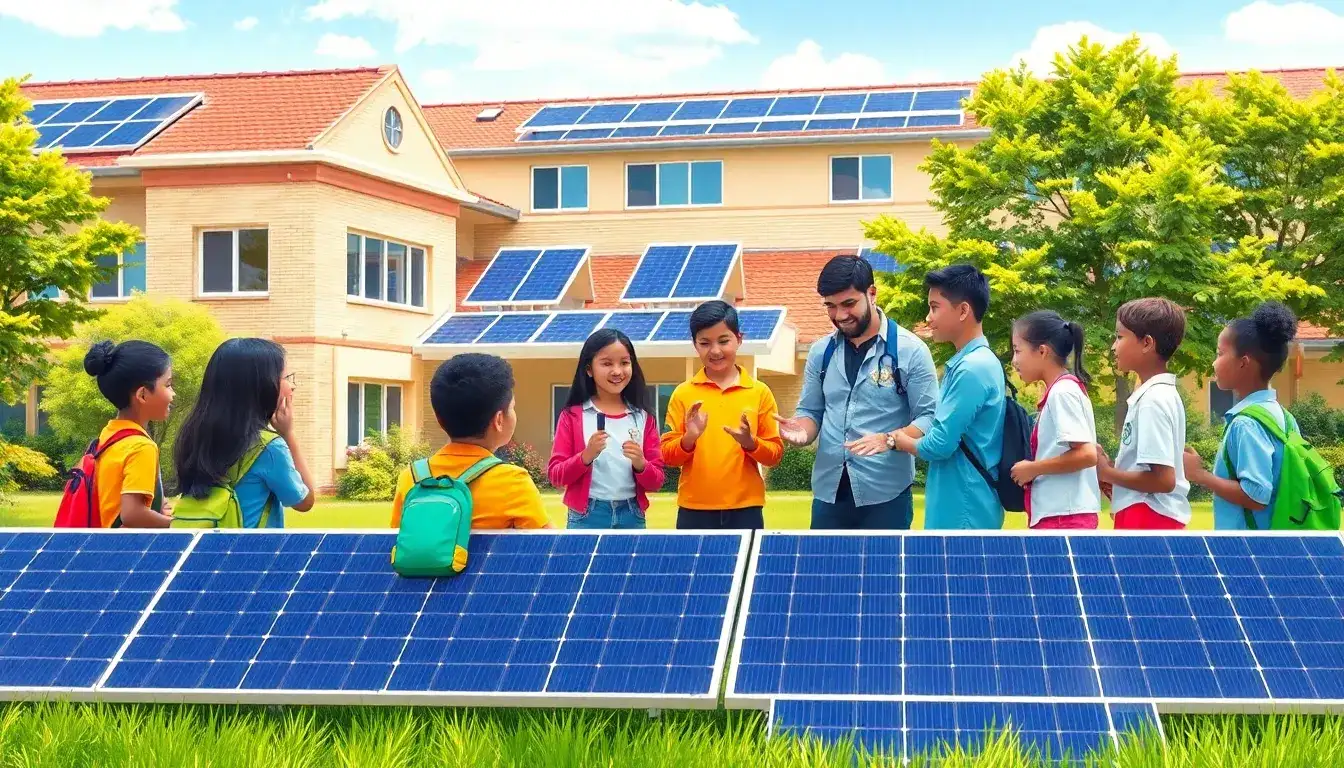
Schools can collaborate with solar energy companies to enhance educational programs through several effective strategies that integrate solar technology with STEM learning, community engagement, and sustainability goals:
Curriculum Integration and Hands-On Learning
- Solar companies can provide standards-aligned, hands-on STEM curricula focused on renewable energy and solar technology. This enables students to engage directly with solar concepts, fostering a deeper understanding of clean energy science and its applications.
- Programs often include interactive tools like energy dashboards that display live solar energy production and weather data, allowing students to analyze real-world data and gain practical skills in data interpretation and environmental science.
- Training for teachers is a key component, with solar companies or affiliated nonprofits offering professional development and curriculum workshops to help educators effectively deliver solar-focused STEM education.
Solar Installation and Infrastructure Support
- Solar energy companies can assist schools by facilitating solar panel installations and providing related infrastructure such as weather stations and data-monitoring equipment. This creates real-world laboratories on school grounds where students observe and study renewable energy systems in operation.
- Collaborations often include grants or matching funds to support installation costs, making solar projects financially accessible to schools.
Career Readiness and Workforce Development
- Partnerships prepare students for careers in the growing solar industry by offering career-ready training, Career and Technical Education (CTE) support, and work-based learning opportunities. This aligns educational programs with high-demand job sectors in clean energy.
Community Engagement and Sustainability Objectives
- Schools become community education hubs for renewable energy, showcasing solar as a sustainable solution and promoting energy-saving practices among students and families.
- Solar installations help schools achieve sustainability goals, reduce energy costs, and protect against electricity price volatility, which can be further emphasized in educational content to link practice with impact.
Examples of Collaborative Programs
- The NC GreenPower Solar+ Schools program offers grants, solar installations, teacher training, and STEM curricula focused on solar energy, actively involving students in renewable energy education and installing solar systems on school sites.
- The Interstate Renewable Energy Council tracks solar installations at K-12 schools and supports initiatives to expand solar access and educational opportunities.
- Madison’s Solar Empowered Schools program provides a comprehensive model combining solar installations with ongoing educational resources and community engagement to prepare students for clean energy futures.
By partnering with solar energy companies, schools can transform solar projects into dynamic educational platforms, enriching STEM curricula, advancing sustainability education, and empowering students with practical skills and career pathways in renewable energy. These collaborations create a win-win scenario that benefits schools operationally and educationally while supporting broader clean energy goals.
Original article by NenPower, If reposted, please credit the source: https://nenpower.com/blog/how-can-schools-collaborate-with-solar-energy-companies-to-enhance-educational-programs/

