

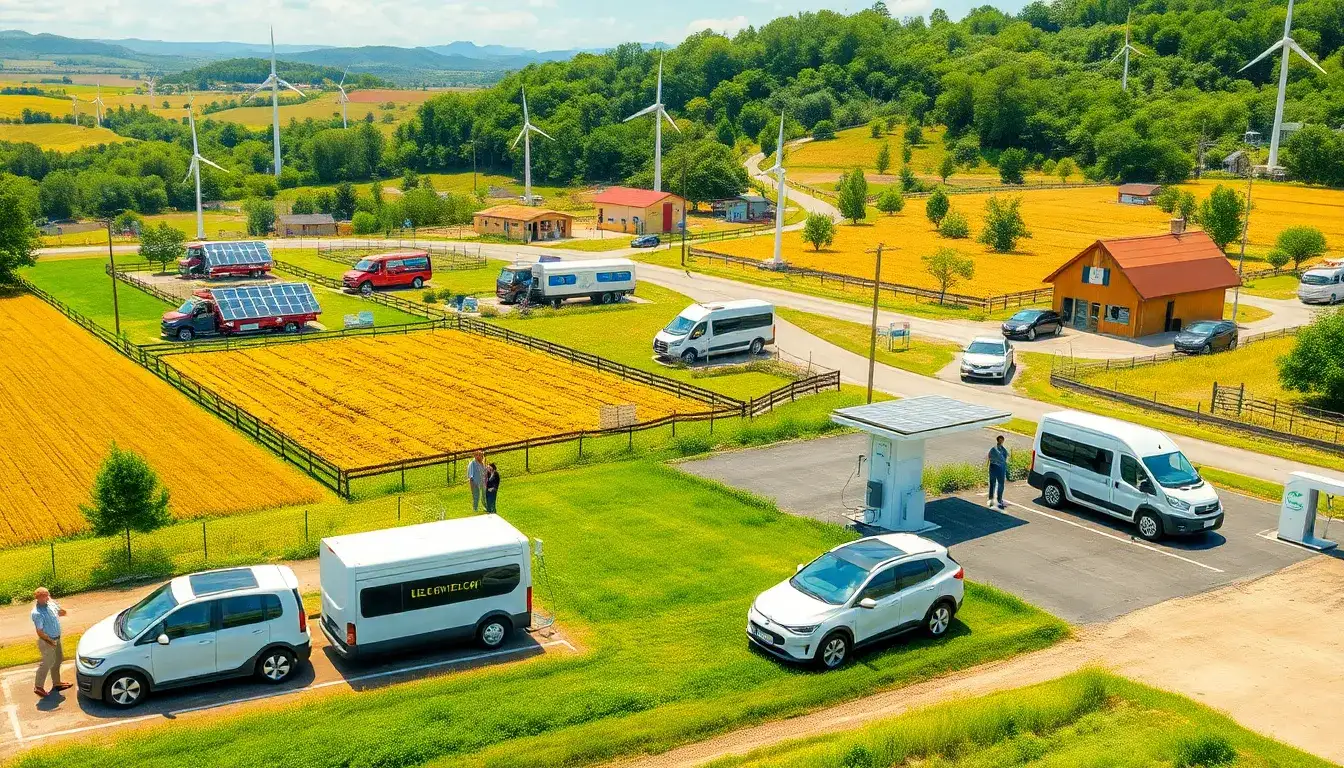
Rural communities have multiple avenues to secure funding for EV charging infrastructure, combining federal, state, and local programs:
Federal Funding Programs
- Bipartisan Infrastructure Law (BIL):
- NEVI Formula Program ($5 billion) for states to deploy EV chargers along highways.
- Discretionary Grant Program ($2.5 billion) for alternative-fuel corridors and underserved areas.
- Surface Transportation Block Grant funds can be used for charging infrastructure.
- USDA Rural Development Programs:
- Loans/Grants through the Rural Economic Development Program (up to $300,000 loans, $2 million grants) for utility organizations to fund EV stations.
- Enterprise Grants for rural transportation projects, including EV charging, via the Rural Business Development Grants Program.
- Inflation Reduction Act (IRA): Expands tax credits and grants for clean energy infrastructure, including EV charging, through multiple federal agencies.
State-Level Initiatives
- Virginia’s Electric Vehicle Rural Infrastructure Program:
- $1.5 million allocated for grants covering up to 70% of nonutility costs (labor, equipment, site prep) in low-density, high-unemployment areas.
- Model for other states to replicate using state budgets or federal matching funds.
Implementation Strategies
- Public-Private Partnerships: Leverage federal grants to attract private investment (e.g., Virginia’s developer grants).
- Utility Collaboration: Partner with rural electric cooperatives to utilize USDA loans and grants.
- Grant Stacking: Combine federal programs (e.g., NEVI + USDA grants) for larger projects.
Key programs prioritize underserved areas, making rural communities strong candidates for funding.
Original article by NenPower, If reposted, please credit the source: https://nenpower.com/blog/how-can-rural-communities-fund-the-development-of-ev-charging-infrastructure/

