

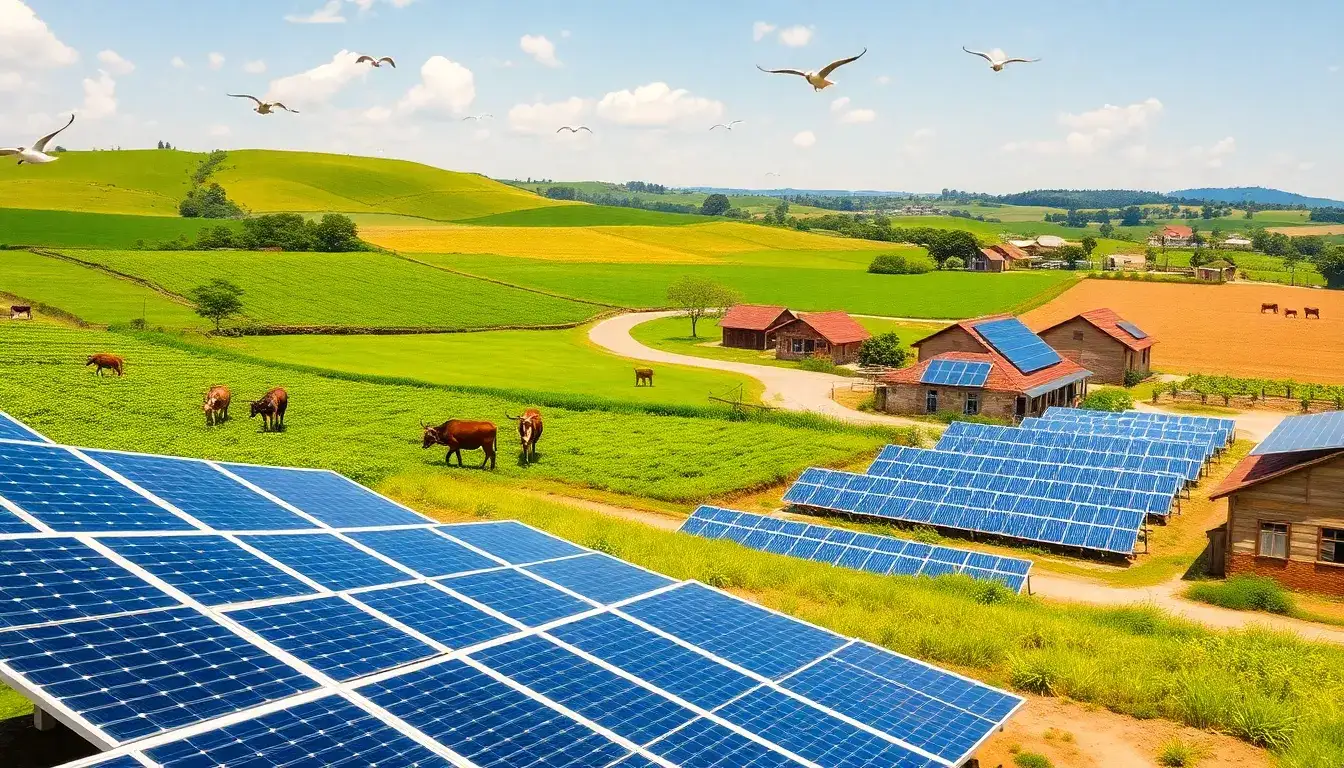
Rural communities face the challenge of balancing the economic benefits brought by solar energy development with the potential changes in land use that such projects can cause. Here are the key considerations and strategies to achieve this balance:
Economic Benefits of Solar Energy in Rural Communities
- Job Creation and Income Generation: Solar energy projects can create local jobs in installation, maintenance, and operations, which help reduce reliance on distant urban centers for employment. Landowners can directly benefit through lease income by hosting solar arrays on their property, increasing their economic stability.
- Increased Tax Revenue and Investment: Solar projects boost local tax revenues, which can be reinvested into community infrastructure and services. The influx of renewable energy companies can attract further investments, spurring broader economic growth in the region.
- Energy Independence and Social Benefits: Solar energy can provide more stable and dependable electricity, especially in remote areas where extending power grids is difficult. This independence improves quality of life, supports essential services, and empowers residents to take active roles in their energy future.
- Economic Diversification: For communities dependent on fossil fuels, solar development offers a pathway to diversify the local economy, reducing risks associated with volatile energy markets.
Challenges and Land Use Changes
- Land Demand and Value Impacts: As solar development expands, demand for land increases, leading to rising land values and rental prices. This can strain local land markets, potentially affecting agriculture and other existing land uses.
- Potential Loss of Agricultural or Natural Land: Large-scale solar arrays require significant space, which may lead to conversion of farmland or natural habitats, altering local ecosystems and traditional land use patterns.
- Infrastructure and Funding Limitations: In some rural areas, lack of infrastructure (like grid connectivity) and financial resources can hinder solar deployment, complicating efforts to maximize benefits while managing land use.
Strategies for Balancing Benefits and Land Use
- Community Engagement and Planning: Involving local stakeholders, including landowners, farmers, and environmental groups, in the planning phase helps identify suitable sites that minimize disruption to agriculture and ecosystems.
- Dual Land Use Practices: Implementing agrivoltaics (combining solar panels with agricultural activities) allows continued farming under or around solar arrays, preserving land productivity while generating energy.
- Zoning and Land Use Policies: Local governments can adopt zoning regulations that designate appropriate areas for solar development, protecting prime farmland and environmentally sensitive areas.
- Benefit Sharing and Local Investment: Ensuring that economic gains from solar projects directly support community needs through local hiring, revenue sharing, and reinvestment can offset land use concerns and foster local support.
- Technical and Financial Support: Partnering with government agencies and securing grants or incentives can overcome infrastructure and funding barriers, enabling sustainable solar deployment aligned with community goals.
Summary
Rural communities can balance economic benefits from solar energy with potential land use changes by careful site selection, incorporating multi-use land practices like agrivoltaics, and engaging stakeholders in planning. Economic gains such as job creation, local income, and increased tax revenue support community development, while policies and strategies that protect agricultural land and natural resources mitigate negative impacts. Through collaborative and thoughtful approaches, solar energy can drive rural economic growth without compromising vital land uses.
Original article by NenPower, If reposted, please credit the source: https://nenpower.com/blog/how-can-rural-communities-balance-economic-benefits-from-solar-energy-with-potential-land-use-changes/

