

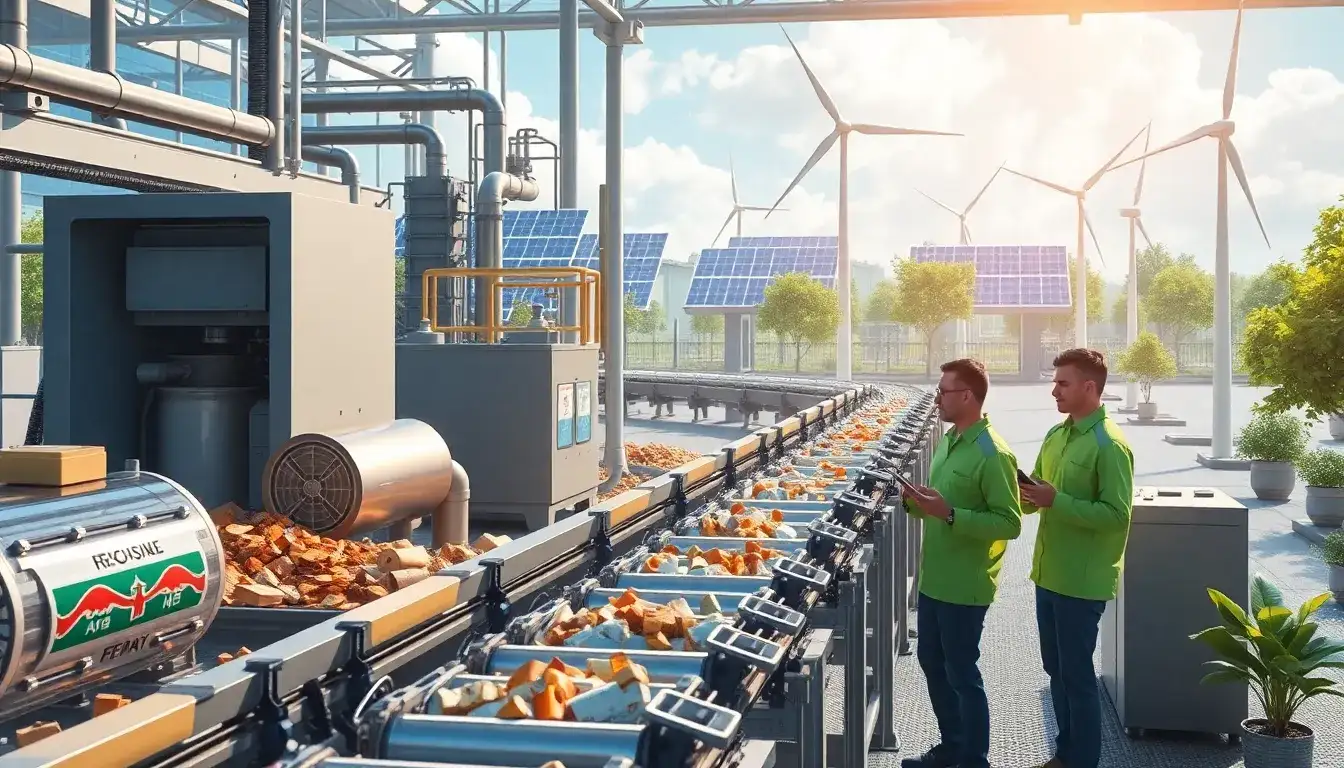
Recycling significantly enhances battery production sustainability through multiple mechanisms:
Emission reduction
Recycling lithium-ion batteries cuts greenhouse gas emissions by up to 80% compared to mining raw materials, with industrial-scale facilities like Redwood Materials demonstrating lower energy consumption and water use through patented low-temperature processes (“reductive calcination”).
Resource conservation
By recovering lithium, cobalt, and nickel from spent batteries, recycling reduces dependence on raw material extraction, preserves finite resources, and establishes closed-loop manufacturing systems. Redwood’s methods recover more lithium than conventional high-temperature pyrometallurgy.
Waste mitigation
Battery recycling prevents hazardous substances (e.g., heavy metals) from leaching into ecosystems through improper disposal, while reducing landfill burdens. Over 99% of lead-acid batteries are successfully recycled in closed-loop systems, serving as a model for emerging lithium-ion practices.
Energy efficiency
Modern recycling techniques avoid fossil fuel reliance in metal refinement. Redwood’s method operates at lower temperatures than traditional pyrometallurgy (no 1,400°C furnaces), while academic-industrial collaborations continuously refine these processes for scalability.
Original article by NenPower, If reposted, please credit the source: https://nenpower.com/blog/how-can-recycling-improve-the-sustainability-of-battery-production/

