

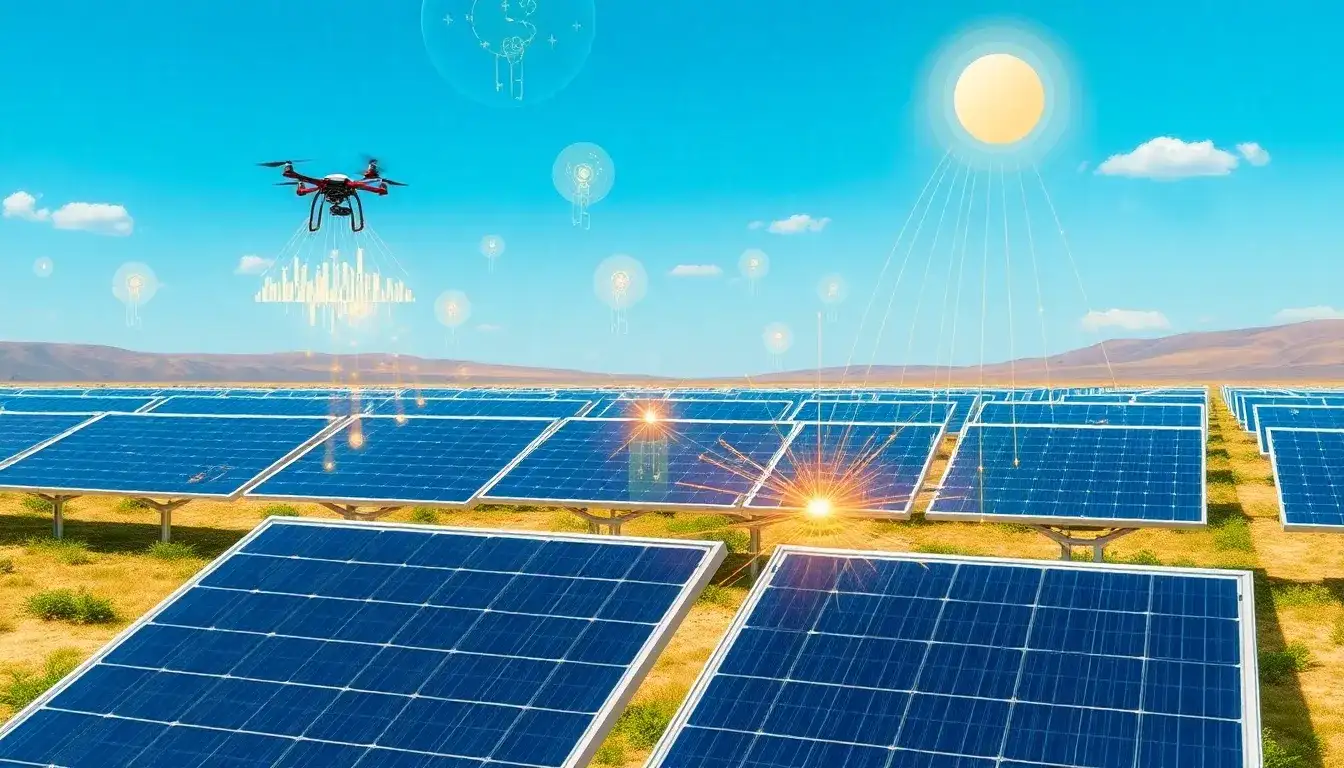
Real-time data collection significantly enhances early fault detection in solar panels through continuous, minute-by-minute tracking and analysis. Here’s how it works:
Immediate Performance Tracking
Real-time monitoring systems track energy output from individual panels or strings, allowing operators to detect anomalies like sudden drops in production that indicate potential faults (e.g., shading, debris, or electrical issues). For example, underperforming panels can be pinpointed instantly through dashboards showing live metrics.
Predictive Maintenance
By integrating weather data, inverter outputs, and panel performance, AI-driven systems identify patterns that precede failures. For instance, irregular voltage fluctuations or temperature spikes trigger alerts, enabling technicians to address issues before they escalate.
Automated Alerts and Diagnostics
IoT sensors transmit data to centralized platforms, where algorithms flag deviations from baseline performance. This reduces downtime by enabling rapid response—such as replacing a faulty microinverter or cleaning obstructed panels.
Key Benefits
- Faster troubleshooting: Pinpoint exact locations of faults (e.g., module-level monitoring).
- Data-driven decisions: Historical and real-time trends optimize maintenance schedules.
- Cost reduction: Minimizes energy loss and extends panel lifespan through proactive repairs.
By leveraging cloud-based analytics and IoT devices, solar operators can prevent minor issues from becoming critical failures, ensuring consistent energy output and reliability.
Original article by NenPower, If reposted, please credit the source: https://nenpower.com/blog/how-can-real-time-data-collection-help-in-early-fault-detection-for-solar-panels/

