

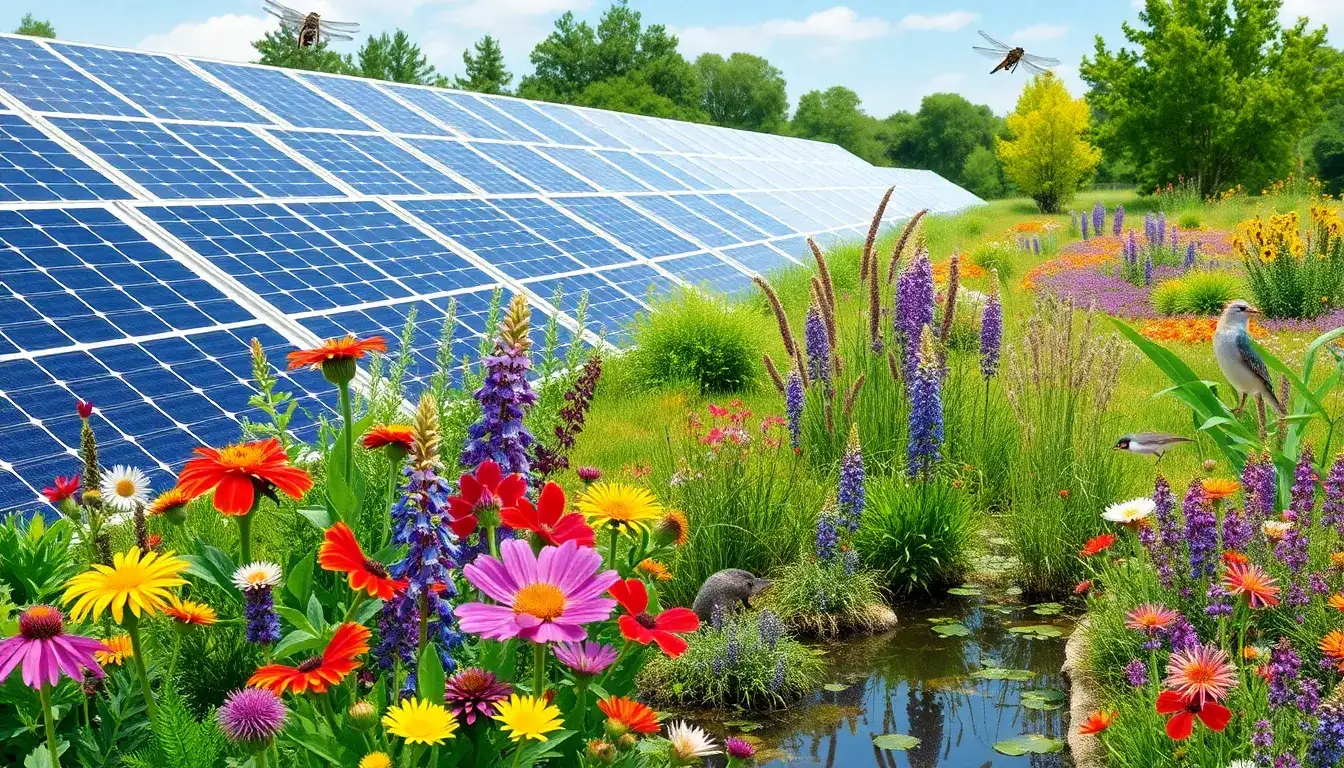
Native plantings can significantly enhance biodiversity within solar arrays by restoring habitat, supporting pollinators, and improving soil and ecosystem health. Here’s how:
Benefits of Native Plantings in Solar Arrays for Biodiversity
- Habitat Restoration and Support for Wildlife:
Planting native grasses and wildflowers under and around solar panels creates a habitat that mimics the local ecosystem, supporting wildlife that depends on it. These native plants provide food, shelter, and breeding grounds for a variety of insects, birds, and other animals, which might otherwise lose habitat to large-scale solar farms. - Boosting Pollinator Populations:
Solar farms with native vegetation have been shown to triple insect abundance and increase native bee numbers by up to 20 times over several years. Pollinators such as bees, butterflies, moths, beetles, hornets, and wasps thrive in these habitats, which is critical given widespread declines due to habitat loss and pesticide exposure. These pollinators not only benefit biodiversity but also aid nearby agricultural crops through improved pollination. - Soil and Water Management:
Native plants help mitigate environmental damage to soil by reducing erosion, improving soil stability, and managing water runoff. This reduces the negative impacts of solar array installations, promoting healthier onsite ecosystems. - Reduced Maintenance and Management Costs:
Maintaining native plantings often requires less mowing and chemical inputs than typical turfgrass or bare ground under solar panels. This can offset initial installation costs, making biodiversity-friendly solar arrays economically viable for developers. - Supporting Ecosystem Services:
Beyond pollination, native vegetation contributes to fire-resistance, drought tolerance, and overall ecosystem resilience. For example, carefully selected native species can protect endangered species such as the California tiger salamander, while also supporting renewable energy goals.
Summary Table of Benefits
| Benefit | Explanation |
|---|---|
| Habitat Restoration | Native plants recreate local habitats and support wildlife |
| Increased Pollinator Abundance | Enhances populations of bees, butterflies, and other beneficial insects |
| Soil & Water Conservation | Helps reduce erosion and manage water runoff |
| Cost-Efficiency | Lower maintenance costs due to less mowing and chemical inputs |
| Ecosystem Resilience | Supports drought/fire resistance and endangered species protection |
| Agricultural Benefits | Improves pollination of nearby crops |
In essence, integrating native plantings within solar arrays transforms solar farms into multi-functional landscapes that generate clean energy while actively fostering biodiversity and ecosystem health.
This approach not only advances renewable energy but aligns with environmental stewardship by enriching local ecosystems and aiding threatened species.
Original article by NenPower, If reposted, please credit the source: https://nenpower.com/blog/how-can-native-plantings-enhance-biodiversity-within-solar-arrays/

