

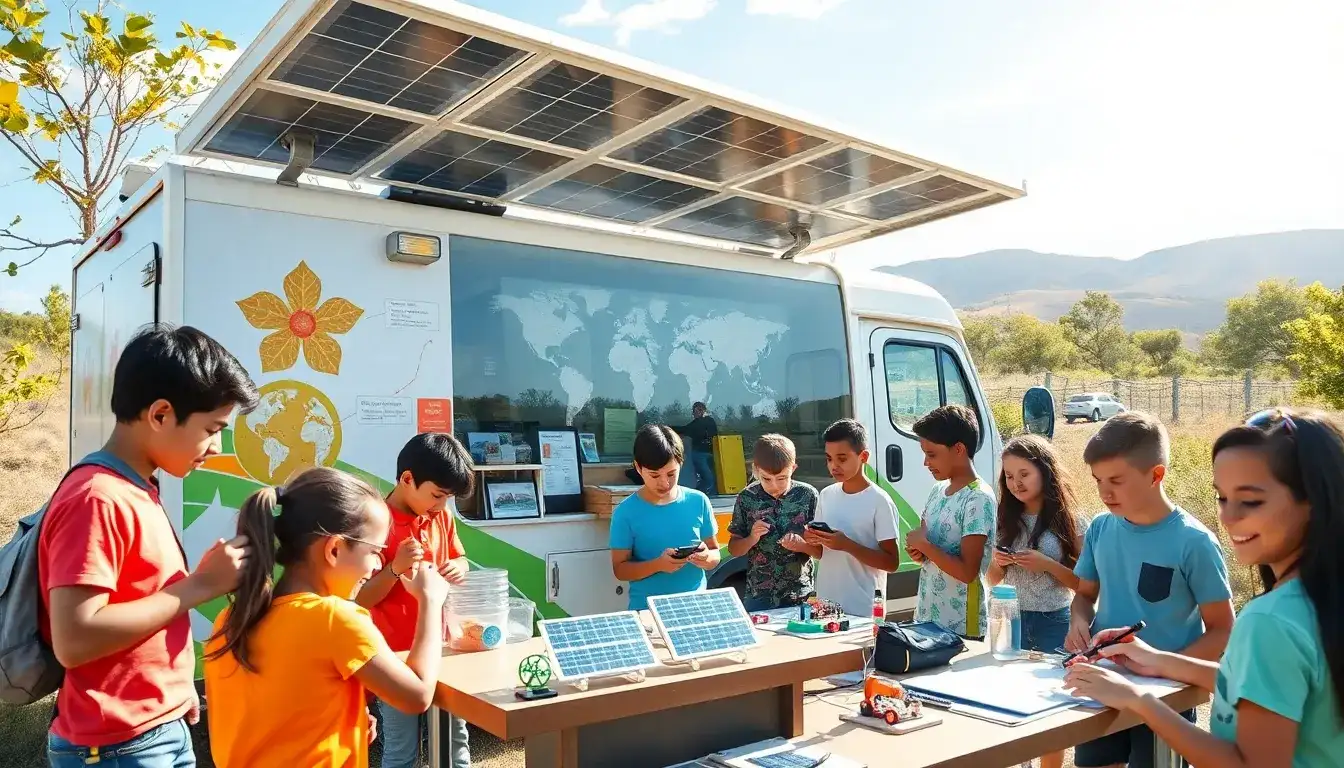
Mobile solar learning labs enhance student engagement through innovative, hands-on experiences that bridge theoretical knowledge with practical application. Here’s how they achieve this:
Immersive Experiential Learning
Mobile labs like the Explorer Lab and Curiosity Cube use interactive technologies (e.g., 360° video, solar-powered experiments) to create immersive environments. Students engage directly with concepts like solar energy conversion and engineering design, transforming abstract ideas into tangible learning moments.
Accessibility and Community Impact
By traveling to underserved areas, mobile labs eliminate geographic and economic barriers. The collaboration between Solar Energy International (SEI) and Illumination Solar delivers hands-on solar training directly to communities, ensuring equitable access to STEM education. This model fosters inclusivity and broadens participation in renewable energy careers.
Hands-On Skill Development
Programs like Horizon Educational’s solar panel kits and Illumination Solar’s mobile labs emphasize practical skills. Students build solar-powered systems, analyze data, and troubleshoot real-world challenges, directly aligning with NGSS standards and workforce demands. This approach boosts self-efficacy, as seen in students’ increased interest in STEM careers.
Collaborative Learning Ecosystems
Mobile lab operators, such as those in the Mobile Laboratory Coalition, share curricula and resources to amplify impact. Partnerships between educators, nonprofits, and industry—like SEI’s collaboration with Illumination Solar—enable scalable, community-driven solutions that keep education relevant to evolving technological needs.
By combining interactivity, accessibility, and collaboration, mobile solar labs create dynamic learning environments that inspire sustained student engagement in STEM fields.
Original article by NenPower, If reposted, please credit the source: https://nenpower.com/blog/how-can-mobile-solar-learning-labs-enhance-student-engagement/

