

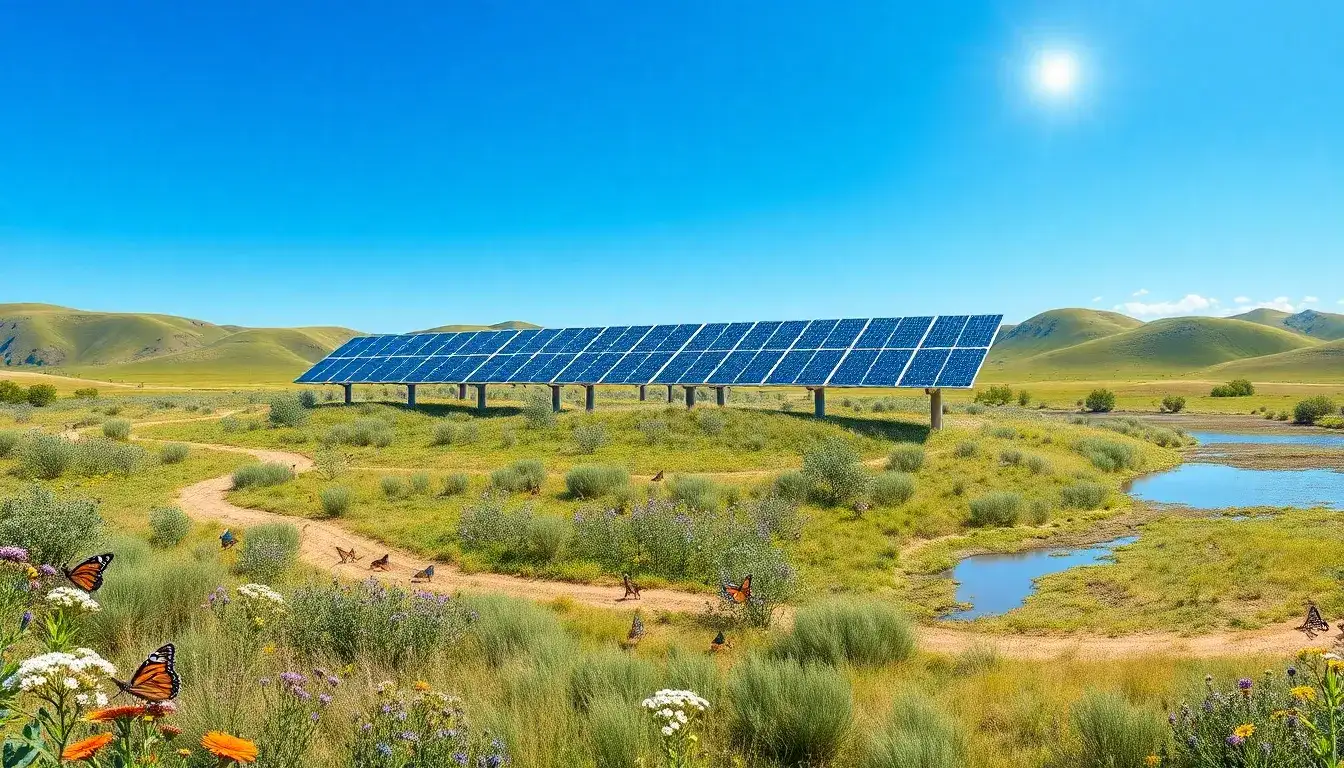
Large-scale Solar Projects and Ecosystem Protection
Large-scale solar projects can be designed to minimize habitat loss and ecosystem disruption through careful planning, innovative design, and proactive management practices. Key strategies include:
Thoughtful Site Selection
- Avoid building solar farms in sensitive habitats or areas with high biodiversity and important species populations, such as migratory bird routes or critical breeding grounds. Instead, prioritize sites already disturbed by human activity to reduce further ecological impact.
Habitat-Friendly Design and Construction
- Employ innovative solar panel placement techniques to maintain existing vegetation and natural topography rather than clearing large areas. For example, minimizing vegetation clearing by clipping only where necessary and elevating panels higher than industry standards allows more light to reach the ground and supports undergrowth.
- Increase spacing between panels to reduce the “lake effect” that can confuse wildlife and to allow more vegetation growth beneath solar arrays.
- Incorporate wildlife corridors and connectivity pathways to enable the movement of species through or around the solar facility, reducing habitat fragmentation and isolation.
- Maintain or restore natural vegetation buffers around the installation to provide refuge, nesting sites, and movement corridors for wildlife, thereby improving species resilience.
- Design fences and barriers with frequent openings sized to allow passage for small to medium-sized animals, facilitating habitat connectivity.
Protecting Sensitive Species and Reducing Disturbance
- Implement setback distances and exclusion zones around habitats of priority or sensitive species to minimize direct impact on populations.
- Schedule construction activities outside of critical periods such as breeding or nesting seasons to avoid disturbing vulnerable wildlife stages.
- Minimize noise, vibrations, and human disturbance during construction to reduce stress on animal populations.
- Temporarily relocate threatened species when necessary, monitoring them carefully before and after construction to ensure their safety and successful return.
Reducing Wildlife Collision and Impact Risks
- Use non-reflective or bird-friendly solar panel designs that reduce the risk of birds colliding with panels.
- Manage vegetation carefully and sustainably post-construction to avoid habitat degradation while maintaining ecosystem function.
- Restrict vehicle speeds and types on-site to reduce the risk of wildlife injury and minimize soil compaction and disturbance.
Enhancing Biodiversity Outcomes
- Solar farms can be designed to foster abundant biodiversity by integrating pollinator habitats and other native species-friendly vegetation, which supports local ecosystems alongside energy production.
- Collaborative efforts between ecologists, engineers, and solar developers help innovate solutions that balance renewable energy goals with wildlife conservation.
By combining these approaches, large-scale solar projects can not only minimize habitat loss and ecosystem disruption but also potentially contribute to habitat conservation and biodiversity enhancement within the landscapes they occupy.
Original article by NenPower, If reposted, please credit the source: https://nenpower.com/blog/how-can-large-scale-solar-projects-be-designed-to-minimize-habitat-loss-and-ecosystem-disruption/

