

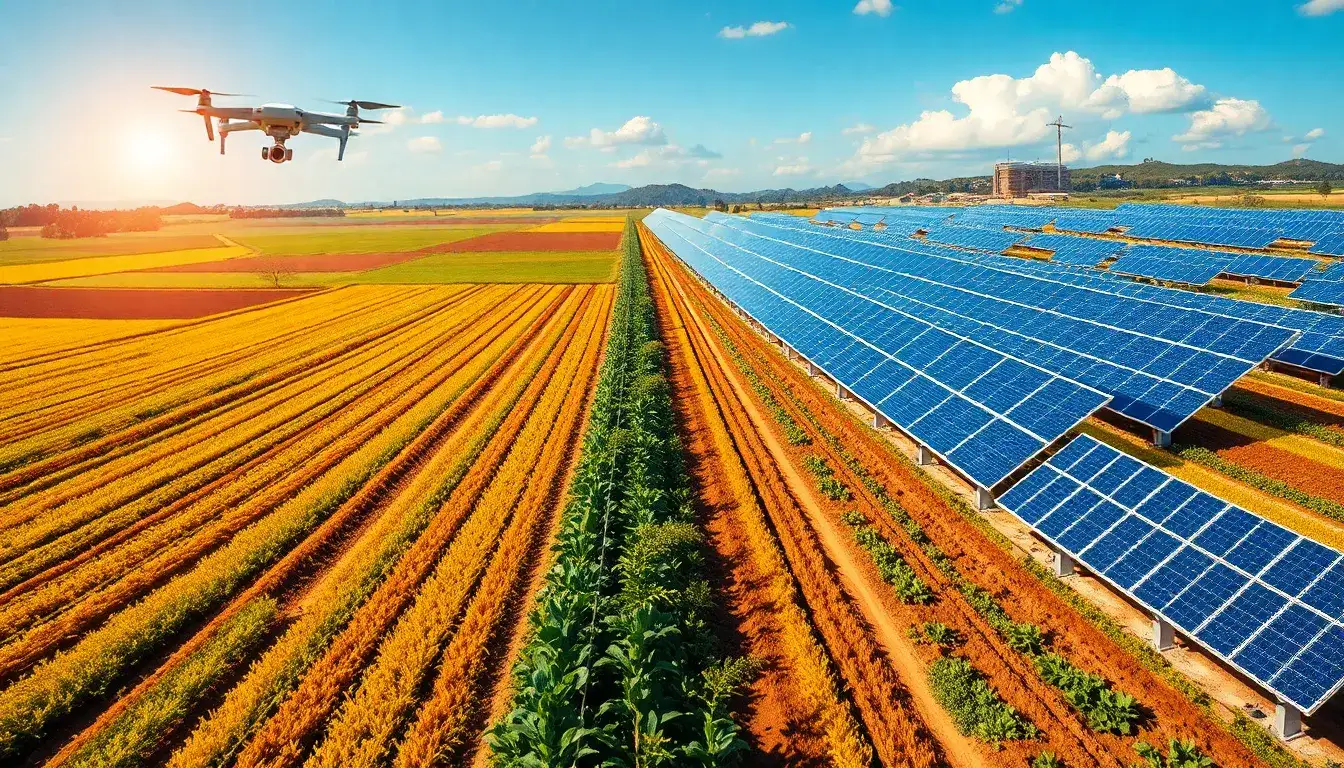
Landowners can monitor the impact of solar panels on their agricultural land through a variety of strategies informed by recent research and best practices related to agrivoltaics (the combined use of land for solar energy and agriculture). Key monitoring areas and methods include:
1. Agricultural Productivity Monitoring
- Track crop yields or forage quality regularly in areas with solar panels versus similar control areas without panels to detect any changes in productivity or crop health.
- Monitor soil health indicators such as organic matter, nutrient levels, moisture retention, and microbial activity, which can be influenced by changes in sunlight and microclimate under panels.
2. Weed, Pest, and Disease Surveillance
- Observe pest populations and disease incidence since solar panels can alter microclimates, potentially influencing weed growth, pest pressures, or plant diseases.
- Document any changes and adapt pest management strategies accordingly to ensure crop health is maintained or improved under solar arrays.
3. Soil Quality and Environmental Testing
- Conduct periodic soil testing to check for any unwanted chemical changes, such as heavy metal contamination. Evidence shows solar panels do not inherently leach toxic substances into soils, but monitoring validates continued safety.
- Assess soil compaction and erosion risks caused by solar panel installation and maintenance equipment and mitigate as needed to protect soil structure.
4. Land Use and Spatial Assessments
- Monitor how much land remains actively productive versus how much is covered or otherwise impacted by solar infrastructure. Studies indicate less than 2% of land under solar PV is disturbed, and the majority of agricultural land around solar sites remains in agriculture after installation.
- Use GIS or drone imaging to track vegetation growth patterns and land cover changes over time.
5. Integration of Agrivoltaics
- If possible, implement agrivoltaic systems that purposefully combine solar panels with agricultural activities (e.g., partial shade crops, grazing). Monitoring focuses on how this co-use affects both energy generation and farm productivity.
- Collect empirical data on changes in microclimate and crop performance under panels to optimize both farming and solar outputs.
Summary Table of Monitoring Focus Areas
| Monitoring Aspect | Purpose | Methods |
|---|---|---|
| Crop Yield & Quality | Detect impact on agricultural productivity | Yield records, quality assessments |
| Soil Health & Chemistry | Ensure soil remains fertile and uncontaminated | Soil sampling, lab analysis |
| Pest, Weed & Disease | Identify changes in pest/disease dynamics | Field scouting, traps, visual surveys |
| Land Use & Coverage | Measure extent of land use changes | GIS, satellite/drone imaging |
| Agrivoltaic Performance | Optimize combined solar-agriculture use | Experimental plots, microclimate monitoring |
By systematically collecting and analyzing this data, landowners can make informed management decisions to mitigate any negative impacts of solar panels on their land and potentially enhance sustainable agricultural outcomes through agrivoltaic practices.
In conclusion, monitoring should focus on agricultural productivity, soil health, pest/disease dynamics, and land use changes. Advances in agrivoltaic research support the coexistence of solar power and farming, offering practical frameworks for ongoing impact assessment.
Original article by NenPower, If reposted, please credit the source: https://nenpower.com/blog/how-can-landowners-monitor-the-impact-of-solar-panels-on-their-agricultural-land/

