Improper pressure settings can lead to system failures in Compressed Air Energy Storage (CAES) systems in several ways:
Pressure-Related Risks in CAES
- Exceeding Operational Pressure Limits:
- CAES systems typically operate within specific pressure ranges, generally between 15 and 70 bar.
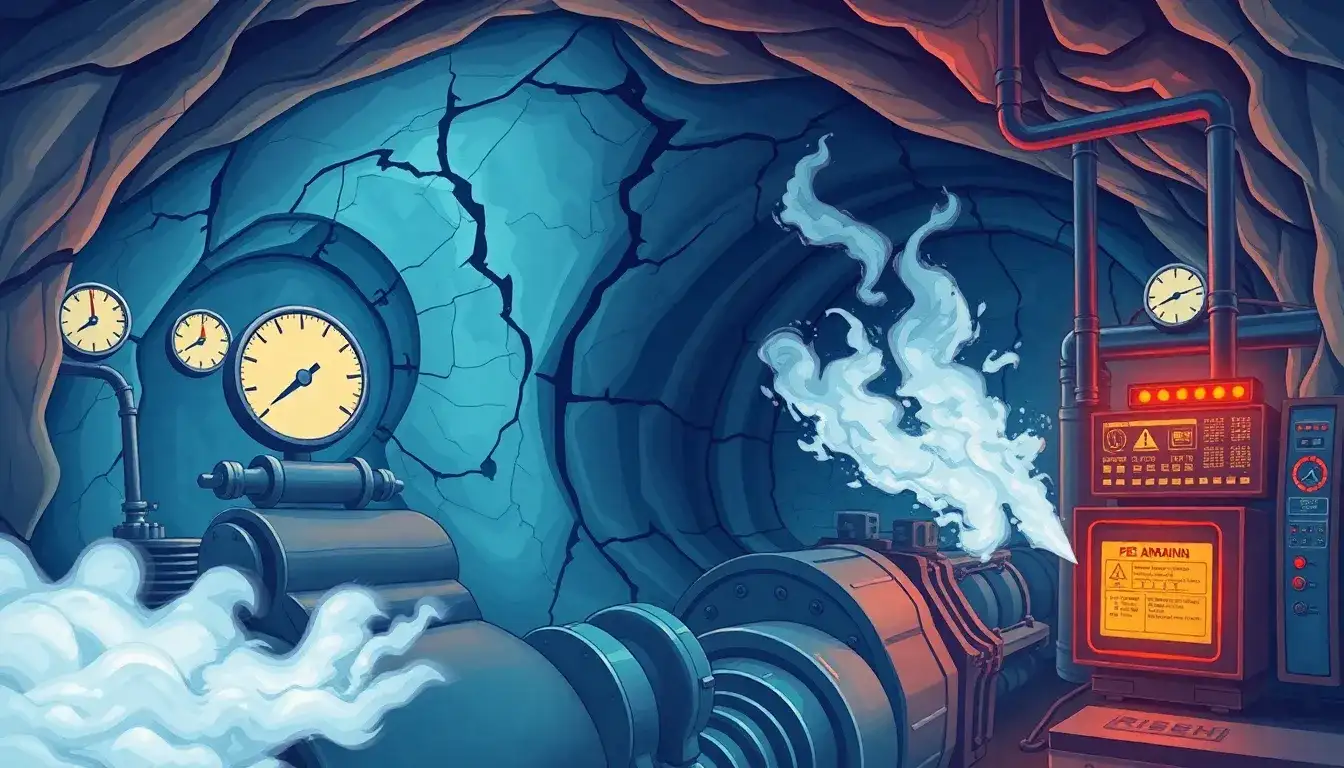
- Exceeding these limits during charging can lead to structural failures in the reservoir, such as damage to the rock formations or caverns used for storage.
- Similarly, discharging below the minimum pressure threshold can result in inefficiencies or damage to equipment like compressors and turbines.
- Ignition and Explosion Hazards:
- In depleted natural gas reservoirs used for CAES, improper pressure management can lead to an air-gas mixture that falls within flammable limits (typically between 4% and 16% natural gas in air by volume).
- If an ignition source is present, this can lead to explosions, especially if the mixture reaches the upper explosion limit as pressure increases during air injection.
- Thermal Management Issues:
- Improper pressure settings can also affect thermal management. During compression, air heats up, and if this heat is not managed properly (either stored or rejected), it can lead to inefficiencies in the system.
- During discharge, if the air is not heated adequately to compensate for expansion cooling, turbine performance can be compromised, affecting overall efficiency.
- Reservoir Integrity and Stability:
- Changes in pressure can cause reservoir fractures to expand or form new ones, potentially leading to hot spots or sparks that could ignite explosive mixtures.
- Such structural changes can also compromise the long-term stability of the storage facility.
Mitigation Strategies
To avoid these issues, several strategies should be implemented:
- Purge and Monitoring: Regularly purge the reservoir of gas to ensure it does not reach flammable mixtures, and install in-situ gas monitors to track gas presence.
- Pressure Control: Ensure that operational pressure limits are not exceeded, and implement gradual pressure changes to avoid sudden stress on the reservoir.
- Thermal Energy Management: Utilize thermal energy storage systems to manage heat during compression and discharge processes efficiently.
- Regular Maintenance: Regularly inspect and maintain equipment to prevent mechanical failures under pressure fluctuations.
Original article by NenPower, If reposted, please credit the source: https://nenpower.com/blog/how-can-improper-pressure-settings-lead-to-system-failures-in-caes-systems/