

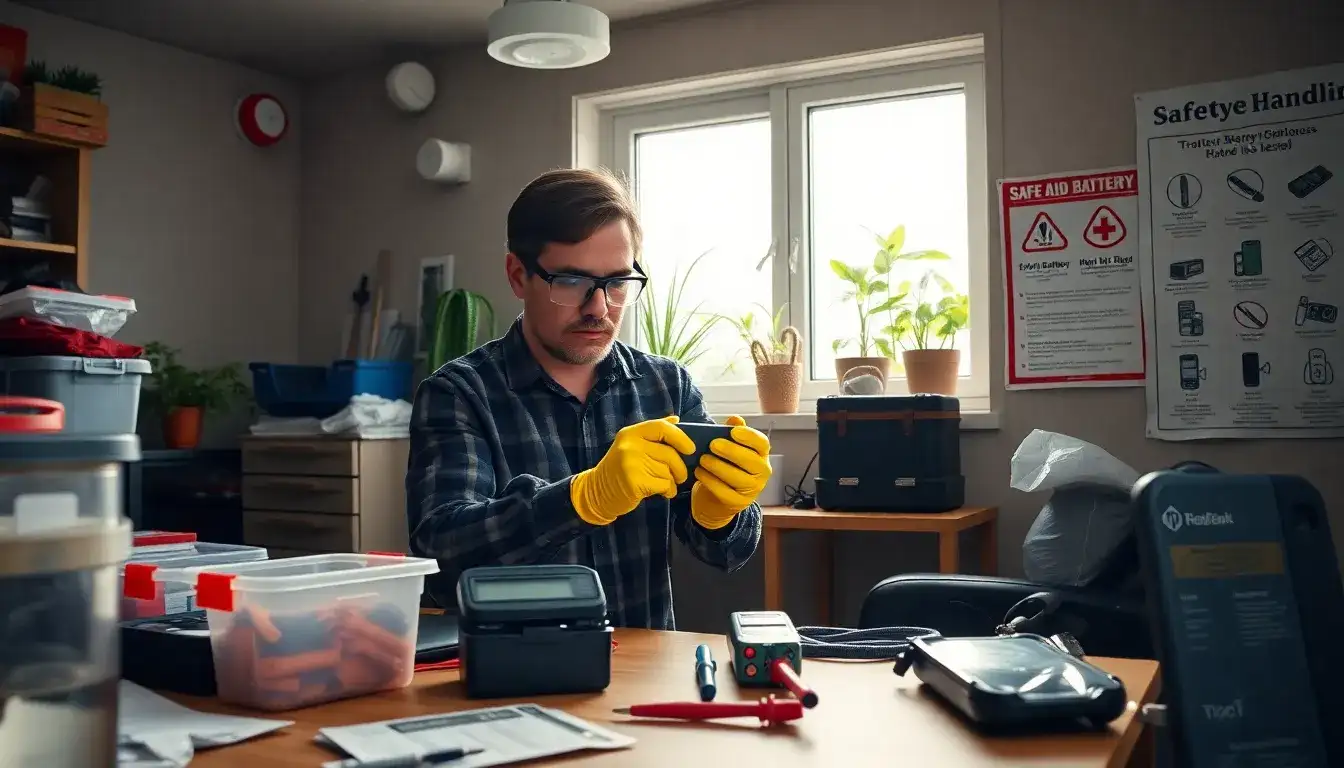
Safe Disposal Practices
- Prepare the Batteries
- Remove any protective coverings or casings from the batteries.
- Use non-conductive tape (preferably electrical tape) to cover the terminals of the lithium-ion batteries. This prevents accidental short circuits and fires.
- Alternatively, place each battery in its own plastic bag to isolate the terminals.
- Use a Vented Container
- Place the prepared batteries in a well-ventilated container. This can help reduce the risk of fire by allowing gases to escape if needed.
- Find a Local Collection Point
- Do not dispose of lithium-ion batteries in household trash or recycling bins. They require specialized handling due to their fire risk.
- Use the Call2Recycle locator or similar services to find a nearby drop-off location for hazardous waste or battery recycling.
- Store Safely Until Disposal
- If a battery is swollen, it’s a fire hazard. Store it in a safe location away from flammable materials until you can dispose of it. If there’s an imminent risk of fire, contact local authorities or emergency services.
- Contact Manufacturers or Local Waste Management
- For specific guidance on disposing of swollen or specialized batteries (like those in computers), consult with the manufacturer or your local waste management agency.
Importance of Proper Disposal
- Lithium-ion batteries contain valuable materials like lithium, cobalt, nickel, and manganese, which can be recovered through recycling.
- Proper disposal helps prevent fires at recycling facilities and reduces environmental hazards.
Original article by NenPower, If reposted, please credit the source: https://nenpower.com/blog/how-can-i-safely-dispose-of-lithium-ion-batteries-at-home/

