

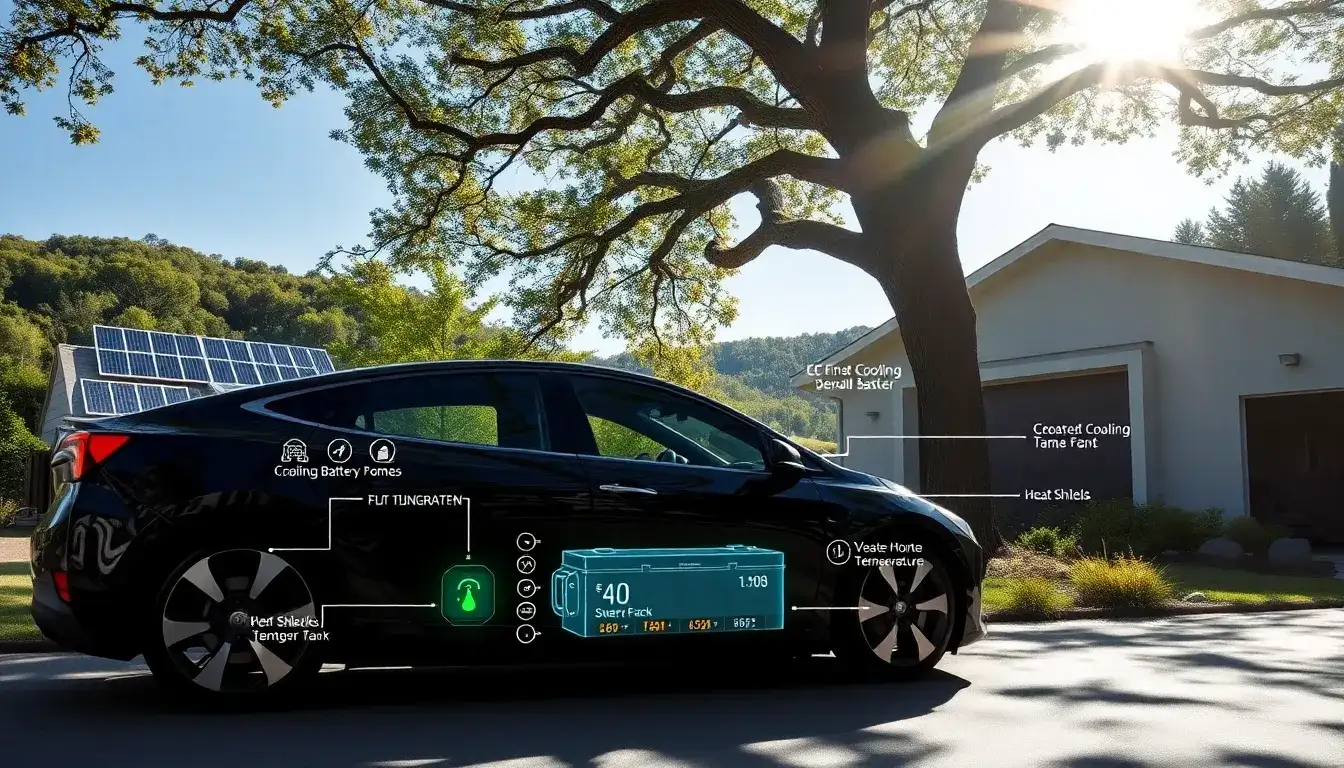
Key Ways to Protect Your EV Battery from Heat Damage
1. Minimize Exposure to High Temperatures
- Park your EV in shaded areas, garages, covered lots, or underground parking to avoid direct sunlight and excessive heat buildup.
- Avoid leaving your EV parked for extended periods in extreme heat as this accelerates battery degradation.
2. Use Battery Preconditioning
- Precondition the battery while the car is still plugged in to bring it to an optimal operating temperature before driving, which reduces the battery’s heat stress during use.
3. Manage Charging Practices
- Keep your battery charge level between 20% and 80% for optimal thermal performance and battery longevity; charging to 100% creates more internal resistance and heat.
- Limit the use of fast charging, as it generates more heat compared to slower Level 1 or Level 2 charging.
- Charge during cooler parts of the day or night when ambient temperatures are lower.
4. Drive Moderately
- Drive at modest speeds with gradual acceleration and deceleration to reduce battery heat generation.
- Avoid aggressive driving especially in hot weather to lessen thermal buildup.
5. Use Vehicle Climate Controls Efficiently
- Pre-cool the cabin while plugged in to avoid stressing the battery during hot weather.
- Use air conditioning sparingly; consider alternative cooling methods such as opening windows or using seat coolers if available, as A/C places extra load on the battery.
6. Maintain Your EV Properly
- Keep tires properly inflated to improve efficiency and reduce unnecessary battery strain.
- Keep the vehicle lightweight by avoiding carrying excess load to reduce energy consumption.
Additional Battery Thermal Protection Technologies
- Manufacturers use materials like silicone polymers and ceramics for battery insulation and thermal management. Silicone insulates individual cells or conducts heat to prevent hotspots without adding weight or stress. When combined with ceramics, the material can sustain high temperatures and prevent thermal runaway by maintaining stable battery temperatures.
- Thermal gap pads made of silicone foams help dissipate heat effectively, protecting battery cells from overheating.
Following these best practices will help safeguard your EV battery from heat-induced damage, extend its usable lifespan, and maintain better range and performance in hot climates.
Original article by NenPower, If reposted, please credit the source: https://nenpower.com/blog/how-can-i-protect-my-ev-battery-from-heat-damage/

