

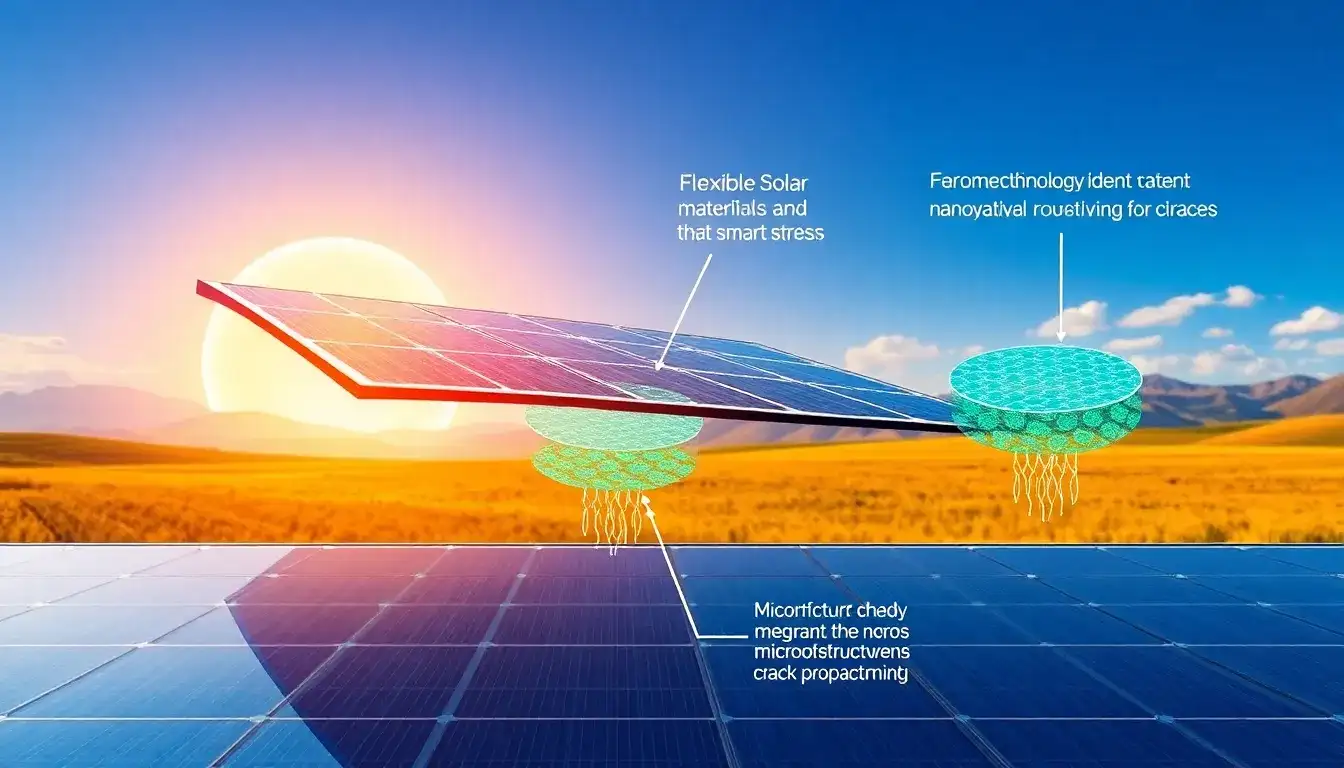
To prevent microcracks in flexible solar panels, focus on manufacturing quality, handling protocols, and environmental resilience:
Manufacturing & Supplier Selection
- Choose HJT or IBC panels: Heterojunction (HJT) solar panels use a monocrystalline silicon substrate and undoped amorphous silicon layers as a stress-absorbing buffer. Interdigitated Back Contact (IBC) panels avoid front-side busbars, reducing crack propagation paths.
- Verify testing standards: Ensure suppliers perform electroluminescence (EL) testing to detect microcracks pre-shipment.
- Prioritize certified manufacturers: Opt for Tier 1 suppliers with robust quality control, such as those using full half-cell processing to eliminate cutting damage during production.
Transportation & Handling
- Avoid mechanical stress: Use protective packaging and secure stacking to minimize vibration and bending during transit.
- Train handlers: Implement proper lifting techniques (e.g., avoid dropping or bumping modules).
Installation Best Practices
- Limit bending: Flexible panels can bend but avoid over-flexing to prevent stress fractures.
- Avoid nonplanar surfaces: Install on flat or gently curved mounts to reduce twisting.
- Use certified installers: Tier 1 installers follow strict guidelines to prevent stepping on or dropping panels.
Environmental Protection
- Monitor thermal cycling: Ensure panels are mounted to accommodate expansion/contraction from temperature swings.
- Prevent humidity damage: Use encapsulation methods (e.g., advanced laminates) to shield cells from moisture.
Maintenance & Monitoring
- Adopt module-level monitoring: Detect power loss early using systems that track individual panel performance.
- Schedule regular EL inspections: Combine visual checks with professional EL testing every 1–2 years to identify hidden cracks.
Material Advancements
| Feature | Benefit |
|---|---|
| Ultra-multi busbars | Reduces current loss from microcracks and minimizes shading impact. |
| Lower-temperature manufacturing | Lowers thermal stress during production, reducing crack risk. |
| Amorphous silicon buffer | Absorbs mechanical stress from bending or vibrations. |
For marine applications, prioritize flexible panels with high-durability encapsulation and vibration-resistant designs to withstand waves and engine movement.
Original article by NenPower, If reposted, please credit the source: https://nenpower.com/blog/how-can-i-prevent-microcracks-in-flexible-solar-panels/

